What Is Canyoning?
A plain-language explanation of canyoning: rappelling, jumping and swimming down a river gorge, how a guided tour runs, and how the Matacanes route near Monterrey works.
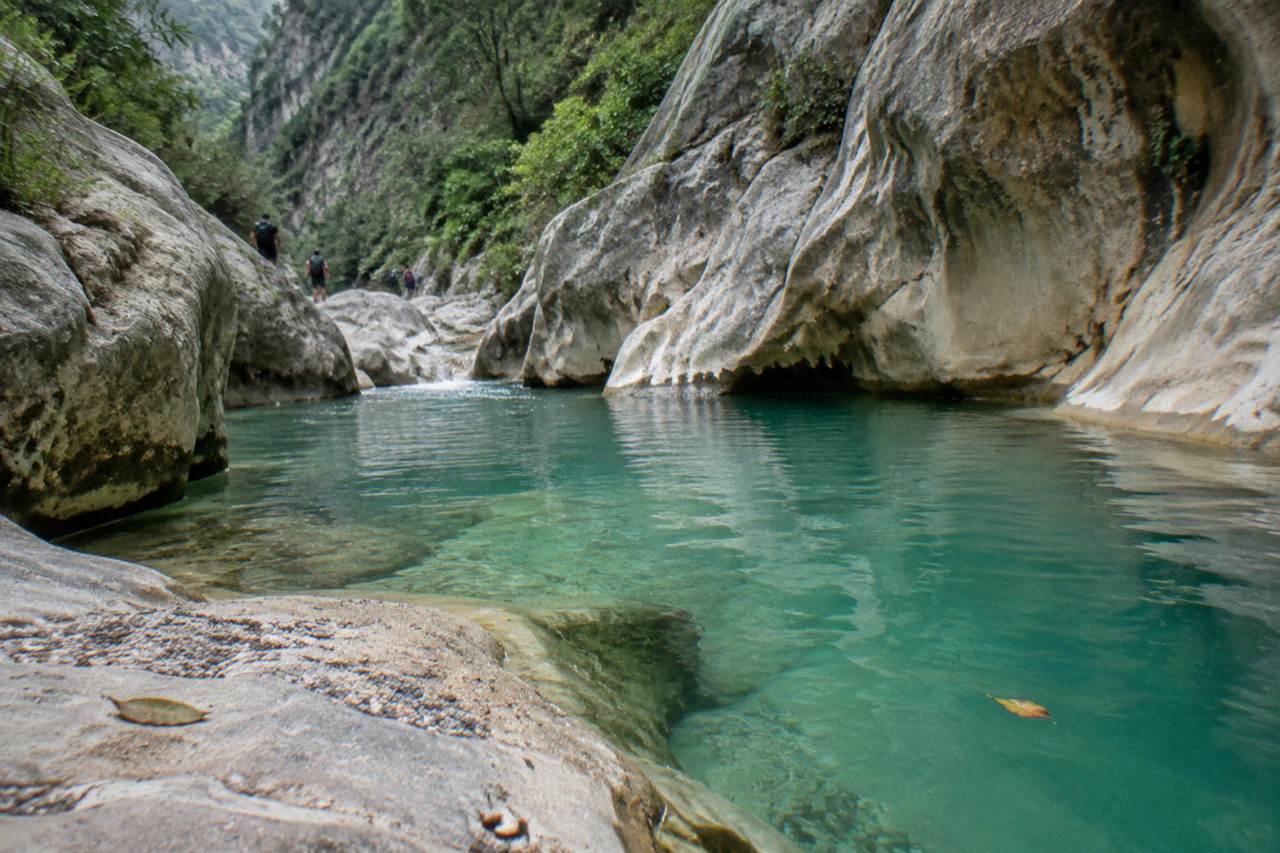
Canyoning is the sport of travelling down a river canyon using whatever the gorge demands: walking, scrambling, rappelling on a rope, jumping into deep pools, sliding down polished rock chutes and swimming through narrow passages. The water did the engineering over millennia, and the canyoneer simply follows the drainage downhill. A full-day trip can involve all of those modes within a few hours, which is why the sport sits somewhere between hiking, climbing and swimming rather than belonging to any one of them. Where exactly the line falls depends on the canyon and the guide, so the linked article examines whether canyoning counts as an extreme sport using the Matacanes route near Monterrey as the test case.
In Mexico the activity is usually called canonismo, and the Sierra de Santiago outside Monterrey has become one of the country's best-known places to do it. The Matacanes Canyoning site exists because one canyon in that range, Matacanes, draws travelers from across the country and beyond. Before booking anything, though, it helps to understand what the word actually describes, what the day feels like, and what you are attaching yourself to when a guide clips you into a rope above a waterfall.
What Is Canyoning?
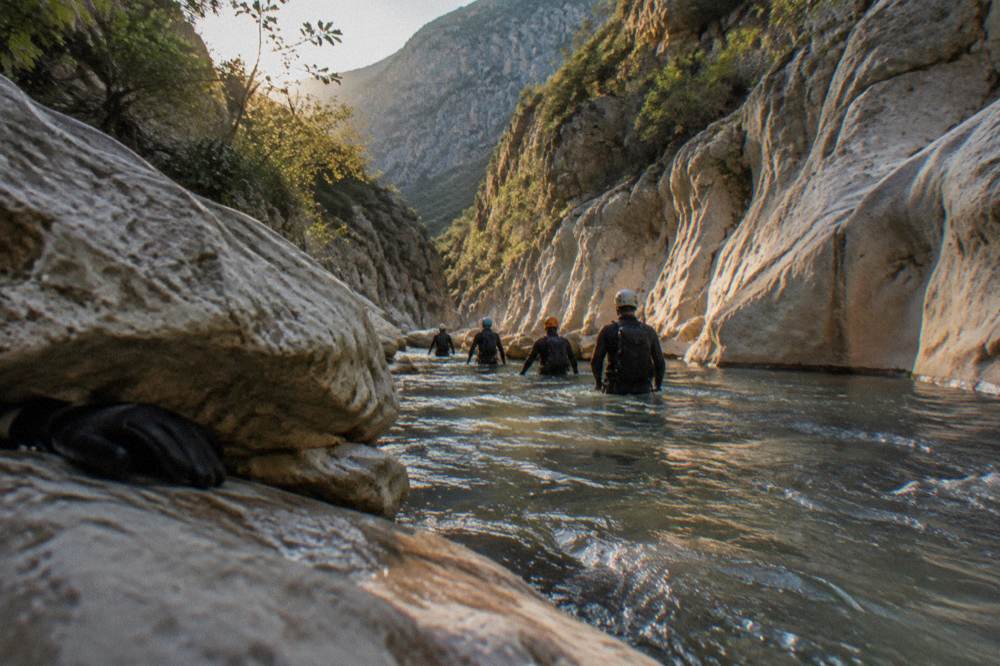
Canyoning is the descent of a river gorge using a mix of walking, scrambling, rappelling, jumping, sliding and swimming, almost always with a wetsuit, helmet, harness and flotation vest, and on commercial trips with certified guides leading every rope and every jump. The canyon is the route and the obstacle course at once: where the wall drops, you rappel; where the pool is deep, you jump; where the water has smoothed a chute, you slide. The operator GEO Aventura describes the Matacanes route exactly that way, with water jumps, swimming, rappels, natural slides and a single 12 m drop as its signature feature. If that signature drop has you wondering how big the leaps really get, a closer look at the biggest jump on the Matacanes route covers its exact height, which jumps you can skip, and how to choose a tour.
The sport goes by several names depending on where you are. In the United States it is usually called canyoneering; in Australia and much of Europe, canyoning; in Mexico and Spain, canonismo or descenso de cañones. The techniques overlap almost completely: rappel anchors, jump scouting, pool reading, and group management in confined terrain. What changes from canyon to canyon is the balance between dry hiking and wet descent. Some routes are mostly walking with two short rappels. Others, like the water-heavy gorges of the Sierra, keep you wet for most of the day. If the naming overlap leaves you unsure which term to use, the guide to canyoning versus canyoneering terminology explains where each name fits and why wet versus dry terrain matters more than the label.
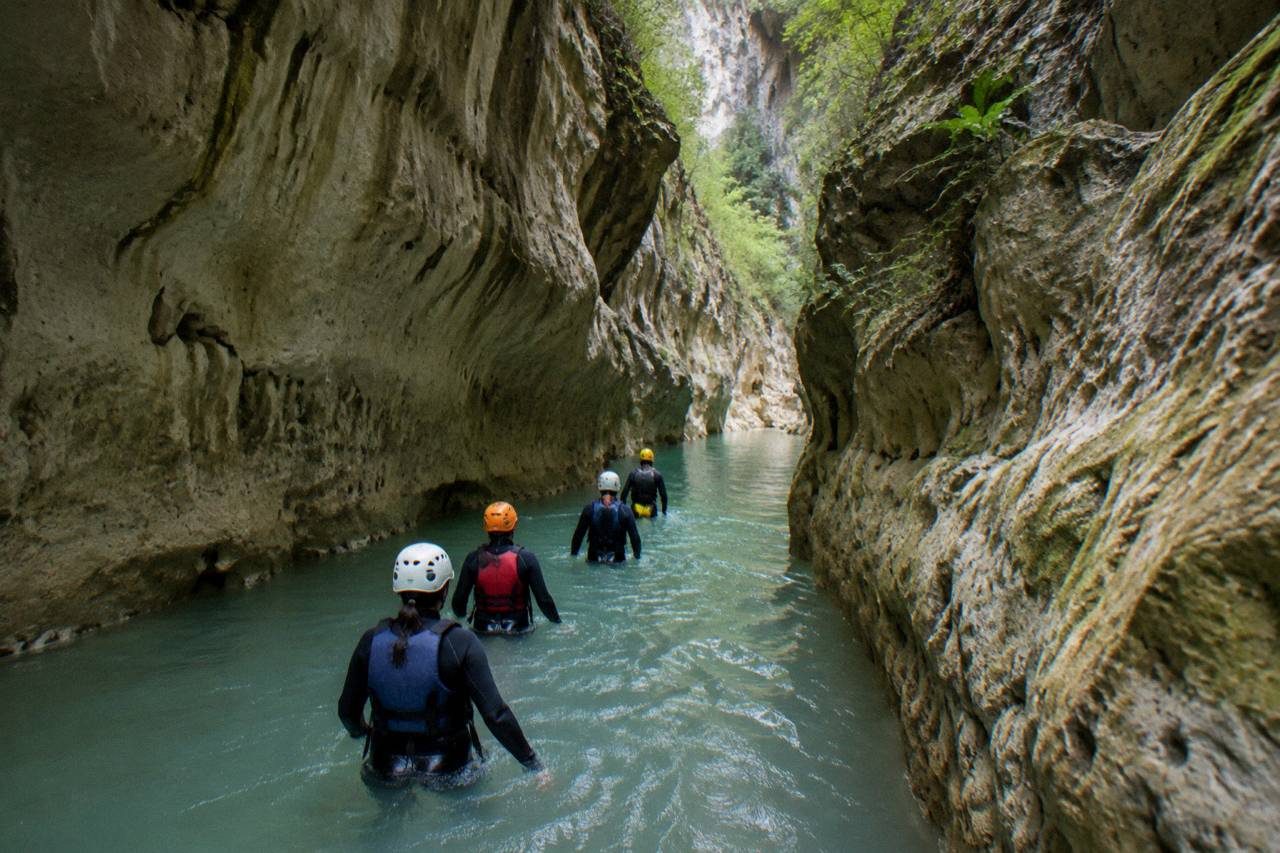
That wetness is the defining feature people underestimate. Operators describe tours of 8 to 10 hours with 70 percent or more of the time spent in water, and the water in a shaded Sierra gorge is cold, typically 12 to 18°C even in summer. That is why the wetsuit is not optional comfort gear but standard safety equipment, supplied and required on guided tours along with the helmet and the canyoning life jacket. If you want a sense of how one full route breaks down stage by stage, the Matacanes route, rappel by rappel guide walks through the sequence.
It also helps to understand the mental side before you book. A canyon is committing by nature: once you are below the first drop, the only easy way out is through, because the walls and the water decide the exits. Guides manage that commitment deliberately, choosing descent lines with escape options and pacing the group to the slowest member. For the participant, this means the day is less about athletic skill and more about trusting the sequence: listen, clip, lean back, and let the rope hold you.
How Does A Guided Canyoning Tour Actually Run?
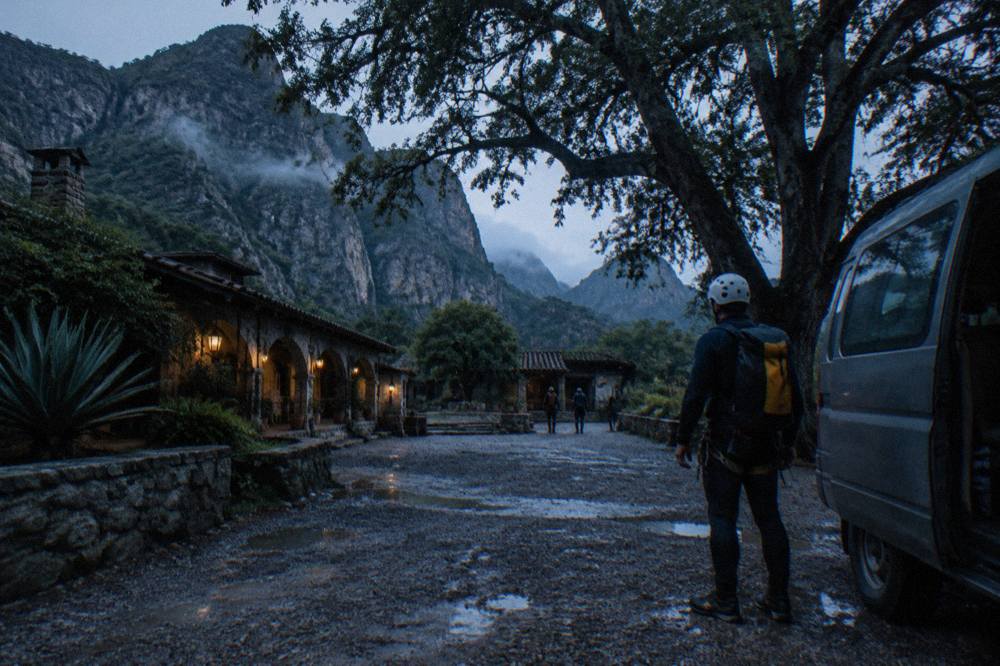
A guided tour follows a fixed arc: gear-up and safety briefing at the meeting point, a rugged drive or hike to the canyon rim, a progressive descent through rappels, jumps and swims, and a final hike out to the vehicle, usually 8 to 12 hours door to door. The group meets early, often before dawn, because the approach roads to Sierra trailheads are slow and the day is long. Breakfast or snacks are commonly served at the start, gear is fitted, and the guides explain each technique before it is needed, not after.
The rhythm inside the canyon is stop-and-go by design. At every drop the guide sets an anchor, rigs the rope and sends people down one at a time. At every jump the guide checks the pool, shows the entry point and goes first or watches from below. Between obstacles the group swims, floats or walks. Nobody is asked to improvise: life jackets and helmets are mandatory and enforced, and certified professional guides either lead or directly supervise every descent. You can see the whole shape of such a day in the hour-by-hour Matacanes day walkthrough.
One honest point about timing: canyon tours in the Sierra de Santiago pause when river levels are high. Operators generally run from about March 21 to about September 15, depending on rains and hurricanes, the water level is watched daily, and the municipal civil protection authority can suspend canyon activities at any time when rivers rise, even when it is not raining at the canyon itself. The booking page and the operator are the authority on whether a given date runs, so check with them before you lock in travel plans. The operator GEO Aventura's Matacanes page states this seasonality plainly.
Meeting logistics vary by listing even when the canyon is the same. Some tours gather at a central Monterrey point before dawn, others at the Hotel Hacienda Cola de Caballo roundabout in Santiago, and the Gaia full-day listing offers two meeting options, the Walmart Supercenter Eugenio Garza Sada or the Hotel Hacienda Cola de Caballo lot, with round-trip group transport from the starting location included but no hotel pickup. Reading the meeting point line on the listing is part of booking well: a 4:00 a.m. start, as one listing shows, is a different kind of day than a 7:00 a.m. one.
What Gear Do You Wear For Canyoning?
The core kit is a full-length wetsuit, a climbing helmet, a canyoning harness with a descent device, and a flotation vest, all supplied by commercial operators on the listings we track, and all mandatory for the full tour, including rappels, jumps and swims. Cold water is the constant, and rock is hard and slick, so each item solves a specific problem: the wetsuit manages heat loss, the helmet absorbs impact, the harness connects you to the rope, and the vest keeps you buoyant in aerated whitewater, where even strong swimmers struggle.
What you bring yourself is simpler. Synthetics or a swimsuit under the wetsuit, secure footwear that can get soaked, a change of dry clothes for the end, and sun protection for the hike in. Operators commonly add breakfast, snacks and photos to the package, and several also carry accident insurance, headlamps for the cave passages some routes include, and permits for the national park. The full packing picture, including what not to bring, is in the what to bring and wear guide.
| Gear item | What it does | Supplied on guided tours? |
|---|---|---|
| Full-length wetsuit | Insulates against 12 to 18°C water | Yes, on every Sierra listing we track |
| Climbing helmet | Protects against rockfall and impact | Yes, mandatory for the full tour |
| Canyoning harness with descent system | Connects you to the rope for rappels | Yes, rigged by the guide |
| Flotation vest (life jacket) | Buoyancy in whitewater and pools | Yes, mandatory and enforced |
| Headlamp | Light for cave passages | On some listings, ask the operator |
| Footwear you can soak | Grip on wet rock | Usually your own |
A note on swimming: operators state that swimming ability is not essential because the specialized canyoning life jacket provides buoyancy, but participants must be able to jump into water, since some entries cannot be walked around. That distinction matters more than any gear choice. The fitness and swimming requirements guide covers who the day suits and who should ask questions first.
If you want the maximum-inclusion version of that gear list, the Matacanes From Monterrey With Lunch listing bundles helmet, harness, descent system, full-length wetsuit, flotation vest and headlamp with certified guides, accident insurance, breakfast, a trail snack, a full meal, park permits, photos and round-trip transport from downtown Monterrey or San Pedro, from $195 per person. Note that this listing asks for prior rappelling experience and good fitness. It is a good example of how differently two tours of the same canyon can be packaged, and why reading the includes and excludes lines matters more than comparing the headline price.
Is Canyoning An Extreme Sport?
Canyoning sits at the demanding end of adventure tourism: operators rate the classic Sierra routes as intermediate, requiring regular physical condition and comfort with heights, jumps and cold water, but the guided format, mandatory gear and guide-controlled rappels keep it accessible to fit first-timers. The extreme-sport label fits unguided descents far better than commercial tours, and operators are blunt that independent attempts in these canyons carry a high risk of accident from hydraulics and inadequate preparation.
The honest middle ground is this: the moves themselves are beginner-learnable, the endurance is not trivial. Expect hours of walking on wet rock, cold swimming sections, and jumps that require committing in the air. Some jumps reach up to 12 m on the Matacanes route, and the operator also lists a single 12 m drop among the day's features without saying whether it is a rappel or a jump. If the jump question is what brought you here, the highest jump in Matacanes post gets into specifics.
Health screening is part of the booking, not fine print. Operators exclude or require prior notification for heart or lung conditions, recent surgeries or fractures, spinal problems, epilepsy, or significant overweight. Minimum age 12 appears on several listings, with children accompanied by a parent or guardian, though some listings state no minimum age at all: ask the operator directly rather than assuming. For the fuller picture, read how hard the day actually is and the safety, rules and rescue guide, which also explains why rescues in this canyon happen and how guided groups avoid becoming one.
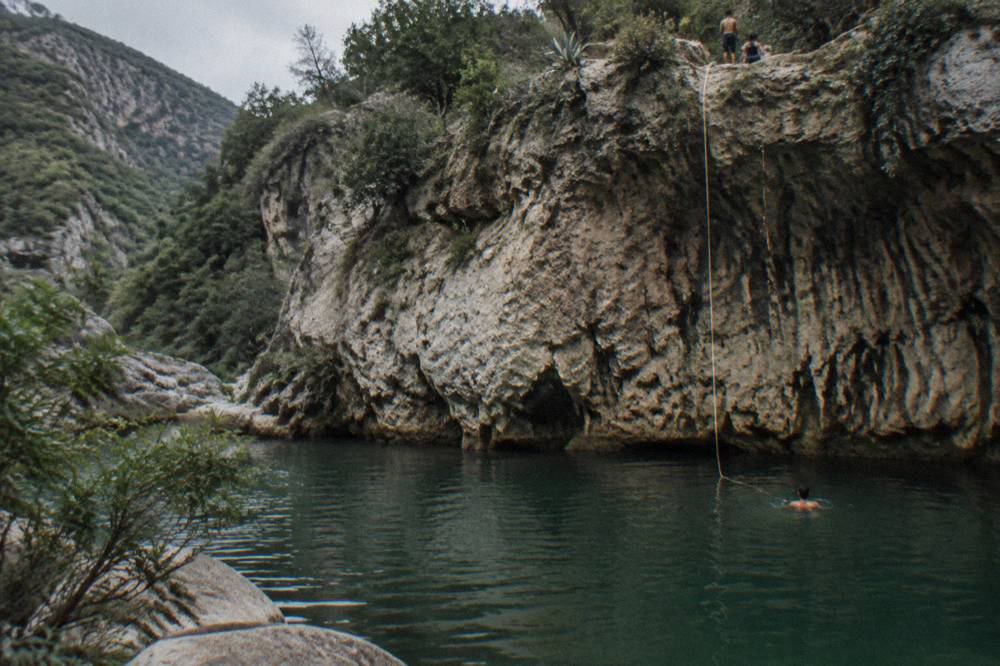
Where Can You Try Canyoning Near Monterrey?
The area around Monterrey offers three distinct guided formats: the full-day Matacanes water canyon and the rappel-focused Chipitin route with its seven descents, both in the Sierra de Santiago, plus the Nido de los Aguiluchos via ferrata above La Huasteca, which is climbing and rappelling rather than canyoning proper. All three sit within Cumbres de Monterrey National Park, whose official entry fee is 125 MXN per person per day, plus a separate 60 MXN ejido access fee for the Matacanes and Chipitin routes, paid in the Potrero Redondo community at the trailhead.
Chipitin deserves its own line because it is often confused with Matacanes. It is a different canyon with a different character: the listing describes seven rappels down a waterfall of about 100 m, which makes it more about rope work and less about the long swims and slides of Matacanes. Nido de los Aguiluchos is different again, a via ferrata with metal rungs, cables, ziplines and rappels, and no river descent at all. Choosing between them is really choosing what excites you: water, ropes, or heights.
| Listing | Canyon | Format | Duration | Price from |
|---|---|---|---|---|
| Matacanes Full-Day Canyoning | Matacanes | Water canyon: jumps, slides, swims, rappels | About 1 day | $158 per person |
| Chipitin 7-Rappel Canyon From Monterrey | Chipitin | Seven rappels, transport from Monterrey, meals | About 12 hours | $195 per person |
| Nido de los Aguiluchos Via Ferrata | Nido de los Aguiluchos | Via ferrata, climbing, rappels, not canyoning | About 7 hours | $108 per person |
Prices are snapshots: treat every figure as "from" and let the live listing show the current number. If your question is less about which route and more about which operator variant, the which Matacanes tour to book comparison breaks down group sizes, meeting points and what each price includes.
Beyond the Sierra, canyoning has grown into a worldwide sport with famous venues in the Alps, the Pyrenees and New Zealand, and Mexico now ranks among the countries travelers target for it. If the idea has caught you and you want the wider map, the best canyoning destinations post and the canyoning in Mexico guide place the Monterrey routes in their international context. For most readers, though, the answer to "where do I try this" is simpler than that: the canyon an hour outside Monterrey, with a guide, on a date the river allows.
Common Questions About Canyoning
What Is Canyoning?
Descending a river gorge on foot, by rope and by water: rappelling waterfalls, jumping into pools, sliding down natural chutes and swimming through passages, wearing a wetsuit, helmet, harness and flotation vest, usually with certified guides on a commercial tour.
Do I need to know how to rappel before a tour?
On most Matacanes listings, no: the guide rigs every rope, rigs your descent device and controls the lowering. One listing we track does ask for prior rappelling experience, so read the requirements on the specific tour before booking.
Do I have to be a strong swimmer?
Operators state swimming ability is not essential because the canyoning life jacket provides buoyancy. You do need to be able to jump into water, since some entries cannot be avoided.
Is there a minimum age?
Several listings state minimum age 12 with a parent or guardian present. Others show no minimum age, so ask the operator for the tour you are considering rather than assuming.
Can the tour be cancelled for water levels?
Yes. The season generally runs from about March 21 to about September 15, levels are monitored daily, and the municipal authority can suspend canyon activities when rivers rise. The operator and the booking page are the authority on whether a date runs.