Is Canyoning An Extreme Sport?
A clear look at where canyoning sits between guided adventure and extreme sport, using the Matacanes route near Monterrey as the working example.
Is Canyoning An Extreme Sport?
No, canyoning is not an extreme sport by definition. It is a graded outdoor activity, meaning its difficulty is measured on a scale rather than fixed at a single level of intensity. It becomes extreme in two situations: at its hardest routes, or when a canyon is attempted without a guide and the missing expert support turns a manageable descent into a serious risk. The Matacanes route near Monterrey is rated intermediate by the operators who run it, requires regular physical condition rather than athletic training, and is done in guided groups with helmets, harnesses, life vests and wetsuits supplied. Jumps, rappels and cold water are real, and so is the framework around them. Before you commit to the trip, it makes sense to ask whether the area around the canyon is a sensible place for tourists right now, and our guide to Monterrey safety for canyon visitors covers everything from official advisories to the drive out to Santiago.
That answer surprises people who have only seen the sport in videos. Search for canyoning and you find clips of free jumps into narrow potholes and athletes racing waterfalls, which is the extreme end of the discipline, the same way free soloing is the extreme end of climbing while most climbers rope up at a crag. The sport spans everything from walking a stream bed in a wetsuit to descending canyons almost nobody has completed. Where a specific trip falls on that range depends on the route, the water level and, above all, whether a certified guide is setting the rope.
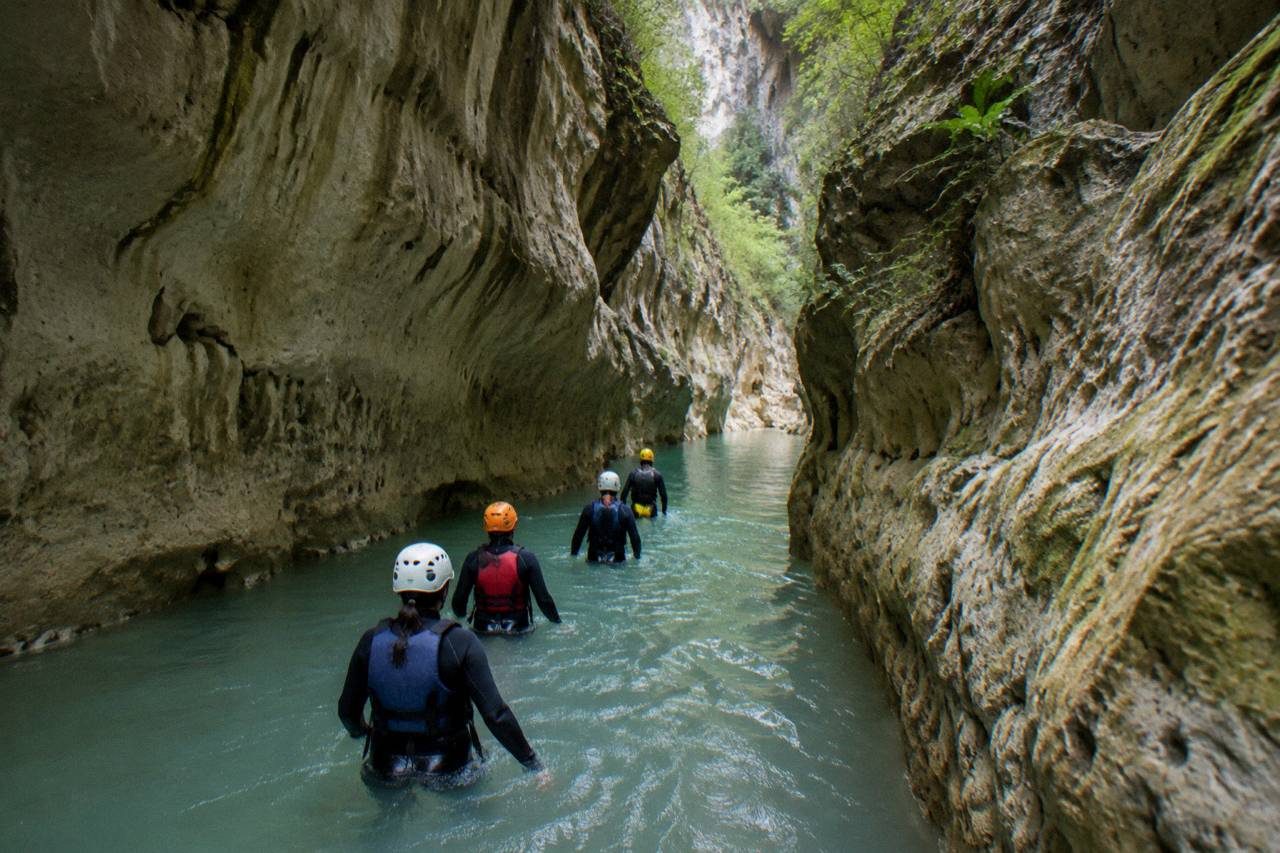
The operators who run Matacanes describe it plainly on their own pages: an intermediate level, water jumps, swimming, rappels, natural slides, a 12 meter single drop, and tours that run 8 to 10 hours with most of that time spent in or near the water. That is a demanding day. It is also a day with structure, equipment and a guide who has run the route many times before, which is a different thing entirely from the unguided descents that give the sport its dangerous reputation.
For readers weighing a first trip, the practical question is not whether canyoning can be extreme, it is whether the specific tour you are considering is built for beginners. The Matacanes full-day trips sold on this site are, with one exception we will flag below.
What Makes A Sport Extreme?
According to most risk researchers, a sport qualifies as extreme when it meets three markers: it takes place in a natural environment that cannot be controlled, a single mistake carries a real chance of serious injury, and once something goes wrong there is no external protection to save you. Canyoning meets the first two markers in every form, including guided tours, because moving water and rock do not negotiate. The third marker is where guided and unguided canyoning split completely: a guided group carries ropes, anchors, rescue equipment and a trained person who has used them before.
It helps to compare like with like. In climbing, nobody calls a guided top-rope session at a gym an extreme sport, and nobody disputes that alpine free soloing is one. Same activity, wildly different risk envelopes. Canyoning works the same way. A guided descent of Matacanes with helmets, harnesses, vests and a guide checking every jump and every rappel station sits much closer to the top-rope end of the scale than the free-solo end. And if the terminology itself is confusing you, our guide to canyoning versus canyoneering sorts out which word applies where.
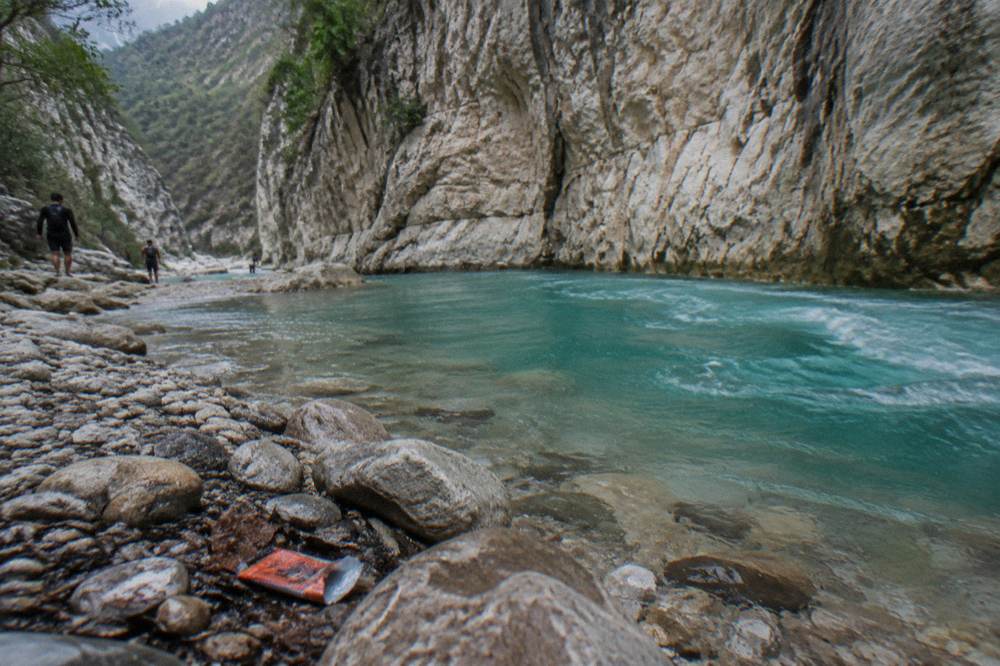
The environment still deserves respect. The canyon community of Potrero Redondo and the municipal civil protection authority monitor the river level daily during the season, and operators state plainly that the season, roughly 21 March to 15 September, exists because water and weather decide whether the route runs, not because anyone wishes it so. Suspensions can be issued at any time when levels rise, including on days when it is not raining in the canyon itself, because rain in the upper Sierra can send a flash flood downstream. This is exactly why the unguided version of the sport earns its extreme label: the authorities that suspend canyon activities in the Sierra de Santiago when rivers rise are the same authorities whose rescues of unprepared groups fill the local news.
So the honest framing is this: the canyon is an extreme environment. The guided tour is a managed way to enter it.
How Hard Is The Matacanes Route Really?
Matacanes is graded intermediate by tour operators, which means it requires regular physical condition along with comfort around heights and cold water, plus the ability to jump into the water. That said, most listings do not ask for prior canyoning or rappelling experience, so the difficulty is real but within reach for prepared beginners. Tours run 8 to 10 hours, most of that time in the water, with swimming sections, rappels, slides and jumps of varying height up to a verified 12 meter single drop on the operator's route description.
One listing on this site is stricter than the rest. The Matacanes From Monterrey With Lunch tour states that prior rappelling experience and good fitness are required, which makes it the closest thing to a genuinely demanding trip in the current roster. It is also the listing that bundles the most in: hotel pickup from Downtown Monterrey and San Pedro Garza García, a full meal, accident insurance, park permits, photos and a certified guide, from $195 per person. If you are unsure whether you are ready for Matacanes, that listing's own requirement line is a useful self-check, and asking the operator directly is the honest next step.
For everyone else, the guided full-day format is the standard entry point. The most reviewed trip on this site, the Matacanes Full-Day Canyoning tour, is rated 4.9 across 1783 reviews and runs from $158 per person with a group maximum of 25, wetsuit, harness, helmet, life vest, breakfast, snacks, group transport from the meeting point and tour photos included. A rating pool that large, drawn almost entirely from first-time canyoners, is itself evidence about the difficulty question: hundreds of ordinary travelers finish this route every season and leave five-star reviews, which is not the pattern a truly extreme product produces.
| Tour | Grading signal on the listing | From (USD) | Group max | Rating |
|---|---|---|---|---|
| Matacanes Full-Day Canyoning | No experience requirement stated | $158 | 25 | 4.9 from 1783 reviews |
| Matacanes From Monterrey With Lunch | Prior rappelling experience and good fitness required | $195 | Not stated | 5.0 from 2 reviews |
| Matacanes Small Group From The Hotel Hacienda | Minimum age 12, small group | $611 | 15 | 4.9 from 27 reviews |
| Matacanes Full Day From Walmart Las Torres | Standard guided day, 4:00 a.m. start | $144 | 30 | 4.2 from 5 reviews |
The table shows the real spread inside one canyon. Same water, same rappels, same 12 meter drop, but four different framings of the day, from a 30-person value departure at 4:00 a.m. to a 15-person small-group trip with tacos and tuna snacks on the trail.
What The Equipment And Guides Actually Do
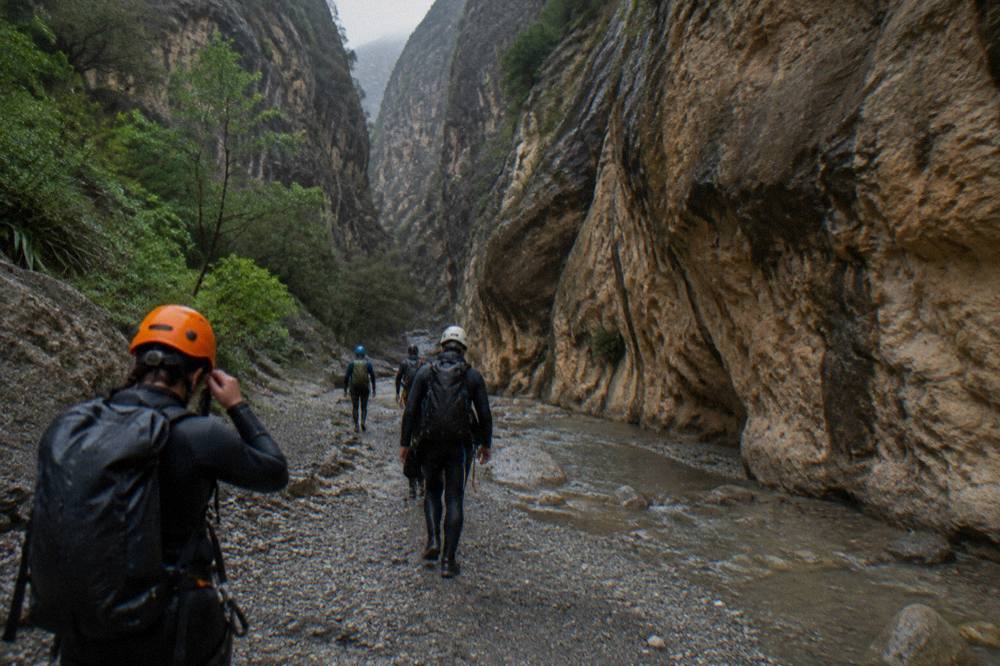
The gear list on a guided Matacanes tour, helmet, harness with descent system, life vest and full-length wetsuit, converts the route's raw hazards into managed ones, which is the entire difference between a guided activity and an extreme one. The life vest matters most: operators state that you do not need to be a strong swimmer because the canyoning vest provides buoyancy, you only need to be able to jump into water and stay calm.
The helmet and harness do the same work for the vertical sections. On an unguided descent, every anchor, every rope length and every landing pool is your own judgment call, and mistakes in moving water are unforgiving. On a guided tour, the guide rigs the rappels, checks the harnesses, goes first into the features and tells the group which jumps are optional and which height to jump from. The operator's own route page lists exactly this package, certified guides and full personal equipment, as standard on every departure.
None of this removes the demands of the day. You will be cold in places, tired in others, and asked to step off ledges your instincts dislike. But the same is true of plenty of activities nobody calls extreme, from winter hiking to open-water swimming. The label should follow the protection level, not the adrenaline level.
Who Should Not Book A Canyoning Tour?
You should not book a canyoning tour if you have heart or lung conditions, recent surgeries or fractures, spinal problems, epilepsy, or significant overweight, as operators either exclude these guests or require prior notification. Likewise, anyone unable to remain calm in cold, moving water should not book at all. These exclusions come from the operators' own requirement pages, and they are the clearest evidence that a guided tour is a managed activity: managed activities have medical screening, extreme ones do not.
Age is the other gate. The minimum age of 12 appears on the small-group Matacanes listing and the operator's programs, with children required to be accompanied by a parent or guardian. Several of the larger-group listings state no minimum age at all, which is not the same as saying any age is suitable, it means the operator decides case by case, so ask before booking for a child. Our guide to Matacanes age limits and kids breaks this down family by family.
Fitness is the question we get most often, and the honest answer is that regular physical condition is enough for the standard guided day: you should be able to walk on uneven ground for hours, climb out of water on rock, and keep moving while cold. What the tours do not require is upper-body strength beyond what the harness and rope handle, or swimming technique beyond calm floating. The deeper detail is in our Matacanes fitness and swimming requirements guide.
If you are honest with yourself on the medical list and the water-comfort question, you are very likely fine. If any item on it describes you, tell the operator before paying, not on the canyon rim at 8 a.m.
Jumps, Rappels, And The 12 Meter Drop
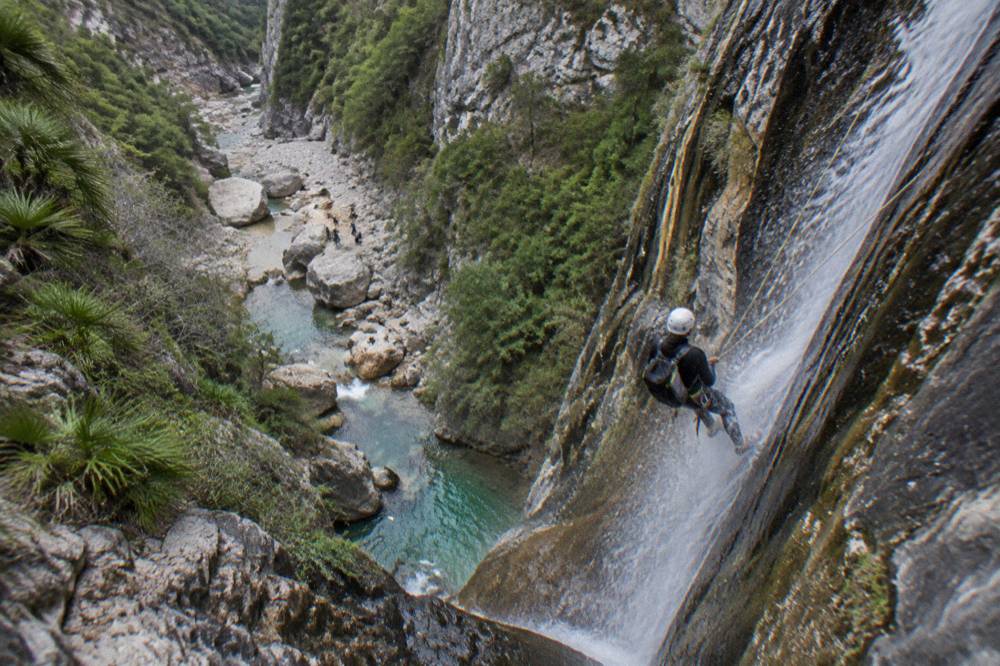
The single most exposed feature on the Matacanes route is a 12 meter drop, which the operator lists among water jumps, rappels and natural slides as the route's core features, and tours typically spend 70 percent or more of an 8 to 10 hour day in or beside the water. Twelve meters is roughly a four-story building, and even with a life vest and a guide in the landing pool, stepping off it is the moment the trip feels genuinely extreme.
Two things are worth knowing before that moment. First, not every jump is mandatory; guides mark which features are optional and which height to enter from, and a rating pool of 1783 reviews on the main full-day listing suggests large numbers of first-timers complete the day. Second, the rappels are where the equipment earns its keep: you descend fixed ropes with a descent device, heavily braked, with the guide controlling the station. Most people find the first rappel scarier in anticipation than in execution.
The water itself is the part no video conveys. Canyon water in the Sierra runs cold, and cold water plus sustained physical output is genuinely tiring in a way warm swimming pools are not. The full-length wetsuit every roster listing includes is not comfort padding, it is what makes an 8 to 10 hour water day survivable for ordinary travelers. Bring the right layer underneath and the cold becomes part of the experience rather than the obstacle; our what to bring and wear to Matacanes guide lists the full kit.
| Route hazard | Unguided exposure | On a guided tour |
|---|---|---|
| Cold water, hours of immersion | Self-managed, hypothermia risk | Full wetsuit supplied, guide monitors the group |
| Jumps into pools | Unverified depths and entries | Guide goes first, marks heights, marks optional jumps |
| Rappels on wet rock | Self-rigged anchors and ropes | Guide rigs and staffs every station |
| Flash floods | No warning system | Daily river monitoring; departures paused when levels rise |
| Getting stuck or injured | Self-rescue only | Trained guide, group support, emergency plan |
That table is the whole argument of this article in five rows. Nothing in the left column is exaggerated. Everything in the right column is why a 12-year-old can legally book the small-group tour.
Why The Guided Version Feels Different
A guided canyoning tour is closer to a structured adventure activity like rafting or via ferrata than to an extreme sport, because the risk decisions are made by a certified professional with local knowledge, and the participant's job is to follow instructions inside a managed system. The closest comparison on this site's own roster is the Nido de los Aguiluchos via ferrata, a climbing and rappel product rated 4.9 across 753 reviews from $108 per person, which shares the same logic: metal rungs, fixed cables and guides turning an exposed cliff into a supervised route.
The small-group Matacanes listing makes the same trade in a different direction. At from $611 per person with a maximum of 15 and a minimum age of 12, it buys closer guide attention, breakfast tacos and trail snacks, and the full descent kit, departing from the Hotel Hacienda Cola de Caballo roundabout in Santiago. More money, more intimacy, same managed canyon. It is the version hesitant readers tend to book after a group trip feels too large.
One point of honesty: the same seasonality that protects you also limits you. Closures in the Sierra de Santiago are issued when river levels rise and lifted when conditions improve, with no fixed calendar, and the booking page and the operator are the authority on whether a given date runs. If you are planning around the shoulder of the season, read our best time to do Matacanes guide before picking dates, and treat any promise that a date will definitely run as a red flag rather than a selling point.
Which brings the article back to its own question. This site, Matacanes Canyoning, exists because thousands of ordinary travelers run this canyon every season under exactly the conditions described above: intermediate grading, full equipment, certified guides, and a water level someone else is watching. If you want the short version of whether canyoning is worth trying, read our what is canyoning primer and then judge the tour, not the label. You can also Check availability on the full-day listing to see live dates in one click.
Common Questions About Canyoning
Is canyoning an extreme sport?
Not in its mainstream guided form. Canyoning is a graded activity, and Matacanes specifically is rated intermediate by the operators who run it, with helmets, harnesses, life vests, wetsuits and certified guides supplied on every listing sold here. The canyon environment is extreme, and unguided descents in moving water are genuinely dangerous, but the guided tour is built to be survivable and enjoyable for first-timers.
Do I need rappelling experience for a Matacanes tour?
Not on most listings. The guides rig and staff every rappel station and brief each descent. One listing, Matacanes From Monterrey With Lunch, does require prior rappelling experience and good fitness per its own listing text, so read the requirements on the specific tour before booking.
Do I need to be a strong swimmer?
No. Operators state that swimming ability is not essential because the canyoning life vest provides buoyancy. What you do need is the ability to jump into water and stay calm in cold, moving water for extended periods.
How high is the biggest jump?
The operator's route description lists a 12 meter single drop among the route's features, alongside water jumps, rappels and natural slides. Guides mark which jumps are mandatory and which heights to enter from.
Can the tour be cancelled for water levels?
Yes. The season runs roughly 21 March to 15 September, the river level is monitored daily, and canyon activities can be suspended at any time when levels rise, even when it is not raining at the site. The operator and the live listing are the authority on whether a date runs, and refund terms vary by listing.