Do You Need To Swim Or Be Fit For Matacanes?
Most people booking the Matacanes full-day tour want one answer first: can I do this if I am not a strong swimmer, and how fit do I need to be? The short version is that a canyoning life jacket does most of the swimming for you, but you must be able to jump into water, handle cold, and move on your feet for hours.
Short answer
You do not need to be a strong swimmer for Matacanes because the canyoning life jacket keeps you afloat, but you must be able to jump into water and stay calm in it. Operators ask for regular physical condition, a minimum age of 12 on the programs that state one, and full disclosure of heart, lung, spinal, or weight concerns before the day.
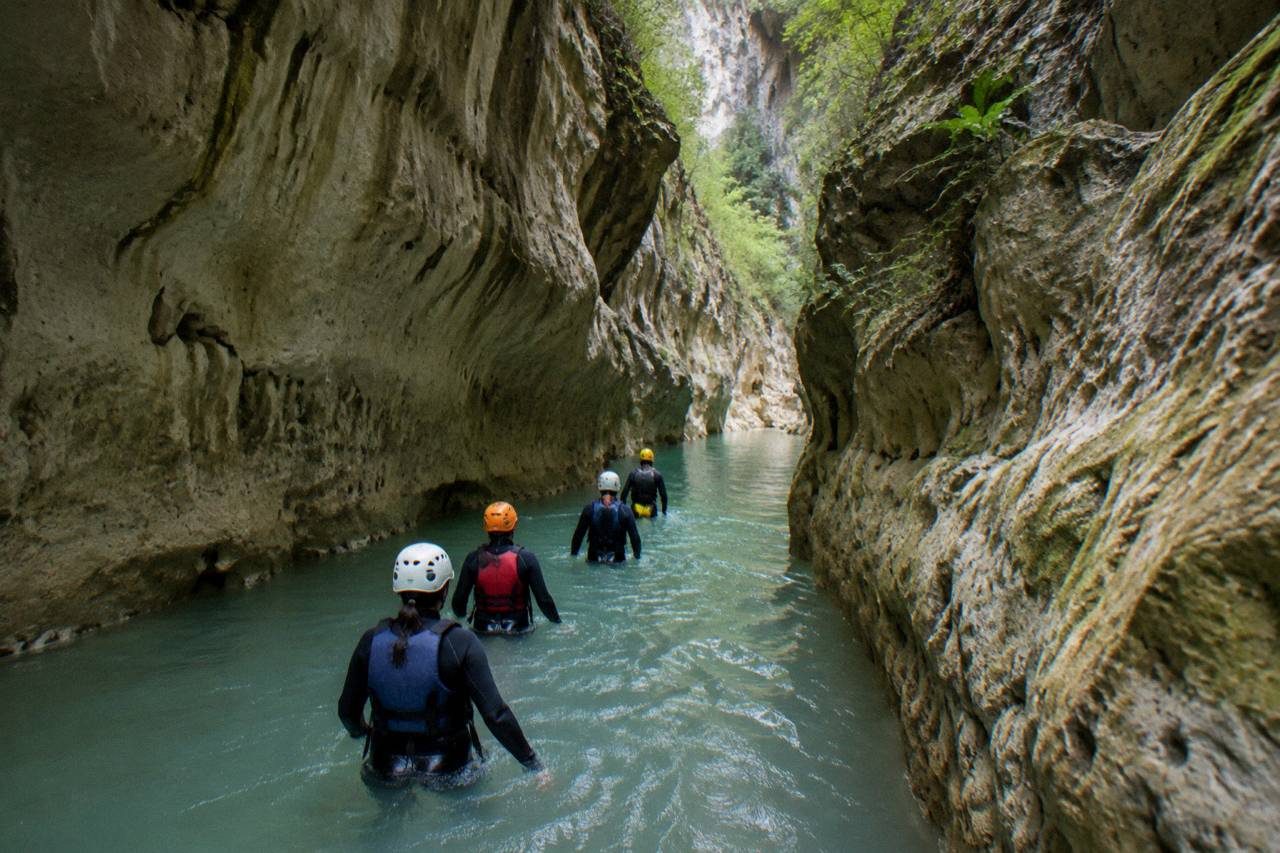
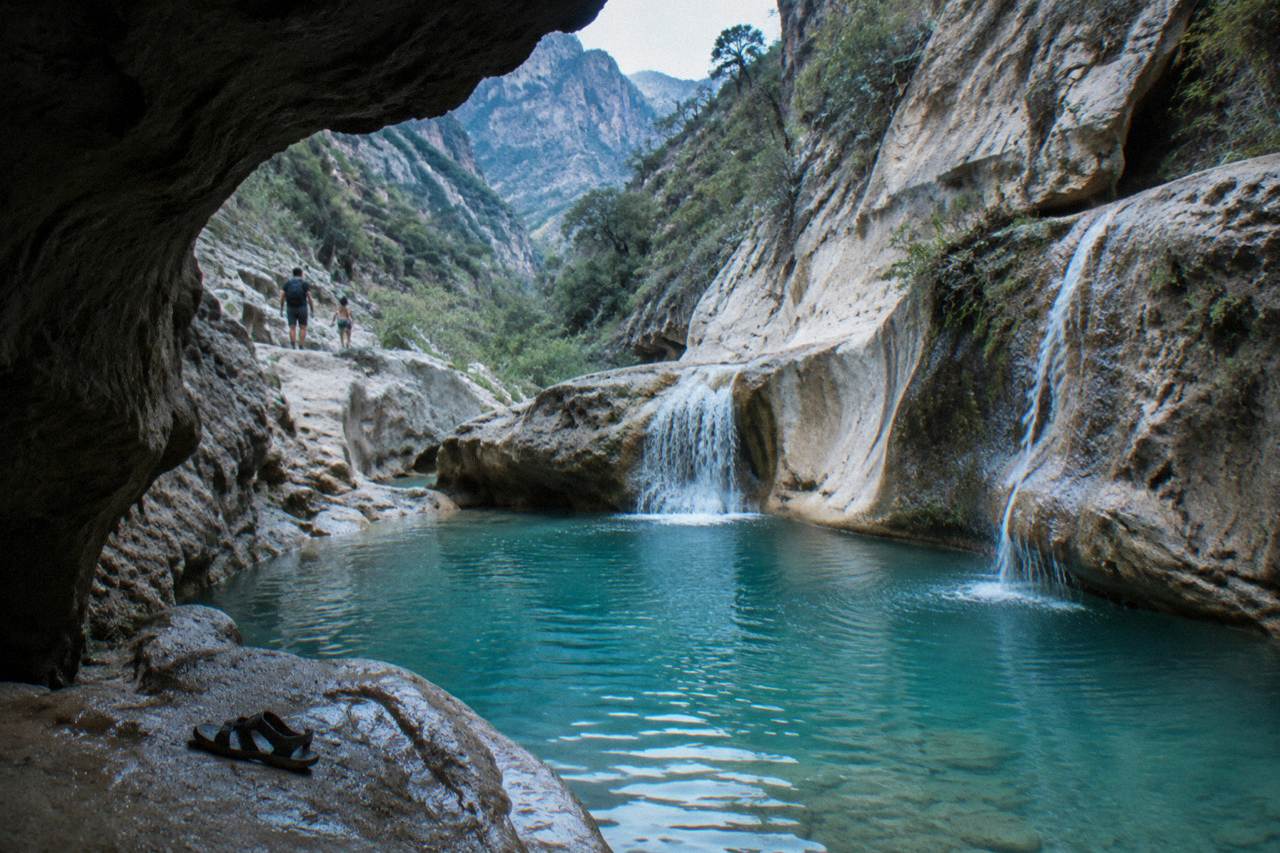
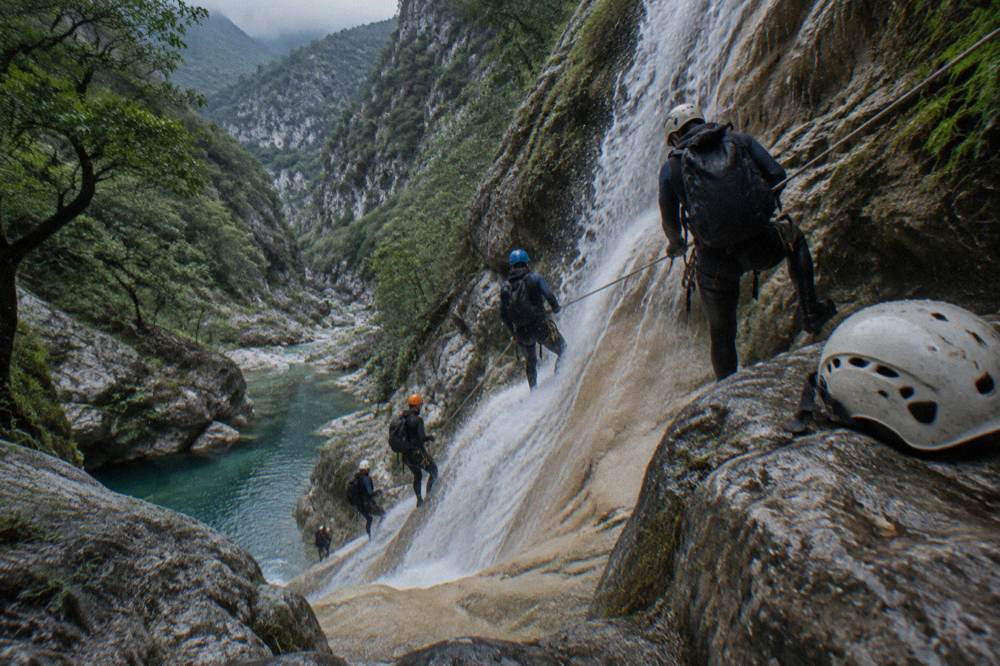
Most people who land on this page have already seen the photos: dark turquoise pools, rope descents beside waterfalls, helmeted figures mid-jump into a narrow limestone corridor. The Matacanes full-day tour looks like it belongs to elite athletes, and that impression scares off a lot of travelers who would genuinely be fine on it. The honest answer sits in the middle: you do not need to be a swimmer in the pool-lap sense, you do need to be able to leap into water and keep your head together in it, and you need the kind of fitness that carries you through a long, wet, walking-heavy day in a canyon. Operators describe the route as intermediate level, and they mean it.
This guide lays out exactly what the route and the listings demand: what the life jacket actually does for you, what "regular physical condition" translates to on the ground, which health conditions operators exclude, why weight disclosure matters for harness fit, and how to prepare in the weeks before you go. Everything here comes from operator statements and the tour listings themselves, so you can measure yourself against the real bar rather than against Instagram.
Can You Do Matacanes If You Cannot Swim?
The operator answer is yes, with one condition attached: a specialized canyoning life jacket provides the buoyancy, so swimming skill is not essential, but you must be able to jump into water and stay reasonably calm while floating in it for short stretches. The jacket holds you at the surface through every swim section, and the guide team manages the group through each pool in sequence. What the route cannot accommodate is panic. If leaping off a rock ledge into deep, cold, moving water triggers real fear, no piece of equipment fixes that, and the day contains jumps that operators describe as mandatory at up to 12 meters on certain segments.
It helps to understand what "swimming" means inside a canyon. You are not covering distance the way you would across a lake. The typical water section is a short swim or float between two rock features, often just a few dozen strokes or less, with the guide positioned at the far end and the group spread along the wall. The wetsuit adds its own lift, and the life vest adds much more. Together they keep a non-swimmer high in the water, face clear, able to kick toward the exit point. The operator FAQ puts it plainly: swimming ability is not essential because of the canyoning life jacket, but participants must be able to jump into water.
The distinction that matters is confidence versus technique. Technique, the actual stroke mechanics, is close to irrelevant here. Confidence in deep water is the whole game. If you can jump into the deep end of a pool and float without gripping the wall, you have the baseline. If you cannot, spend a few sessions at a local pool before the trip building exactly that: jump in, float, breathe, get out, repeat. That single habit closes most of the gap between anxiety and readiness, and it costs nothing but a pool pass. For a fuller picture of what the day physically contains, the Matacanes route breakdown of rappels, jumps and slides walks through each feature in order.
| Water skill | Does Matacanes require it? | Why |
|---|---|---|
| Freestyle stroke technique | No | The life jacket and wetsuit keep you at the surface; you kick and glide, not race |
| Treading water for minutes | Not really | Floats are short, section to section, with guides at each end |
| Jumping into deep water | Yes | Several entries are jumps, and operators describe some up to 12 m as mandatory |
| Comfort with face in water | Yes | Splashes, spray and brief submersion happen constantly |
| Cold water tolerance | Yes, trainable | Operators cite water of 12 to 18 degrees Celsius |
| Calmness in moving water | Yes | Currents exist in the canyon even on calm days |
How Fit Do You Need To Be For Matacanes?
Operators ask for regular physical condition, not athlete-level training: the day runs 8 to 10 hours, most of it on foot over wet, uneven rock, and 70 percent or more of the tour time is spent in or beside water through the whole route. The listing for the Monterrey departure with lunch goes further and states that prior rappelling experience and good fitness are required, so read the specific tour page before assuming the gentlest standard applies. The honest self-test is whether you can walk downhill on loose terrain for a couple of hours, climb short steep banks, and still function at hour seven.
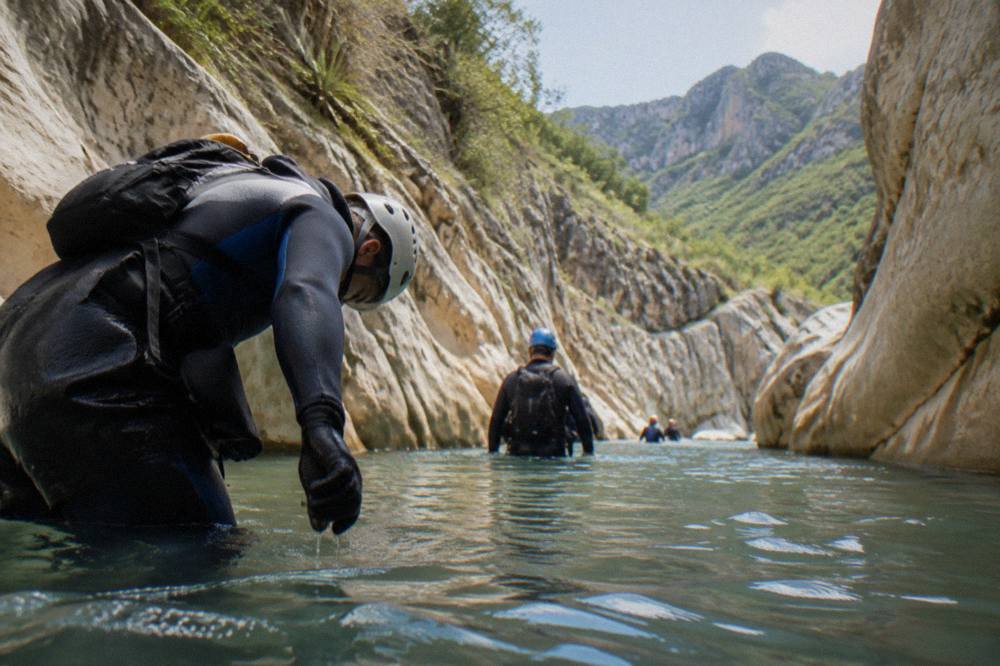
The fitness profile of Matacanes surprises people. It is not upper-body dominated. Rappels are short and the descent system does the braking; the guide clips and manages the rope. What eats energy is the walking. The approach and exit involve dirt roads and rocky trail, the canyon floor is a staircase of wet boulders and gravel bars, and you do it all in a soggy wetsuit that weighs more with every splash. Legs and lungs carry the day. A person who hikes a couple of times a month handles this comfortably; a person who finds a long flight of stairs genuinely hard will suffer, and at canyon pace suffering compounds because the group moves as one.
Temperature is the hidden fitness factor. Water of 12 to 18 degrees Celsius sounds manageable until you have been in and out of it for hours. Cold steadily drains grip strength and coordination, which is exactly why operators supply full-length wetsuits and why they exclude people with heart or lung conditions. If you run cold, ask the operator about layering options under the suit and bring the snack plan we cover later. The related guide on how hard Matacanes really is grades the full route feature by feature if you want the difficulty picture in detail.
Preparation is simple and effective. In the four to six weeks before the trip, walk hills or stairs twice a week for an hour, add one longer walk of three hours on consecutive days, and do a handful of pool sessions where you practice the jump-and-float habit. Nothing exotic. The goal is not peak fitness, it is arriving at the trailhead with enough reserve that hour eight is merely unpleasant rather than unsafe, because the canyon exits uphill and the vehicle is at the top.
What Health Conditions Keep You Off The Route?
Operators bar guests with heart conditions, lung conditions, recent surgeries or fractures, spinal problems, epilepsy, or significant overweight from joining the route unless they are notified well in advance, and every guest must disclose any medical conditions before the day begins. This is not fine print designed to dodge liability. It maps directly to what the route does to a body: sustained cold, exertion at altitude, adrenaline spikes at jumps, and compression from a harness and wetsuit. Conditions that interact badly with any of those are a genuine safety problem in a canyon with no road access.
The disclosure step matters more than travelers expect. The operator statement is explicit that prior notification of medical conditions is required or strongly recommended, and significant overweight specifically calls for advance notice, because harness fit and wetsuit sizing are safety equipment questions, not comfort questions. A harness that does not load correctly across the pelvis, or a suit that gaps and floods with cold water, changes the physics of every rappel. Operators would rather size you properly or advise a different program than discover a fit problem at the canyon rim.
Read each listing's own wording, because they differ. The table below summarizes what the roster actually says; where a listing states no minimum age or no fitness language, the honest move is to ask the operator directly rather than assume.
| Listing | Fitness or experience language on the listing | Minimum age stated |
|---|---|---|
| Matacanes Full-Day Canyoning | None beyond the general route demands | Not stated; ask the operator |
| Matacanes Full Day From Walmart Las Torres | None stated | Not stated; ask the operator |
| Matacanes Small Group From The Hotel Hacienda | None stated | 12 |
| Matacanes From Monterrey With Lunch | Prior rappelling experience and good fitness required | Not stated; ask the operator |
| Matacanes From Santiago With Regional Meal | None stated; Spanish-language guide | Not stated; ask the operator |
If you carry one of the listed conditions, the answer is a conversation, not an automatic no. Some situations resolve with a doctor's clearance, a different program, or a Nido de los Aguiluchos via ferrata day, which the listing prices from $108 per person with a minimum age of 12. The safety guide on Matacanes rules, guides and rescues explains how guide certification and group management work, which is useful context for anyone weighing a medical question.
How Much Time Do You Actually Spend In Water?
Operators describe 70 percent or more of the tour time as spent in water across an 8 to 10 hour day, with water temperatures of 12 to 18 degrees Celsius, which is why the wetsuit and life vest are non-negotiable and why cold tolerance is a real requirement rather than an afterthought. That figure reframes the whole fitness question. This is not a hike with two swims in it; it is a sustained aquatic day with walking in between. Anyone can survive one cold plunge. Staying functional through hours of in-and-out exposure is a different proposition, and it is the single best predictor of whether you finish the route smiling.

The rhythm of the day helps you tolerate it. Water sections come in pulses: a jump, a swim, a slide, then a scramble or a walk while the suit drains and your body reheats. The full-length wetsuit slows the heat loss dramatically, and the breakfast and snacks most listings include exist precisely to keep the furnace fueled. Eat at every stop even when you are not hungry, particularly in the afternoon stretch, because cold plus fatigue plus an empty stomach is the classic recipe for a shaky, slow guest at the back of the group. The packing guide on what to bring and wear to Matacanes covers the extras that make the cold manageable.
One planning note belongs here because it affects every physical question on this page: the season and the river. Operators run roughly 21 March to 15 September, dates that depend on rains and hurricanes, and Protección Civil de Santiago can suspend canyon activities at any time when river levels rise, even when it is not raining on site. The booking page and the operator are the authority on whether your date runs, so hold your training plan loosely and your booking conversation tightly.
What Gear Carries You Through The Canyon?
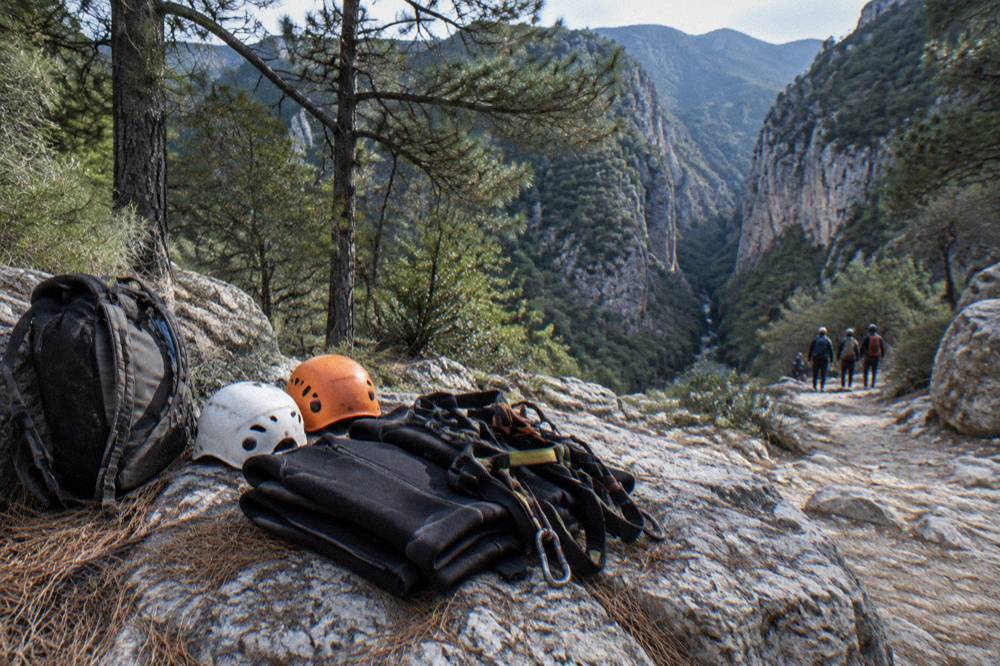
Every listing on this site's roster includes helmet, harness and flotation as supplied equipment, most add a full-length wetsuit and a descent system, and operators state that life jackets and helmets are mandatory for the entire tour including rappels, jumps and swims. You bring almost nothing technical. The gear list is the operator's job; your job is body, food, and clothing decisions, plus honest sizing information so the supplied equipment actually fits the body it protects.
| Listing | Wetsuit | Harness with descent system | Helmet and vest | Food included |
|---|---|---|---|---|
| Matacanes Full-Day Canyoning | Yes | Yes | Yes | Continental breakfast and snacks |
| Matacanes Full Day From Walmart Las Torres | Not listed | Not listed | Life jacket, safety equipment | Breakfast; meal not included |
| Matacanes Small Group From The Hotel Hacienda | Yes | Yes | Yes | Breakfast tacos, tuna and energy bar |
| Matacanes From Monterrey With Lunch | Full-length | Yes | Yes | Breakfast, trail snack, full local meal |
| Matacanes From Santiago With Regional Meal | Yes | Yes | Yes | Light breakfast, snacks, regional meal |
The gear does more than protect you; it is the mechanism that makes the swimming and fitness standards as forgiving as they are. The vest floats you, the suit insulates you, the harness carries you down the drops, and the helmet takes the rock contact your scalp otherwise would. That is why the disclosure conversation in the previous section is not bureaucratic: every one of those items is sized to a body, and a body outside the expected range needs advance notice. Give the operator your real height and weight when asked and the equipment layer of the fitness question largely solves itself.
Does Body Weight Or Age Change The Answer?
For weight, operators ask for prior notification of significant overweight because harnesses and wetsuits must fit and load correctly, and no roster listing prints a weight cap; for age, a minimum of 12 appears on the small-group Matacanes listing and the Nido via ferrata listing, while several Matacanes listings state no minimum age at all. The pattern to read is that where a listing says nothing, the honest answer is ask the operator, because an age or size limit enforced at the trailhead is a bad surprise at the trailhead.
Weight deserves a plain-language treatment because people are embarrassed to ask. Don't be. The operator needs to know for three reasons: harness sizing across a range of body types, wetsuit availability in extended sizes, and rope systems set for the group's actual range. None of that is judgment, all of it is arithmetic. The operator statement lists significant overweight alongside medical conditions that require notification, in the same sentence, for exactly this reason. Disclose it, get a straight answer, and book accordingly. The fitness standard itself, regular physical condition, is measured by what your body can do on the day, not by a number on a scale.
Age interacts with fitness and water confidence more than with the route itself. The 12-and-up listings pair the age with the requirement that children be accompanied by a parent or guardian, which is a confidence-management rule as much as anything: a nervous 13-year-old with a calm parent beside them usually completes the day, while a confident adult who never disclosed a heart condition is the actual risk case. For families weighing the whole question, the guide on Matacanes age limits and kids goes deeper than this page can.
How Do You Prepare In The Weeks Before The Tour?
A four to six week block of hill walking, stair climbing, one long back-to-back walking day, and pool jump-and-float practice covers everything the route demands, and it is deliberately modest because the bar is regular condition, not race readiness. The point of training is not to make the canyon easy, it is to make the final third of the day, the exit walk, survivable with judgment intact, because that is where fatigue turns small mistakes into ankle rolls and slips.
Structure the block simply. Two sessions a week of an hour of stairs or a steep hill, done at a pace where talking is possible but not comfortable. One longer walk each weekend, building to three hours, and on the final weekend do two long walks on consecutive days to teach your legs to start tired. In the pool, practice the specific skill: jump into the deep end, let the vest of your imagination hold you up, float for a minute, climb out, repeat ten times. Cold showers in the final two weeks help modestly with the 12 to 18 degree water. None of this requires a gym, and all of it compounds.
| Weeks out | Focus | Sessions per week | What it buys you on the day |
|---|---|---|---|
| 6 to 4 | Base walking and stairs | 2 walks, 1 pool | Legs that do not cramp on the approach |
| 4 to 2 | Longer walks, 2 to 3 hours | 2 walks, 1 pool | Stamina for hours 5 through 8 |
| 2 to 1 | Back-to-back days, cold showers | 2 walks on consecutive days | Starting hour eight with reserve |
| Final week | Light movement, sleep, hydration | Easy walks only | Fresh legs and a calm head at the trailhead |
Book the right vehicle for your training too. The listing that pairs the canyon with a full local meal and hotel-zone transport from Monterrey and San Pedro Garza García removes two common stresses, the drive and the food gap at the end of the day, which matters when you are running on empty at hour ten. The small-group format caps the group at 15, which slows the day to the pace of the group rather than the pace of a 25 or 30 person column, a real consideration if your fitness is honest-but-modest.
What Do The Actual Tour Listings Ask Of You?
Across the roster, the concrete asks are sparse and readable: one listing requires prior rappelling experience and good fitness, two state a minimum age of 12, group sizes run from 15 to 30 where stated, and every listing supplies the flotation and protective equipment that makes the swimming standard achievable for a cautious but confident non-swimmer. The variance between listings is smaller than the variance between guests. Choosing among them is less about difficulty tiers and more about format: transport origin, group size, meal depth, and language.
Compare the three formats side by side and the fitness question stays constant while the day's texture changes. The most-reviewed full-day listing, rated 4.9 across 1783 reviews, runs groups up to 25 with breakfast and snacks included and transport from a Walmart meeting point, from $158 per person. The lunch-included Monterrey departure, from $195 per person, carries the explicit experience and fitness language along with hotel-zone pickup and a full meal. The Santiago departure with a regional meal, from $247 per person, is a new listing with no reviews yet and a Spanish-language guide, meeting at Hotel Hacienda Cola de Caballo.
| Listing | Group max | Start point | From, per person | Rating on the listing |
|---|---|---|---|---|
| Matacanes Full-Day Canyoning | 25 | Walmart Supercenter Eugenio Garza Sada or Hotel Hacienda lot | $158 | 4.9 across 1783 reviews |
| Matacanes Full Day From Walmart Las Torres | 30 | Walmart Las Torres, 4:00 a.m. start | $144 | 4.2 across 5 reviews |
| Matacanes From Monterrey With Lunch | Not stated | Downtown Monterrey and San Pedro pickup | $195 | 5.0 across 2 reviews |
| Matacanes From Santiago With Regional Meal | Not stated | Hotel Hacienda Cola de Caballo, Santiago | $247 | No reviews yet |
Whichever format you choose, the pre-booking checklist is the same and it takes ten minutes. Confirm your date falls inside the operator season window, roughly 21 March to 15 September, and accept that river levels can suspend any date. Read the listing's fitness and age language yourself. Message the operator with any medical condition, weight or sizing question before paying. Check the cancellation terms on the specific listing: some carry free cancellation and some refund only if the operator cancels for weather or minimum group size. That last point decides how experimental your travel plans can afford to be. The cost guide on Matacanes tour prices and what is included breaks the money side down line by line, including the park entry fee of 125 MXN per person per day that the park authority states, and the 60 MXN ejido access fee payable in Potrero Redondo.
The deeper planning picture also lives on this site. Once your fitness and swimming questions are settled, the choice among operators becomes a logistics question, and the guide to which Matacanes tour to book compares every listing on this site across price, pickup and group size. For the day's shape once you are in it, the hour-by-hour Matacanes timeline shows where the water sections, the rappels and the walking blocks actually fall. The publisher behind this page, Matacanes Canyoning, keeps both current alongside the tour listings themselves.
If the fitness answer for your group is yes, or yes-with-training, the format choice below is the last decision before booking. Each listing states its own cancellation terms, and the booking page shows the live price for your date.
Common Questions About Matacanes Fitness And Swimming
Can you do Matacanes if you cannot swim?
Yes, within limits. The canyoning life jacket provides the buoyancy, so swimming technique is not essential, but you must be able to jump into water and stay calm floating in it. Some jumps on the route are described as mandatory, so water confidence cannot be skipped.
How fit do you need to be for Matacanes?
Operators ask for regular physical condition. The day runs 8 to 10 hours with most of it in or beside water, over wet, uneven terrain, in a wetsuit. A few weeks of hill walking and stair climbing covers the demand for most reasonably active people.
What health conditions exclude you from Matacanes?
Operators list heart conditions, lung conditions, recent surgeries or fractures, spinal problems, epilepsy and significant overweight as requiring prior notification, and they exclude participation where the risk is real. Disclose everything before booking and let the operator make the call.
Is there a weight limit for Matacanes?
No roster listing prints a weight cap. Operators ask for advance notice of significant overweight because harnesses and wetsuits must fit and load correctly. Share your real measurements when booking and the equipment question resolves before the trailhead.
What is the minimum age for Matacanes?
A minimum age of 12 appears on the small-group Matacanes listing and on the Nido de los Aguiluchos via ferrata listing, with children accompanied by a parent or guardian. Several Matacanes listings state no minimum age, so ask the operator directly for those.
How cold is the water in Matacanes?
Operators describe water of 12 to 18 degrees Celsius, with 70 percent or more of tour time spent in water. The full-length wetsuit most listings include is what makes that sustainable, and eating at every snack stop keeps your heat up through the afternoon.
Do you need rappelling experience for Matacanes?
Most listings require none and teach the descent on the day. One Monterrey departure listing states that prior rappelling experience and good fitness are required, so check the specific tour page before booking that format.
Can you train for Matacanes in a few weeks?
Yes. Four to six weeks of twice-weekly hill or stair walks, one building long walk, a back-to-back walking weekend, and pool sessions practicing jump-and-float covers the route's demands. The goal is reserve at hour eight, not race fitness.