What To Bring And Wear To Matacanes: The Packing List
The tours hand you a wetsuit, helmet, harness and life jacket, so most of the technical kit is already covered. What you add is footwear, dry clothes, cash for two community fees, and nothing that cannot get wet.
Short answer
Guided Matacanes tours provide the wetsuit, helmet, harness and life jacket, so you bring only footwear that grips wet rock, a swimsuit, a towel, a full change of clothes, cash for the park fee of MXN 125 and the ejido access of MXN 60, and a small dry bag. Everything you wear in the canyon will get wet.
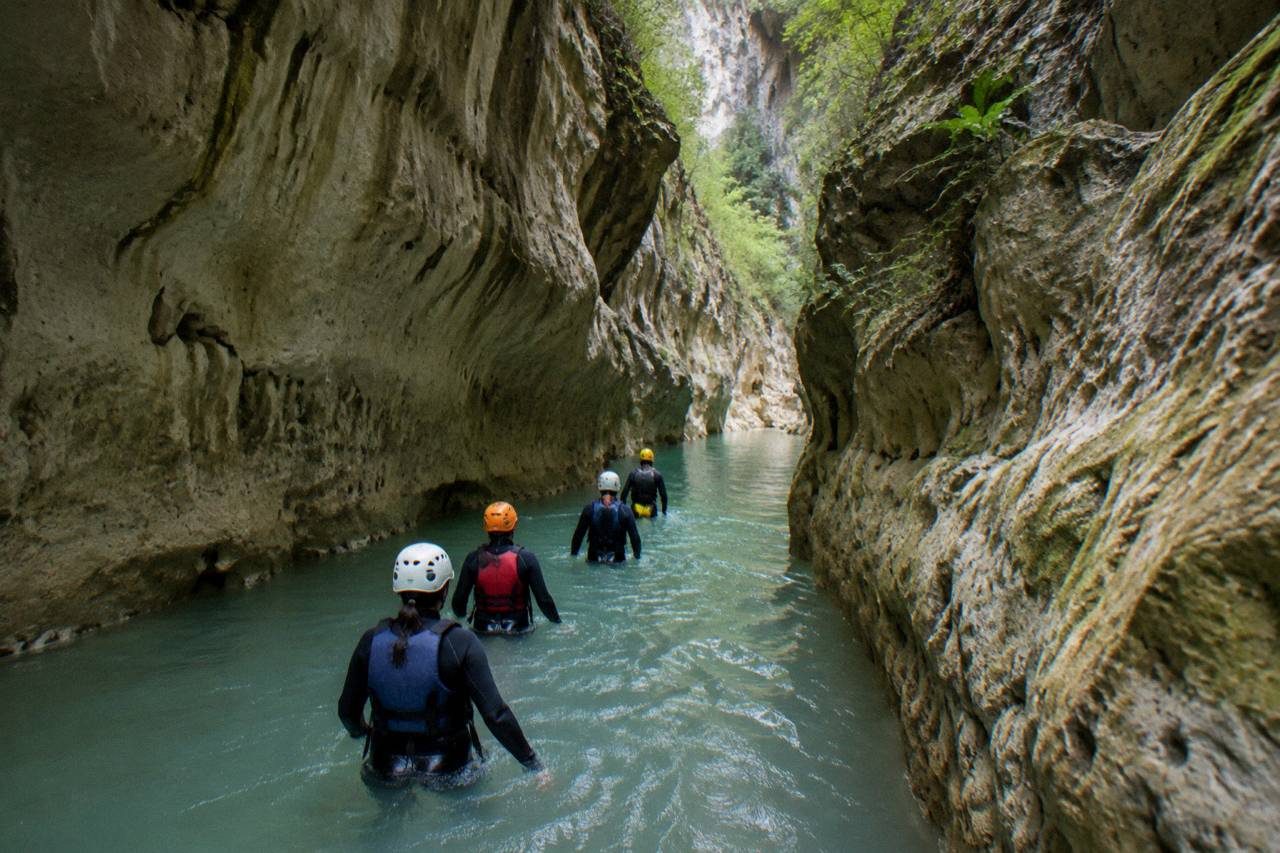
Matacanes is a full water day: jumps, swims, rappels and natural slides, with the operator stating that most of the 8 to 10 hours is spent in or beside the water at temperatures of 12 to 18°C. That single fact drives the whole packing list. The technical equipment is provided on every guided tour in the roster, from the full-day trip at from $158 per person to the small-group version at from $611, so the decisions that actually shape your day are shoes, layers, dry storage and cash (see Full Day Vs Extended).
This guide separates what the operator hands you from what only you can bring, then works through footwear, clothing, food, documents and the two entrance fees you pay in person. The full-day Matacanes Canyoning lineup is compared on the homepage picker if you are still choosing between tours; this page assumes you have a date and need to know what goes in the bag. Read it once before you shop and once the night before you leave, and you will not be the person at the trailhead in flip-flops.
What Gear Does The Tour Already Provide?
Every guided Matacanes listing on this site supplies the full safety kit: a wetsuit, a helmet, a harness with descent system, and a life vest or canyoning flotation jacket. Nothing on the technical side is left for you to buy or rent, and the gear is issued and fitted at the meeting point before the group moves to the canyon. The Gaia full-day tour, rated 4.9 across 1783 reviews, lists wetsuit, harness, helmet and life vest among its inclusions, alongside breakfast, snacks, group transport from the meeting point and tour pictures. The Camaleon small-group listing adds tacos and trail snacks to the same core kit, and the Lyli tour from Monterrey includes a headlamp plus a full-length wetsuit.
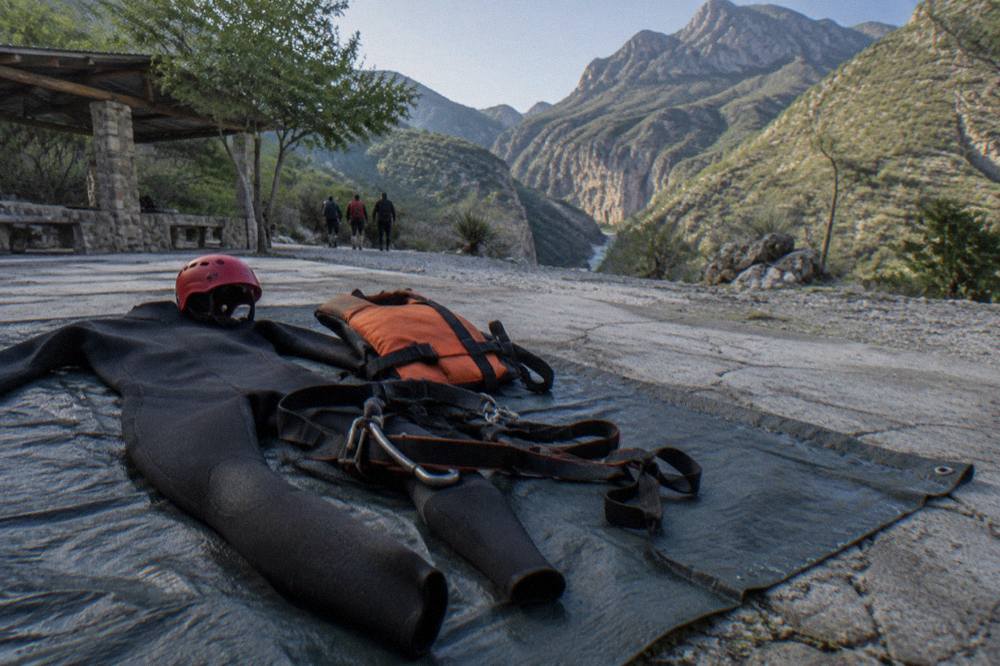
Operators describe the helmet and life jacket as mandatory for the entire route, including the rappels, jumps and swims, and the operator GEO Aventura states that guides provide this equipment for all participants. The life jacket matters more than most first-timers expect: the same operator notes that swimming ability is not essential because the canyoning vest provides buoyancy, but you must be able to jump into water. In practice that means the gear list is not a menu; you wear what is issued.
Sizing is worth a moment at the meeting point rather than on the trail. A wetsuit that fits loosely floods with cold water at every immersion and stops doing its thermal job, so if the first suit offered is hard to zip or bags at the small of your back, say so immediately. The same applies to helmets: level on the head, snug with the strap done up, no gap above the eyebrows. Guides fit this gear every day and would much rather swap a suit at the van than halfway down the canyon. If you are at the tall or small end of standard sizes, a quick message to the operator before the day lets them bring the right range of suits.
One item is consistently excluded: video service. Several listings include photos in the price, the Gaia tour among them, but video is listed as an exclusion, so if you want footage of the rappels you need to ask the operator directly what is possible and at what cost. Some travelers arrange a private photographer through the operator; others accept that photos are included and leave the cameras at home.
The table below sums up the provided kit against the roster, so you can see at a glance what you never need to buy or rent.
| Tour | Wetsuit | Helmet | Harness and descender | Life vest | Food included |
|---|---|---|---|---|---|
| Matacanes Full-Day Canyoning | Yes | Yes | Yes | Yes | Breakfast and snacks |
| Matacanes Full Day From Walmart Las Torres | Yes (wetsuit in safety equipment) | Yes | Yes | Yes (life jacket) | Breakfast |
| Matacanes Small Group From The Hotel Hacienda | Yes | Yes | Yes | Yes | Tacos and snacks |
| Matacanes From Monterrey With Lunch | Yes (full-length) | Yes | Yes | Yes | Breakfast, snack, full meal |
What Shoes Should You Wear Canyoning?
Shoes are the one piece of technical gear you bring yourself: closed-toe, snug-fitting shoes with grippy soles that you do not mind soaking for a full day, because you will walk, scramble, swim and land in them from the first approach to the final slide. No listing in the roster includes footwear. Canyoners report that the rock in Matacanes is polished and slick in the water sections, and the route mixes wet rock, gravel and forest trail between the drops, so traction and a firm fit matter more than anything else on your body.
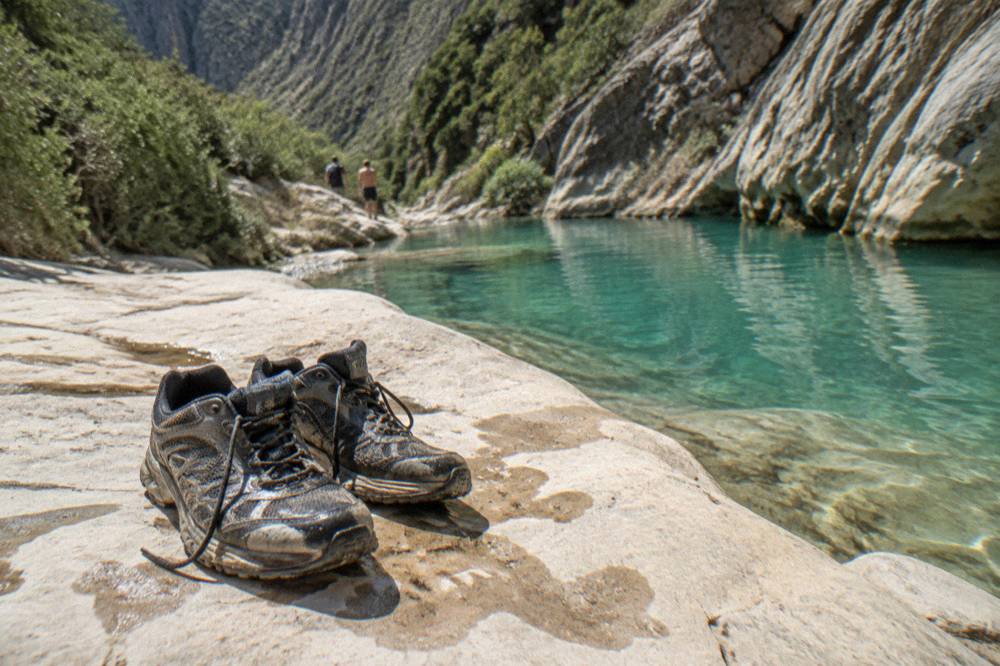
Old running shoes work and are the traditional answer, but they drain slowly. Light trail runners with a sticky rubber sole are the usual upgrade, and some canyoners use canyoning-specific shoes with neoprene socks. Whatever you choose, lace it tight: a shoe that comes off on a jump or in a swim is gone, and the operator's day continues without it. Sandals, flip-flops, water shoes with open mesh and anything without a closed toe are not suitable for the rappel approaches. Double-knot the laces or tuck the ends under the cross-lacing, because a loose lace on a wet ledge is a hazard to the whole group, not just to you.
There is a school of thought that says the cheapest grippy shoes you own are the best choice, and it is hard to argue with. The canyon is abrasive: the rock, the sand in the water and the approach trail will sandpaper a pair of shoes over a single day. Expensive footwear does not perform better when it is full of grit, and a shoe with mesh panels that drains and dries fast will serve you better than a heavily cushioned trainer that holds water for hours. If you buy something new for the trip, wear it a few times beforehand; a fresh shoe rubbed raw on a wet foot is a long day made longer.
Bring a second pair, dry, left in the vehicle or your bag for the return. Operators describe the exit hike back up to Potrero Redondo as part of the day, and putting wet shoes back on after the final slide is the kind of small misery a spare pair solves. Two pairs of socks, one synthetic for the canyon and one dry for after, round this out.
What Clothes Do You Wear Under And After The Wetsuit?
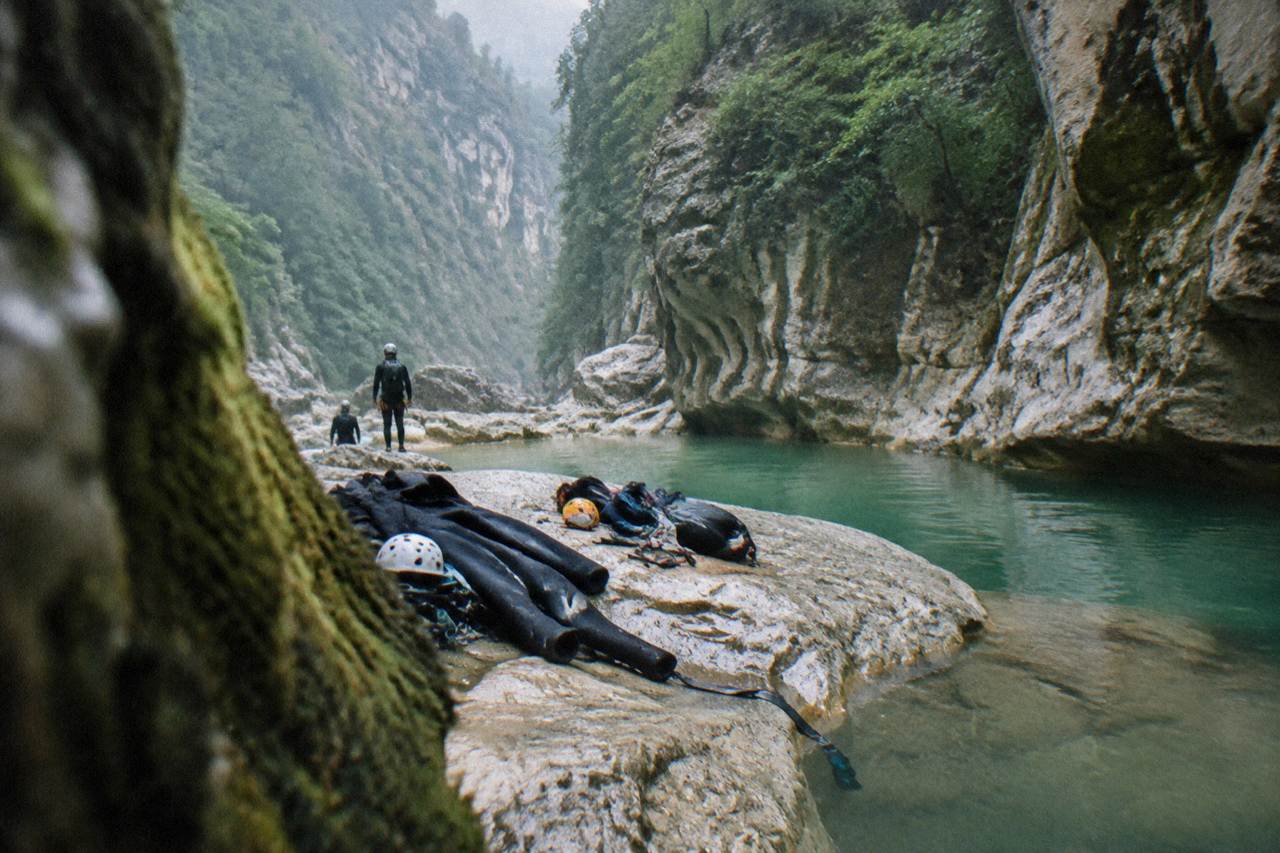
Under the wetsuit you wear a swimsuit or thin synthetic base layer, never cotton, and you carry a complete change of clothes plus a towel for the end, because everything you wear in Matacanes ends up soaked and the water runs cold enough that the wrong fabric undercuts the wetsuit completely. The water runs 12 to 18°C per the operator, and while the wetsuit does the thermal work, a cotton t-shirt underneath holds cold water against your skin and stays wet all day. Synthetic or merino layers, a rash guard, or simply the swimsuit are the standard choices.
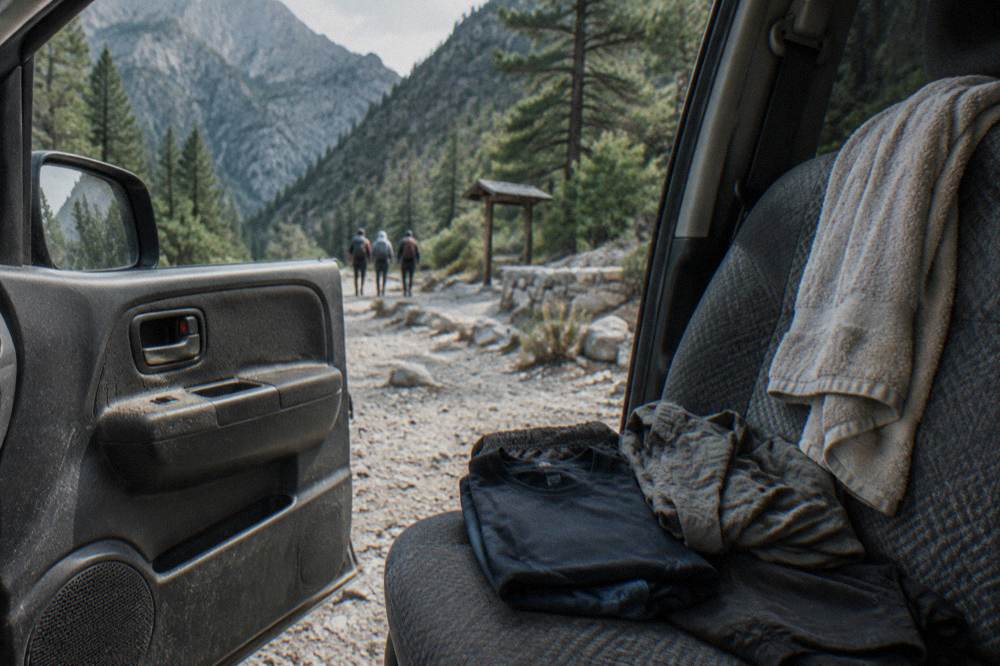
The after-kit deserves real planning. The tour day is roughly 9 to 12 hours door to door depending on the listing, the drive back to Monterrey is part of it, and you will change at the vehicle, not in a locker room. A full outfit including underwear and socks, a towel that actually absorbs, a warm layer for the air-conditioned ride, and a plastic bag for the wet gear is the standard loadout. Trash bags work; a proper dry bag works better. A fleece or puffy jacket sounds like overkill in a Monterrey summer, but after hours in cold water, in the shade, in a van with the air on, it is the item people fight over.
Think through the logistics of changing outdoors, too. There is no changing room at the exit; there is a vehicle, a road and whatever privacy a towel held at the right angle provides. Pack your after-clothes on top of the bag, not buried under the wet gear from the morning. If you are traveling with a group, a single large garbage bag per person keeps the van from smelling like a river for the rest of the week. Small preparation, large payoff.
If you are booking a small-group day, the Camaleon listing from the Hotel Hacienda roundabout runs at a maximum of 15 people with a minimum age of 12, and the same clothing logic applies. Fewer people on the rope does not mean warmer water.
What Should You Pack In Your Day Bag?
Pack small and waterproof: a 20 to 30 liter bag with a dry bag or ziplock inside for what must stay dry, and leave the bag in the vehicle during the descent, because you do not carry a backpack through the rappels and jumps, and anything loose on your body becomes a hazard on the rope. The operator transports group gear, and listings mention round-trip group transport from the meeting point, but your own bag stays at the trailhead end of the logistics chain.
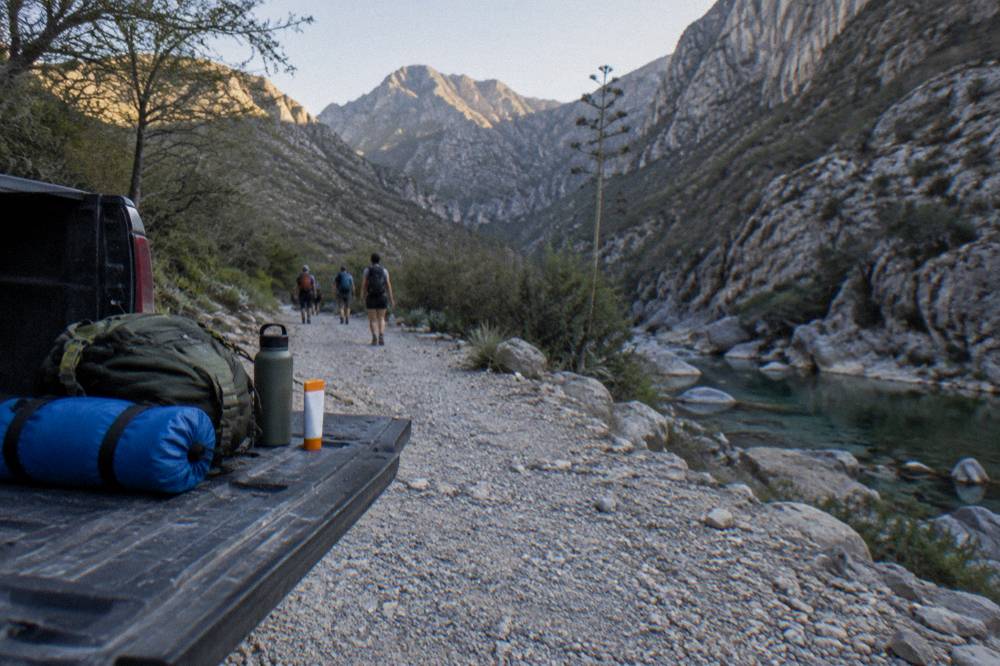
The core list is short, and every item earns its place:
| Item | Why | Notes |
|---|---|---|
| Swimsuit or synthetic base layer | Worn under the wetsuit | No cotton |
| Closed-toe grippy shoes | The only gear not provided | Will be soaked |
| Spare shoes and socks | For the drive back | Left in the vehicle |
| Full change of clothes | You change outdoors at the end | Include underwear |
| Towel | Drying at the vehicle | Packable microfiber is easiest |
| Dry bag or ziplocks | Phone, documents, cash | Test the seal first |
| Sunscreen | The approach hike is exposed | Apply before the wetsuit |
| Cash, small bills | Two entrance fees and tips | See the fees section |
| Water and snacks | Food is not on every listing | Check your inclusions |
Phone handling is its own question. Photos are included on several listings, the Gaia tour among them, which reduces the pressure to carry a phone in the canyon. If you do carry one, it lives in a sealed dry bag inside a zipped pocket, and you accept that a 12 m drop into water is where phones die. A strap-attached case is the minimum; a cheap camera you can lose without grief is the honest alternative.
Two small items that travelers consistently thank themselves for: a strap for glasses or sunglasses, and a hair tie for anyone with long hair, which must go under the helmet anyway. Conversely, the items people regret bringing are the ones with sentimental or financial value. A wedding band that fits loosely, a watch worn out of habit, a favorite pair of sunglasses: leave them at the hotel. The packing test is simple, and it works for every line of the table above. If it fell into a pool at the bottom of a rappel and drifted into the current, would you shrug? If not, it stays behind.
What Food And Water Should You Bring?
Check your listing's inclusions before you pack food, because the roster splits cleanly: two Matacanes listings include a full meal, two include only breakfast and snacks, and none include lunch unless the listing says so, and a long cold day with no real food waiting is the most common avoidable mistake on this route. The Lyli tour from Monterrey includes breakfast, a trail snack and a full local meal, lunch or dinner depending on the schedule, plus accident insurance and park permits in the price, from $195 per person. The Nantli tour from Santiago includes a light breakfast, snacks and a regional meal at the end, from $247 per person, with a Spanish-language guide per the listing.
On the breakfast-and-snacks-only listings, notably the Gaia full-day and the Walmart Las Torres departure, a meal is listed as not included, so bring real food for after the descent or plan to buy it in Potrero Redondo or Santiago. You will be hungrier than you expect: operators describe a physical intermediate-level day requiring regular physical condition, and 8 to 10 hours of cold water burns energy fast. A sandwich, a bag of nuts, a couple of pieces of fruit and something sweet live in the vehicle bag and are eaten within minutes of the final slide. The snacks provided on tour are exactly that, snacks, and they are usually consumed during the descent rather than after it.
Water is the same story. Some listings hand out water and electrolytes, the Chipitin departures among them, but for Matacanes you should carry at least a liter and a half per person in the vehicle and a bottle within reach for the approach. Avoid glass bottles entirely; broken glass on a trailhead or in a shuttle vehicle is a group problem, not just yours. A small electrolyte sachet or two weighs nothing and addresses the specific drain of a cold-water day, which is dehydration people do not notice because they never feel hot.
| Listing | Breakfast | Trail snacks | Full meal | Bring extra food? |
|---|---|---|---|---|
| Matacanes Full-Day Canyoning | Yes | Yes | No | Yes, for after |
| Matacanes Full Day From Walmart Las Torres | Yes | Not listed | No | Yes, for after |
| Matacanes Small Group From The Hotel Hacienda | Yes, tacos | Yes, tuna and energy bar | No | Light extras only |
| Matacanes From Monterrey With Lunch | Yes | Yes | Yes | No |
What Fees, Cash And Documents Do You Need?
Carry cash in Mexican pesos for two fees the park authority and the community state: the Parque Nacional Cumbres de Monterrey entry at MXN 125 per person per day, and the official Potrero Redondo ejido access at MXN 60 per person, paid in the community. These are paid in person regardless of what your tour price covers, and the community has warned that outsiders near the entrance were asking 180 to 250 pesos under the name of an ejido fee, well above the official 60. Paying the stated amounts, in the stated places, avoids that trap.
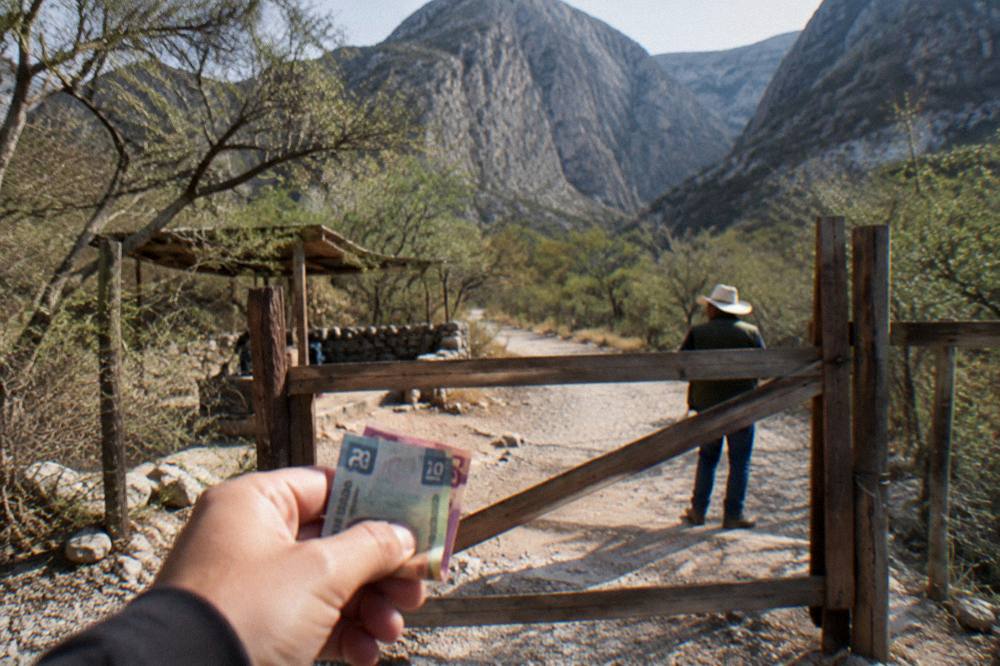
Bring small bills. Change for a 500 peso note does not exist at a canyon gate at dawn. Beyond the fees, cash covers gratuities, which several listings list as an exclusion, and any food or crafts in Potrero Redondo. Documents are minimal: an ID, something that shows your age if the listing carries a minimum age of 12, and your booking confirmation on your phone, in a dry bag. The national park's entry terms, including exemptions for children under 12 with ID, are published by the park authority at its official page.
A workable cash plan for one person looks like this: 125 pesos for the park, 60 for the ejido, a cushion of a few hundred for food and tips, all in 100 and 200 peso notes with some fifties mixed in. Double it for two people, and round up rather than down. Cards are not reliably accepted at any of the rural points on the route, and the nearest reliable cash machine is back toward Santiago, which is the wrong direction when the group is loading up at 4 or 5 in the morning for the early departures.
The fee logic is one reason the all-in listings deserve a look before you finalise plans: the Nantli tour from Santiago lists CONANP permit and ejido access among its inclusions, folding the paperwork into the price, from $247 per person.

What Should You Leave Behind?
Leave behind jewelry, watches, cotton hoodies, glass, drones without asking, and anything whose loss would hurt, because the canyon keeps what it takes, the rappels punish loose items, and there is no lost-and-found at the bottom of a waterfall. Rings and bracelets catch on rope and rock. A cotton hoodie under the wetsuit is worse than nothing. Drones fall under the national park's rules, so ask the operator before bringing one rather than assuming. Valuables are safest in a hotel safe, not in a bag at a trailhead.
There is also a seasonal leave-behind worth naming plainly: assumptions about the date running at all. Protección Civil de Santiago suspended canyon activities in the Sierra de Santiago after river levels rose, and the operator season runs roughly March 21 to September 15 depending on rains. The operator states that flash floods are possible even when it is not raining at the canyon itself. None of this changes what you pack; it changes what you expect, and the operator's live listing is the authority on whether your date goes ahead. The best months for a Matacanes trip are covered in full on the season guide.
Two more pointers from elsewhere on this site: if you are weighing the drive and meeting points, the route from Monterrey to the canyon guide covers transport, and the full cost breakdown of a Matacanes tour puts these fees in the context of total trip spend. If you already know your date and your listing, the last thing to do is the simplest: lay everything out the night before, put the cash in a ziplock, and set the alarm for a departure that for several listings falls before dawn.
Common Questions About Packing For Matacanes
Do I need to bring a wetsuit or harness?
No. Every guided Matacanes listing on this site includes the wetsuit, helmet, harness with descent system and life vest in the price. You bring footwear, clothing and personal items only.
What shoes are best for Matacanes?
Closed-toe shoes with grippy soles that fit snugly and can stay wet all day: old running shoes, light trail runners or canyoning shoes with neoprene socks. Sandals and open water shoes are not suitable for wet rock and rappels.
Can I swim if I am not a strong swimmer?
The operator states swimming ability is not essential because the canyoning life jacket provides buoyancy, but you must be able to jump into water. The life jacket and helmet are mandatory for the whole route.
How much cash should I carry?
Enough in Mexican pesos, in small bills, for the park entry of MXN 125 per person, the ejido access of MXN 60 per person, gratuities, and any food you buy in Potrero Redondo or Santiago. Listings list gratuities as an exclusion.
Is food included on the tour?
It depends on the listing. Two Matacanes tours include a full meal, and two include only breakfast and snacks. Check your listing's inclusions and pack food for after the descent if a meal is not included.
Should I bring my phone into the canyon?
Photos are included on several listings, which reduces the need. If you carry a phone, use a sealed dry bag inside a zipped pocket, and accept the risk: the route includes jumps, swims and a 12 m drop where unprotected electronics do not survive.
What do I wear under the wetsuit?
A swimsuit or a thin synthetic base layer. Avoid cotton, which holds cold water against your skin all day in 12 to 18°C water. Bring a complete dry outfit and a towel for the change at the vehicle afterward.