The Matacanes Canyon Route: Rappels, Jumps And Slides In Order
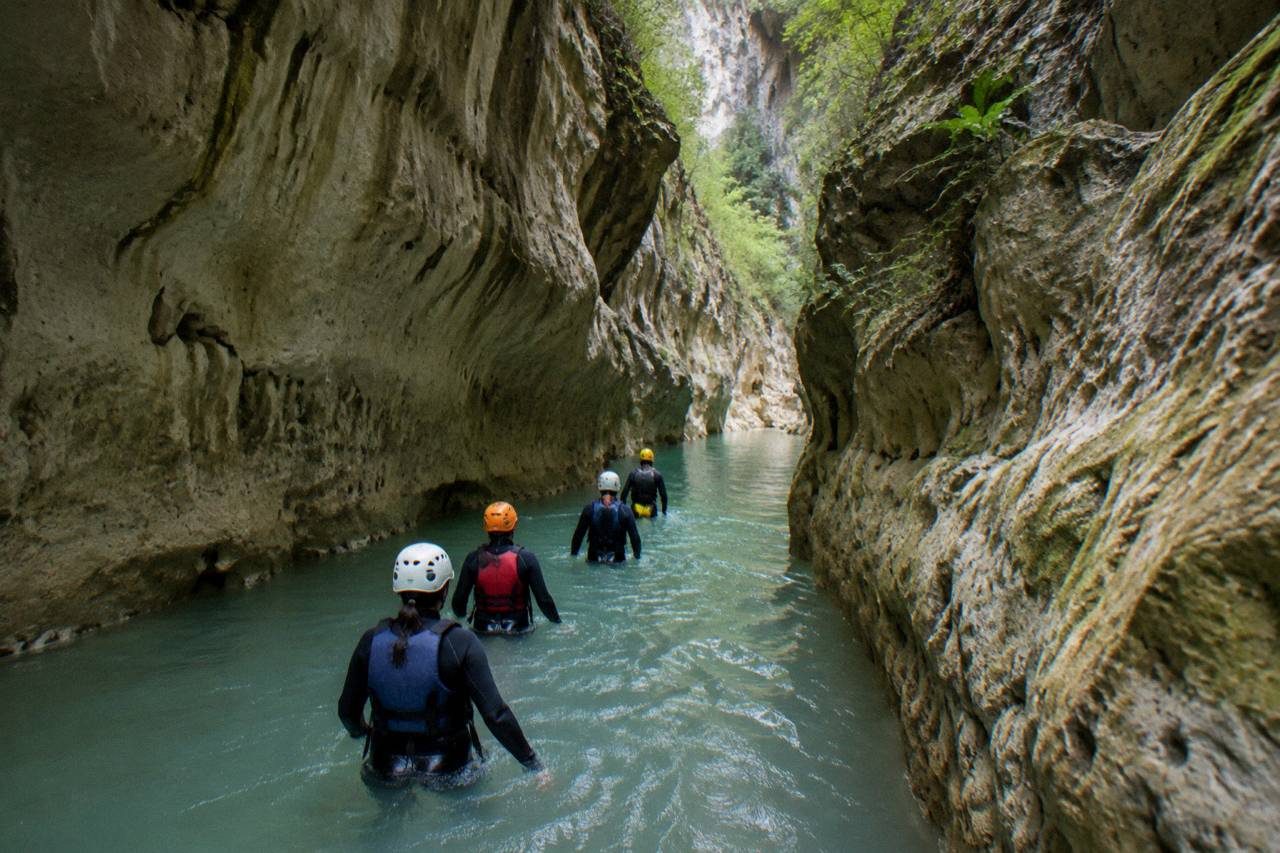
The Matacanes canyon route packs rappels, water jumps, natural slides, cave passages and long swims into a single day in the Sierra de Santiago. Here is the route in order, obstacle by obstacle, as the operators who run it describe it.
Short answer
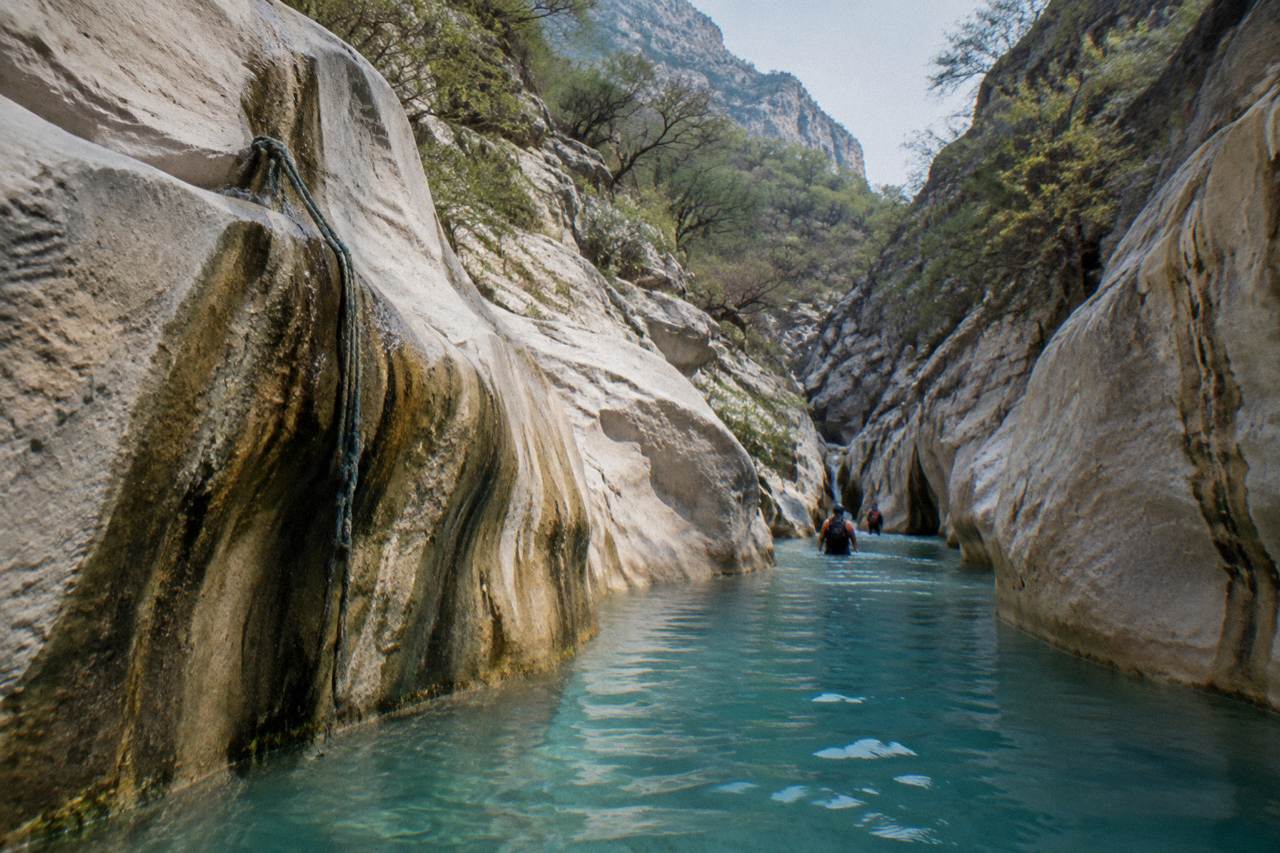
The Matacanes route is a full-day canyon descent, 8 to 10 hours with 70 percent or more of that time in or beside water. Operators describe water jumps up to 12 m including a single 12 m drop, multiple rappels, natural rock slides, two cave passages and long cold swims at 12 to 18°C. Minimum age is 12 on the operator programs that state one.
Matacanes is the canyon that put the Sierra de Santiago on the international canyoning map, and the reason is the route itself. In a single descent it strings together rappels beside waterfalls, jumps into deep green pools, polished natural slides, two cave passages and long swims through narrow limestone corridors. Operators describe the day as 8 to 10 hours on the move with 70 percent or more of the time spent in water, which is why the wetsuit stays on from the first rappel to the last swim. This guide walks the Matacanes canyon route obstacle by obstacle, in the order a guided group meets them, using only what operators and the park authority publish about the descent.
The route sits inside Parque Nacional Cumbres de Monterrey, reached through the Potrero Redondo community, and it is a guided product in practice: gear, certified guides and canyon-specific equipment come with every tour listed here. The most reviewed option, the Matacanes full-day canyoning trip, is rated 4.9 across 1783 reviews and includes wetsuit, harness, helmet, life vest, breakfast, snacks, pictures and round-trip group transport from the meeting point, from $158 per person. If you want the broader picture of how demanding the day is, see our guide on how hard Matacanes actually is; this page is the route itself.
What Is The Matacanes Canyon Route?
The Matacanes route is a point-to-point canyon descent in the Sierra de Santiago, inside Parque Nacional Cumbres de Monterrey, that combines hiking, rappelling, jumping, sliding and swimming in one continuous 8 to 10 hour day, with 70 percent or more of that time spent in the water itself. Operators grade it intermediate: it demands regular physical condition, comfort with heights and cold water, and the ability to jump into water even if you are not a strong swimmer, because the canyoning life vest provides buoyancy. It is the most famous canyoning descent in Nuevo León and the product almost every adventure visitor to Monterrey is thinking of when they say "canyoning."
Technically the route is a water canyon. That distinguishes it from dry canyons and from via ferrata routes: you are in the stream for most of the day, and the obstacles are shaped by flowing water. The operator's own route page describes water jumps, swimming, rappels, natural slides and a 12 m single drop, and notes the season runs about 21 March to 15 September, depending on rains and hurricanes, with the river level watched daily. Closures can be issued at any time by Protección Civil de Santiago when levels rise, even when it is not raining at the canyon itself; our page on flash floods, closures and water levels covers how that works.
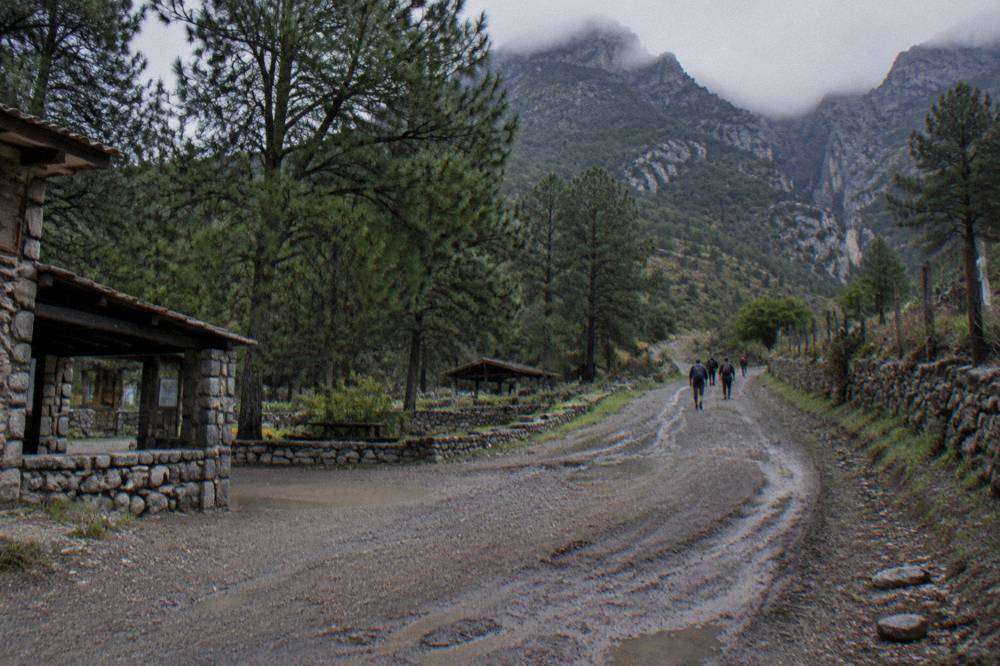
Access is part of the story. The trailheads above Potrero Redondo sit at the end of unpaved dirt roads that need a 4x4 for the steep sections, which is why every listed tour includes vehicle transfer to the canyon mouth and back. The community of Potrero Redondo charges an official ejido access fee of 60 MXN per person, paid at the route entrance, and the national park entry fee is 125 MXN per person per day. Reputable tours fold the logistics in: the Matacanes From Santiago with regional meal listing, for example, includes the CONANP permit, ejido access and 4WD transfer to the canyon in its price.
What Obstacles Does The Route Include In Order?
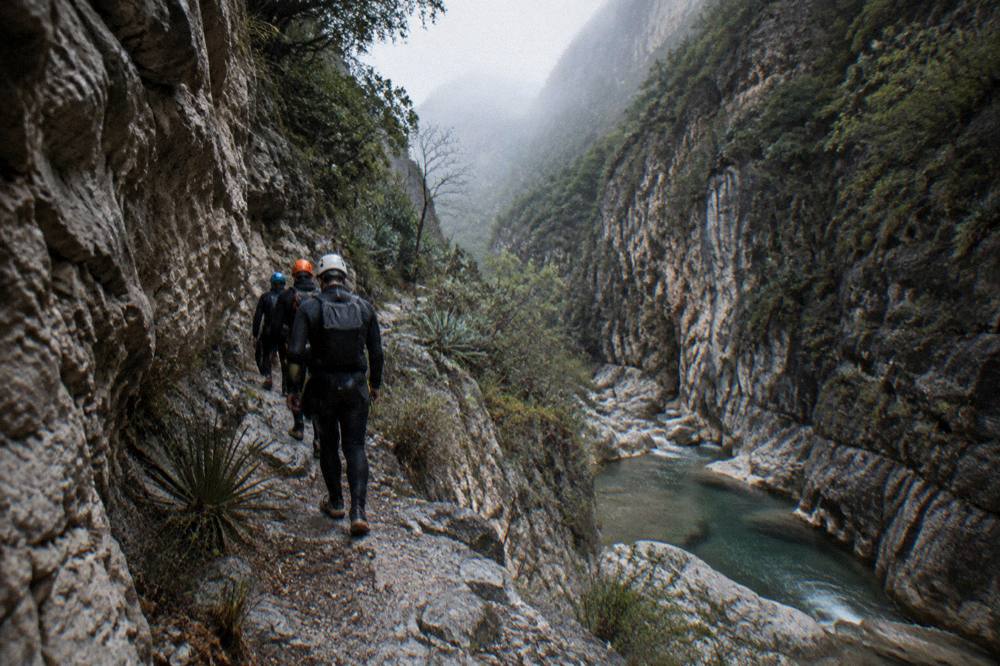
In the order a guided group meets them, the Matacanes route runs: an approach hike, a first rappel descent, a sequence of water jumps into pools, natural rock slides, the two cave passages with their swims, the big 12 m drop, more rappels and slides, and a final hike out to Potrero Redondo. No operator publishes a meter-by-meter logbook, but every listing and operator page describes the same building blocks, and the day always moves from the upper entrance down toward the exit, because it is a descent: gravity and the stream set the order.
The table below lays out the sequence as operators describe it. Treat it as a shape of the day rather than a fixed script: guides reroute around obstacles when water levels change, and some jumps close while others open depending on conditions on the morning.
| Order | Section | What It Involves | Time Share |
|---|---|---|---|
| 1 | Approach hike | Unpaved trail from the 4x4 drop-off to the canyon entrance, gearing up | About 1 hour |
| 2 | First rappels | Rope descents beside water into the streambed | Early canyon |
| 3 | Water jumps | Jumps from rock lips into deep pools, heights varying, some mandatory | Repeated all day |
| 4 | Natural slides | Polished chutes you slide down sitting, exiting into pools | Repeated |
| 5 | Cave passages | Two dark sections, swimming with headlights, cold air and water | Mid route |
| 6 | The 12 m drop | The signature single water jump, 12 m per the operator | After the caves |
| 7 | Exit rappels and slides | Final obstacle sequence as the canyon widens | Late canyon |
| 8 | Hike out | Trail up to Potrero Redondo, gear off, meal | About 1 hour |
Two things surprise first-timers. First, the proportion of water time: with 70 percent or more of the day in water at 12 to 18°C, the wetsuit is not optional comfort, it is what keeps you functional through hour six. Second, the caves: Matacanes passes through genuine dark sections where you swim with a headlight, which is rare among canyon routes anywhere and is the feature returning canyoners mention most.
How Many Rappels Are There And How Tall?
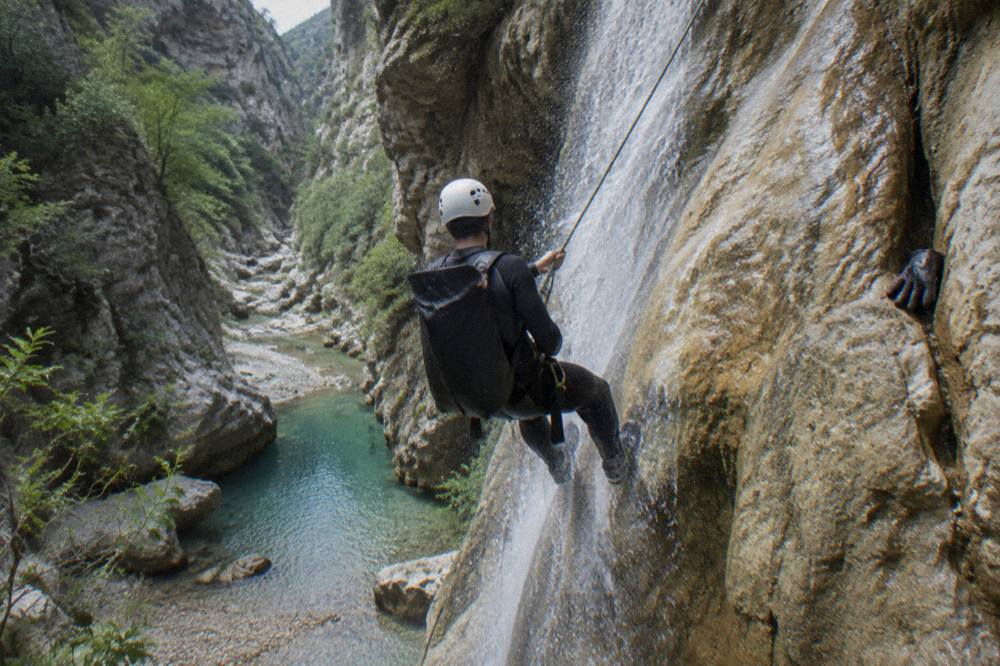
Operators describe multiple roped rappels on Matacanes, all guided and all run on installed anchors with harnesses and descent devices, but no listing publishes an exact count or exact heights for the Matacanes rappels; the named figure belongs to the route description, the 12 m single drop, which is a jump rather than a rappel. If a fixed rappel count matters to you, ask the operator directly before booking. What the listings do confirm is that every tour supplies the full technical kit, helmet, harness with descent system, life vest and full-length wetsuit, and that certified guides rig and check every descent. Since that single drop is a jump rather than a rappel, our guide to the twelve meter leap and how to handle it explains which jumps you can skip and how guides run them.
The rappels on Matacanes are water rappels: you descend rock that the stream is running down, which means spray, slick stone and a pool landing at the bottom. That is a different experience from the dry rappels on a via ferrata day. The operator's route description lists rappels alongside jumps and slides as core features, and the equipment lists on the tour pages, harness with descent system on every Matacanes listing, back this up.
If rappel count is what you are shopping for, the honest comparison is with Chipitín, the neighboring canyon whose headline is in its name: the Chipitín 7-rappel canyon from Monterrey is built around seven roped descents, including one down a waterfall of about 100 m as the listing words it. Matacanes spreads its technical ground across rappels, jumps, slides and caves instead; Chipitín concentrates it in rope work. Neither is a soft option, and both demand the same fitness baseline. We compared the listings in detail on the guide versus guide question, including what going unguided means on a wet route.

How High Are The Jumps And Which Ones Are Mandatory?
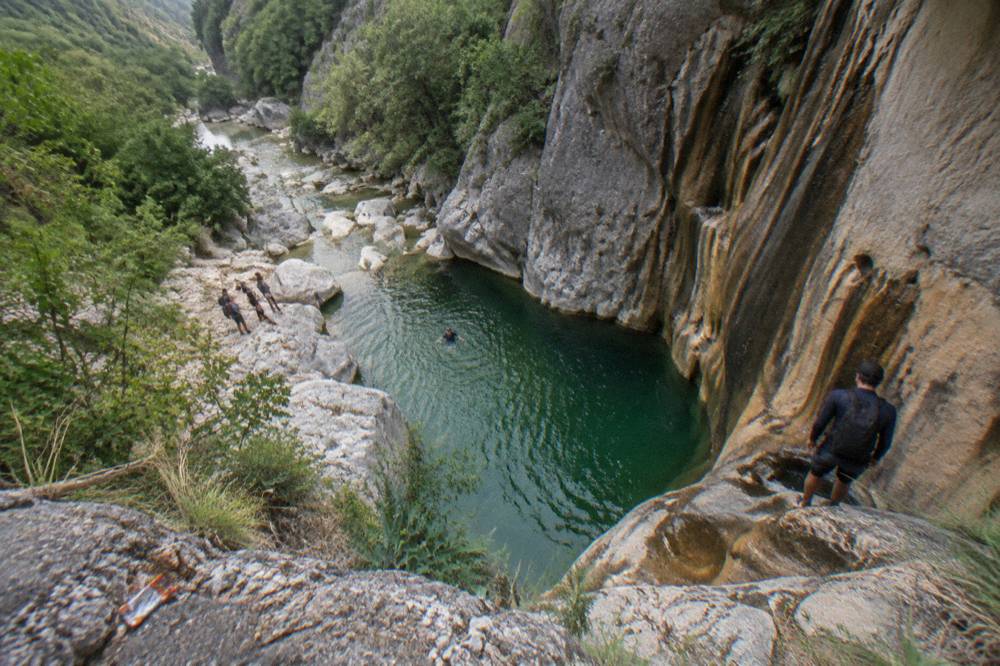
The tallest jump on Matacanes is the 12 m single drop, as the operator states it, and operators describe jumps up to that height with some mandatory: meaning there are points where the only way forward is into the water, because the canyon walls offer no walk-around. That word, mandatory, is the single most important thing to understand before booking. On a wet route, the exits are the pools, and a guide cannot lower everyone past every lip on a rope when the group needs to keep moving.
Jumping technique is taught on the spot: feet first, arms crossed or at the sides, life vest on, guide watching from below. The canyoning life vest does the buoyancy work, which is why operators state that swimming ability is not essential even though the day is mostly water; what is essential is the willingness to step off a rock ledge into a deep pool, repeatedly, for hours. If that sentence makes your stomach drop, read our page on fitness and swimming requirements before you decide, and be honest with yourself, because a panicked freeze mid-canyon is the scenario guides plan hardest to avoid.
The heights between the 12 m signature drop and the small warm-up jumps vary with the route and the water level, and guides change the plan morning by morning. What stays constant is the sequence logic: early jumps are smaller and build confidence, the big drop comes after the caves, when the group is warm and used to the water. For the full picture on the signature drop, we cover it from every angle in what is the highest jump in Matacanes.
What Are The Natural Slides And Swims Like?
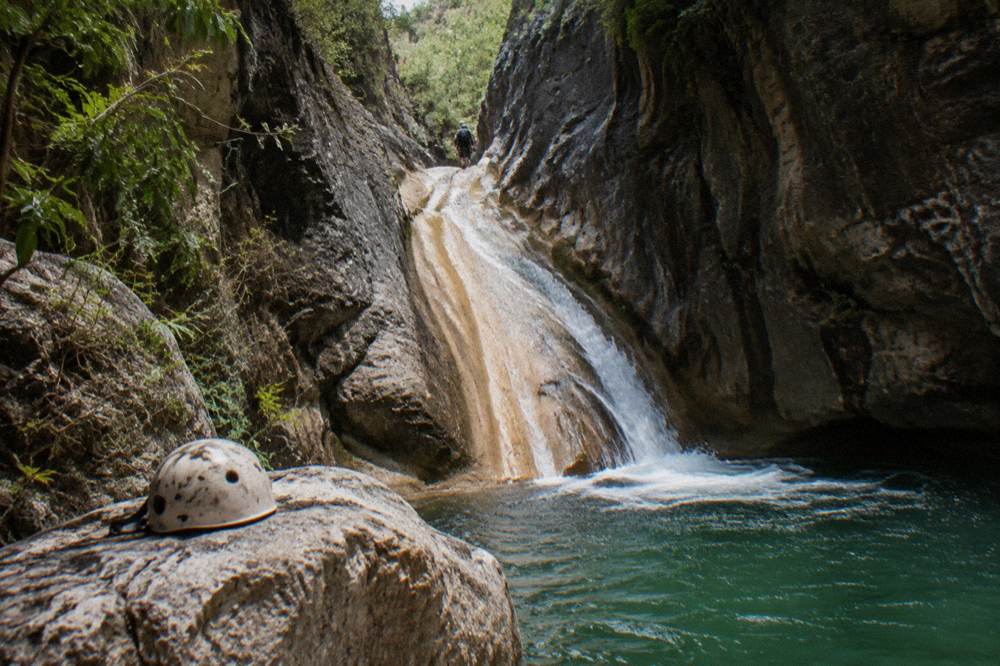
The slides on Matacanes are polished rock chutes that the stream has worn smooth, ridden sitting or lying back with the life vest on, emptying into pools; the swims are long, cold and often inside narrow corridors or the cave sections, at 12 to 18°C. Together they are what makes the route feel like a water park built by a river, and they are why operators put the day at 70 percent or more time in water. You do not visit the water on Matacanes, you travel in it.
The slides need no technique beyond keeping limbs tucked and letting the water carry you; the guide indicates the line, checks the pool below, and sends each person in turn. The swims are where the wetsuit earns its place. Cold water is not an edge case on this route, it is the default, and the long swims between obstacles are where tiredness shows up late in the day. Operators exclude participants with heart or lung conditions, recent surgery or fractures, spinal problems or epilepsy unless they have notified the operator in advance, precisely because the sustained cold plus exertion is a real physiological load. Everything else covered here is indexed on Matacanes Canyoning.
The cave swims are the signature version of this. With headlights on, you swim through dark passages where the canyon roof closes overhead, one of the few genuinely caving-flavored experiences available on a day tour anywhere near Monterrey. It is also the section where group spacing and guide control matter most, which is another argument for the guided format every listed tour takes. For what to pack for a day of cold water, including shoes that grip wet rock, see what to bring and wear to Matacanes.
Where Does The Route Start And Finish?
The route starts at the upper canyon entrance above the community of Potrero Redondo, reached by 4x4 on unpaved dirt roads, and finishes with a hike out back to Potrero Redondo, where the vehicles, dry clothes and usually a meal are waiting. Every listed tour runs this same geography; what differs is where your day starts before that, because the tours collect from different points in and around Monterrey and Santiago.
The standard pattern is a very early meet, sometimes brutally early: one listing sets a 4:00 a.m. start outside Walmart Las Torres, and the group-tour listings meet at the Walmart Supercenter on Eugenio Garza Sada or at the Hotel Hacienda Cola de Caballo lot in Santiago. From there it is a drive south on the Carretera Nacional, roughly 34 km from Monterrey to Santiago under normal conditions, then the dirt-road climb to Potrero Redondo in the operator's vehicles. The table below shows the meeting points as the listings state them.
| Tour | Meeting Point | Hotel Pickup | Duration |
|---|---|---|---|
| Matacanes Full-Day (Gaia) | Walmart Supercenter Eugenio Garza Sada or Hotel Hacienda Cola de Caballo lot | No, group transport from meeting point | About 1 day |
| Matacanes Full Day From Walmart Las Torres | Outside main entrance, Walmart Las Torres, 4:00 a.m. | No | About 12 hours |
| Matacanes Small Group (Camaleon) | Hotel Hacienda Cola de Caballo roundabout, Santiago | No | About 9 hours |
| Matacanes From Monterrey With Lunch | Downtown Monterrey and San Pedro Garza García, else Hotel Hacienda | Yes, from set zones | About 12 hours |
| Matacanes From Santiago (Nantli) | Hotel Hacienda Cola de Caballo, Santiago | No | About 9 hours |
Notice how the meeting point changes the character of the day. The Monterrey-based tours, including the one with round-trip transport from Downtown Monterrey and San Pedro Garza García, stretch to about 12 hours door to door because of the drive. The Santiago-based options, like the small-group Camaleon departure from the Hotel Hacienda roundabout, compress to about 9 hours. If you are staying out in Santiago rather than the city, the Santiago meets buy you roughly three hours back, which is worth weighing when you plan where to sleep the night before.
The Camaleon small-group option is the one that changes the in-canyon experience too: it caps the group at 15, sets a minimum age of 12, and runs from $611 per person as the listing shows it, against group maxima of 25 and 30 on the bigger tours. Fewer people on the rope means less waiting at each rappel and jump, which on a route with this many obstacles is a real difference.
How Long Does The Full Route Take?
The canyon descent itself takes 8 to 10 hours from the upper entrance to the exit hike, per operator descriptions; the full tour day runs about 9 hours for Santiago-based departures and about 12 hours for Monterrey-based ones, once the drives and the meal are included. Those are two different numbers and both matter: the 8 to 10 hours is what your body does, the 9 to 12 is what your calendar needs.
Inside the canyon, the day divides roughly into an hour of approach hiking, the obstacle sequence proper, and an hour of exit hiking. The obstacle middle is where the 70 percent water figure lives, and it is also where the pace is set by the group, not the clock. A group of 25 moves slower through seven rappels and a dozen jumps than a group of 15, because every obstacle is run one person at a time under a guide's eye. Budget energy accordingly: canyoners consistently report that the last third, the exit rappels and the hike out, is the hardest part, not the drops.
One listing sweetens the long day with a full meal. The Matacanes from Monterrey with lunch tour includes a full local meal, lunch or dinner depending on the schedule, on top of breakfast and a trail snack, plus accident insurance, a photo shoot, park permits and round-trip transport from set Monterrey zones, from $195 per person. It is also the one listing that states prior rappelling experience and good fitness are required, which fits: a 12-hour day with a full meal break is built for people who already know they like this. For a fuller treatment of the day's shape, see how long the Matacanes tour takes.
How Does The Route Compare With Chipitin And Nido?
Matacanes, Chipitín and Nido de los Aguiluchos are three different products: Matacanes is the water route with jumps, slides and caves; Chipitín is a 7-rappel canyon descent including a descent beside a waterfall of about 100 m; Nido de los Aguiluchos is a via ferrata and climbing day with rappels, not canyoning at all. They share the same mountains and the same gear vocabulary, but a buyer should not treat them as versions of one another.
| Product | Canyon Or Format | Headline Feature | Duration | From |
|---|---|---|---|---|
| Matacanes full-day (Gaia) | Water canyon | Jumps, slides, caves, the 12 m drop | About 1 day | $158 per person |
| Chipitín from Monterrey | Water canyon | 7 rappels, waterfall of about 100 m | About 12 hours | $195 per person |
| Nido de los Aguiluchos | Via ferrata, climbing, rappels | Rung-and-cable routes, ziplines | About 7 hours | $108 per person |
The buyer logic is straightforward. Choose Matacanes if the water day, the slides and the cave swims are the draw; it is the most reviewed product of the three, 4.9 across 1783 reviews on the Gaia full-day listing against 4.9 across 753 on the Nido via ferrata. Choose Chipitín if rope time is the draw and you want the tallest single descent in the region. Choose Nido if you want heights and rappels without the long cold immersion, or if a 7-hour day fits better than a 12-hour one; it also carries a stated minimum age of 12 and a group max of 15.
A word on Hidrofobia, the canyon people ask about next: it exists as a neighboring water canyon described by its operator as a 7-plus hour route with jumps up to 18 m and no rappels, but there is no Hidrofobia tour on this site's roster, so we do not sell or describe it as bookable here. The nearest bookable equivalents for a jumps-focused water day are the Matacanes and Chipitín listings above. For a closer look at how the two canyons compare, our side-by-side breakdown of Hidrofobia and Matacanes walks through the differences.
What Fitness And Age Does The Route Demand?
Operators grade Matacanes intermediate and require regular physical condition; the minimum age is 12 on the operator programs and listings that state an age, with children accompanied by a parent or guardian, and several listings state no minimum age at all, in which case the answer is ask the operator. The medical exclusions operators publish are consistent: heart or lung conditions, recent surgeries or fractures, spinal problems, epilepsy, or significant overweight without prior notification to the operator.
The fitness the route actually consumes is stamina and grip, not strength. You hike in and out on unpaved trail, you swim repeatedly in cold water, you hold your own weight on rappels, and you do it across 8 to 10 hours. Comfort with heights is listed as a requirement because some jumps are mandatory, and there is no option to walk around the canyon. Swimming ability itself is not essential, operators state, because the canyoning life vest provides buoyancy; the non-negotiable is being able to jump into water. We break the age question down fully, including which listings state 12 and which state nothing, on Matacanes age limits and kids.
Honesty at booking time is the safety system working as designed. Guides can adjust a route, slow a group or watch a specific person closely, but only if they know what to watch for. The general point that rescues do happen in these canyons, and that unguided attempts carry high risk from hydraulics and inadequate preparation, is stated plainly by the operator community; it is the strongest single argument for booking a guided tour rather than treating Matacanes as a hike, and every product on this site is guided for exactly that reason.
When Does The Route Run And What Closes It?
Operators run Matacanes roughly 21 March to 15 September, a window set by rains and hurricanes rather than a fixed calendar, with the river level watched daily by Potrero Redondo residents, Las Adjuntas and state authorities; Protección Civil de Santiago can suspend canyon activities at any time when levels rise, and suspensions hold until an official notice of improved conditions. The authority and the operator's live listing are the only sources that can tell you whether a date runs, and neither promises far ahead.
The reason is physics specific to this canyon. Rain in the upper Sierra can generate sudden flash floods in Matacanes even when the sky at the canyon is clear, which is why the closure notices are conservative and why guides check conditions on the morning, not the week, of a tour. When a date is suspended by weather, the refund terms differ by listing: some tours offer free cancellation, while the Gaia full-day listing carries no customer free-cancellation term and refunds only if the operator cancels for weather or minimum group size. Read that term on the live listing before you book, and see our best time to do Matacanes page for the seasonal planning picture.
Within the open season, the fees on the ground are stable and worth carrying cash for: the CONANP park entry fee is 125 MXN per person per day, with exemptions for older adults, pensioners, people with disabilities and children under 12 with ID, per the park authority's official page, and the official ejido access fee paid in Potrero Redondo is 60 MXN per person. The community has publicly warned about outsiders near the route charging 180 to 250 MXN under an ejido-fee name, so pay the official fee at the route entrance, as the community notice reported.
| Fee | Amount | Who Charges It | Where Paid |
|---|---|---|---|
| Park entry (CONANP) | 125 MXN per person per day | National park authority | Park, exemptions with ID |
| Ejido access | 60 MXN per person | Potrero Redondo community | At the route entrance |
| Tour price | From $144 to $611 per person | The operator | On the live listing |
The tour price band on this site runs from $144 per person on the Walmart Las Torres full day to $611 on the Camaleon small group, with the most reviewed Gaia full-day at from $158 per person including gear, breakfast, snacks, pictures and group transport. Every listing prints its own live price, and inclusions differ enough that the cheapest day is not always the cheapest day once meals and permits are counted.
Common Questions About The Matacanes Route
What obstacles are on the Matacanes route?
Rappels beside water, water jumps into pools, natural rock slides, two cave passages swum with headlamps, long swims, and the signature 12 m drop, in roughly that order from the upper entrance to the exit hike.
How many rappels does Matacanes have?
Operators describe multiple roped rappels without publishing an exact count; ask the operator before booking if the number matters to you. The route page of the operator lists rappels among the core features alongside jumps and slides.
What is the highest jump in Matacanes?
The 12 m single drop, as the operator states it. Operators describe jumps up to that height, and some jumps are mandatory because the canyon offers no walk-around at those points.
Do you have to swim in the caves?
Yes, the two cave passages are swum with a headlight on and a life vest, and the water is cold, 12 to 18°C. Swimming ability is not essential per operators, but you must be able to jump into water.
Is the Matacanes route harder than Chipitín?
They are different rather than ranked. Matacanes spreads the day across jumps, slides, caves and rappels over 8 to 10 hours mostly in water; Chipitín concentrates on seven rappels including one down a waterfall of about 100 m. Both demand regular fitness.
How long does the route take end to end?
The descent takes 8 to 10 hours. Full tour days run about 9 hours from Santiago meeting points and about 12 hours from Monterrey, including drives and the meal stop.
Can children do the Matacanes route?
Where a listing states an age it is 12 minimum, accompanied by a parent or guardian. Several listings state no minimum age, so the honest answer for those is ask the operator directly.
Does the route run all year?
No. Operators run roughly 21 March to 15 September depending on rains, and Protección Civil de Santiago can suspend canyon activities at any time when river levels rise. The live listing and the operator are the authority on whether a date runs.