Matacanes Closures And Water Levels: When Tours Are Cancelled
Matacanes is a water canyon, and water is exactly what shuts it down. This guide explains the suspension system, the flash-flood risk, how operators and Protección Civil decide whether a date runs, and what happens to your money if it does not.
Short answer
Canyoning in Matacanes runs roughly March 21 to September 15, and Protección Civil de Santiago can suspend it at any time when river levels rise. The current suspension, issued after heavy rain, stays in force until a new official notice. Tour prices run from $144 to $611 per person depending on the listing.
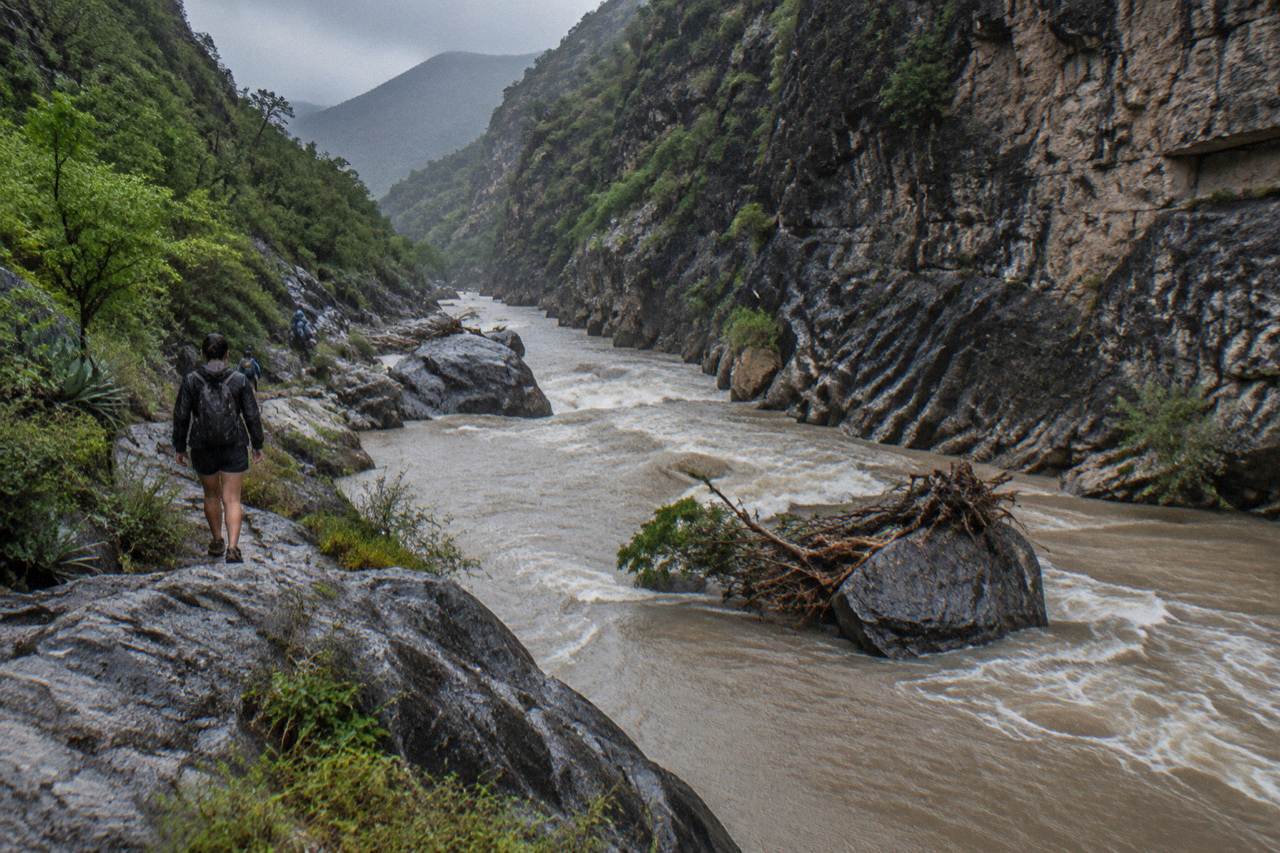
Rain is the whole reason Matacanes exists as a tour and the whole reason it sometimes cannot run. The canyon is a riverbed: jumps, slides, rappels and swim sections all depend on water, and when the Sierra de Santiago gets too much of it, the same river that makes the route fun makes it dangerous. Protección Civil de Santiago suspended river, canyon and rugged-terrain activities across the Sierra after river levels rose, and that suspension remains in force until a new official notice. That is not a one-off. It is how the system is designed to work, and any traveler booking a Matacanes day needs to understand it.
This guide walks through the mechanics: why the canyon closes, who actually makes the call, what a flash flood in this terrain looks like, how refunds and cancellations play out, and how to plan around a season that operators describe as roughly March 21 to September 15. For the wider question of picking between listings, see our guide to choosing a Matacanes tour; this page is about the weather layer on top of that choice.
Why Does Matacanes Close When It Rains?
Matacanes closes when river levels rise because the tour takes place in the riverbed itself, with jumps, swims and rappels that become unsafe in high, fast water. Protección Civil de Santiago, the municipal civil protection authority, has the power to suspend canyon activities across the Sierra de Santiago, and it did so until further notice after rains raised the rivers.
The canyon drains a large upper catchment in the Sierra de Santiago. Operators describe the season as starting around March 21 and ending around September 15, with the exact dates depending on rains and hurricanes, because that window is when water levels are typically low and stable enough for a guided descent. Outside it, and any time a storm system passes through, the calculation changes quickly.
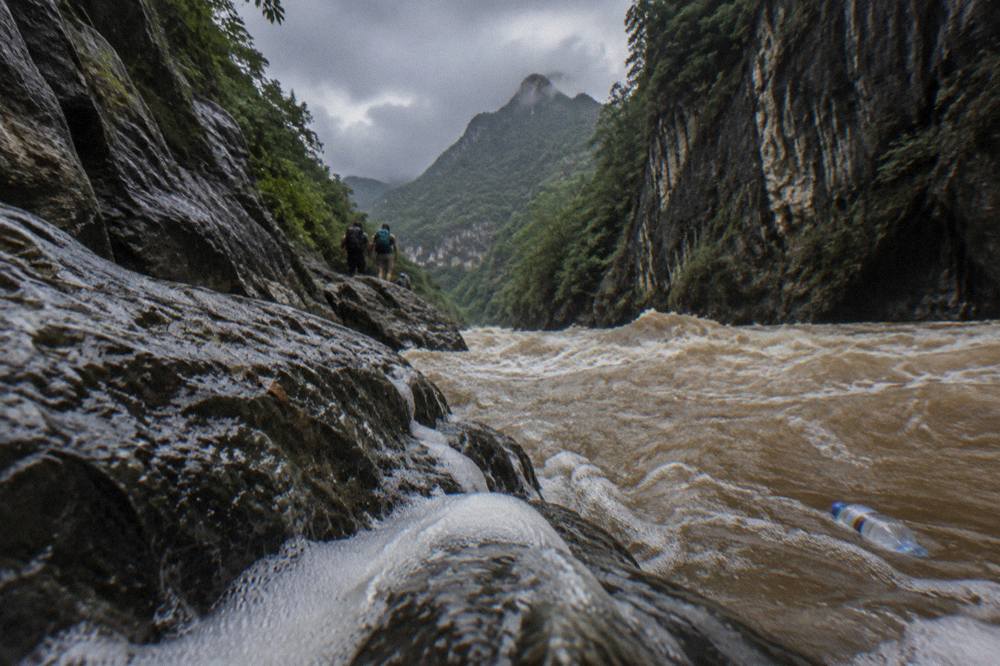
What surprises many visitors is that the danger is not always visible on site. The civil protection authority has warned that rains in the upper Sierra can generate sudden, dangerous flash floods in canyons and watercourses like Matacanes even when local conditions look fine and it is not raining where you stand. Water arrives from upstream, hours after the rain that caused it fell somewhere you cannot see from the canyon mouth.
That is the core reason the closure system exists at all. A canyon that looks calm at 9 a.m. can be a torrent by noon, and a group deep in the route, below rappel anchors and between rock walls, has very limited options for getting out fast. The suspension notice removes the judgment call from individual groups.
The recent suspension named canyon descent in Matacanes explicitly, along with other river and rugged-terrain activities in the Sierra, and it stays in force until the authority issues a new notice. Treat any specific date you read online, including reopening guesses, with suspicion: the authority communicates suspensions and liftings ad hoc, not on a calendar.
Who Decides If Matacanes Runs On A Given Day?
Two layers decide. Protección Civil de Santiago can ban canyon activities outright with an official suspension, and below that, operators, Potrero Redondo residents and state authorities monitor the river level daily and cancel individual departures they judge unsafe. The booking page and the operator are the authority on whether your date runs.
The formal layer is the municipal suspension. When Protección Civil de Santiago issues one, it covers named activities across the Sierra, and no legitimate operator runs during it. These notices come after river levels rise, and they stay in force until a new official notice, not for a fixed period.
Below that sits the daily judgment. Operators describe the river level as monitored every day during the season by Potrero Redondo residents, the Las Adjuntas community and state authorities. Even with no formal suspension in force, an operator can cancel a departure because the level, the current or the forecast does not support a safe descent. High water after a storm can scrub single dates long before any authority steps in.
For you as a booker, this means two checks before any trip: whether a suspension is currently in force, which the operator will tell you, and whether your specific departure is confirmed, which the operator will also tell you. Never assume a date runs because the calendar says September, and never assume it is off because it rained in Monterrey yesterday. The river decides, and the people watching it decide.
If you are weighing which listing to book with this variability in mind, the cancellation terms matter as much as the price. Here is how the main Matacanes day listings compare on that front.
| Listing | Price shown | Duration | Cancellation term | Meeting point |
|---|---|---|---|---|
| Matacanes Full-Day Canyoning | from $158 per person | about 1 day | refund only if the operator cancels | Walmart Supercenter Eugenio Garza Sada or Hotel Hacienda Cola de Caballo lot |
| Matacanes Full Day From Walmart Las Torres | from $144 per person | about 12 hours | free cancellation | Walmart Las Torres main entrance, 4:00 a.m. start |
| Matacanes From Monterrey With Lunch | from $195 per person | about 12 hours | free cancellation | pickup in Downtown Monterrey and San Pedro Garza Garcia |
| Matacanes From Santiago With Regional Meal | from $247 per person | about 9 hours | free cancellation | Hotel Hacienda Cola de Caballo, Santiago |
| Matacanes Small Group From The Hotel Hacienda | from $611 per person | about 9 hours | free cancellation | Hotel Hacienda Cola de Caballo roundabout, Santiago |
Notice the pattern: the busiest listing, the Matacanes Full-Day Canyoning tour rated 4.9 across 1783 reviews, carries no customer free-cancellation term, with a refund only if the operator itself cancels for weather or minimum group size. The smaller and newer listings mostly do offer free cancellation. Weather risk and money risk are not distributed evenly across the roster, so read the terms on the live listing before paying.
What Happens If My Tour Is Cancelled?
If the operator cancels for weather or water level, every Matacanes listing refunds you, though the exact path depends on the listing. If you cancel yourself, listings with a free-cancellation term refund you and listings without one may not, so the refund question is decided by who cancelled, not by the weather itself.
Start with the operator-cancelled case, because it is the common one in a closure. When a suspension is in force or the river level kills a departure, the tour does not run and the operator refunds. The Matacanes Full-Day Canyoning listing states this plainly: with no customer free-cancellation term, the refund comes when the operator cancels for weather or minimum group size. The same logic applies across the roster, since a tour that never ran is not a service you received.
The self-cancelled case is where listings differ. The Full Day From Walmart Las Torres listing, the From Monterrey With Lunch listing, the From Santiago With Regional Meal listing and the Small Group From The Hotel Hacienda listing all carry free cancellation terms, so a change of plans or a nervous glance at the forecast does not have to cost you the from $144 to $611 those listings span. Check the exact cutoff window on the live listing, because free cancellation almost always has a deadline measured in hours or days before departure.
One practical note on timing: weather cancellations in this canyon often come late, sometimes the evening before or the morning of, because the river level is watched daily. If you are traveling on a tight schedule, book the earliest viable date in your trip so a cancelled day can roll forward rather than eat your last morning in Nuevo León.
The refund scenarios break down cleanly once you know who initiated the cancellation, and the table below maps every combination you are likely to face.
| Scenario | Who cancels | Typical outcome | What to do |
|---|---|---|---|
| Suspension in force for your date | Operator | Full refund, tour does not run | Rebook for later in the season or take a non-canyon alternative |
| River level too high on the day | Operator | Full refund, departure cancelled | Ask the operator about the next confirmed date |
| Your plans change before the cutoff | You | Refund if the listing has a free-cancellation term | Check the deadline on the live listing before cancelling |
| Your plans change after the cutoff, no term | You | Possibly no refund | Message the operator first; ask about moving the date |
| Weather doubtful, you stay home without cancelling | You, effectively | No-show, listing terms apply | Always message rather than silently not showing |
If a closure kills your whole window, the region has alternatives that do not depend on a swollen Matacanes. The Nido de los Aguiluchos via ferrata, rated 4.9 across 753 reviews and priced from $108 per person, is a climbing-and-rappel day rather than a canyon descent, so river levels matter far less to it.
How Do Flash Floods Form In Matacanes?
Flash floods in Matacanes form when rain falls in the upper Sierra de Santiago catchment and runs downhill into the canyon, raising the river suddenly even when the canyon itself is dry or calm. The civil protection authority has warned that these crecientes can arrive when it is not raining on site, which is why upstream rain, not local weather, is the real trigger.
The mechanics are simple and unforgiving. The Sierra's rock and thin soil shed water fast, so a storm kilometers upstream funnels into the drainage that runs through Matacanes. The water arrives as a rising wave: what canyoners report as a climb from ankle-deep to chest-deep in minutes, with a current no swimmer can fight in a constricted section.
This is why the daily monitoring exists. The people watching the river level are not reacting to the sky above the canyon; they are reacting to what has fallen, and is forecast to fall, across the whole upper basin. A bright, cloudless morning in Santiago can still be a dangerous morning in the canyon if the previous night's storm is still working its way downstream.
It is also why independent descents are a genuinely bad idea, a point operators and the rescue record both support. A guided group gets the level check, the local knowledge of which sections to avoid in high water, and the equipment. For that full argument, see our page on going with a guide or on your own, and for the safety picture overall, Matacanes safety, rules and rescues.
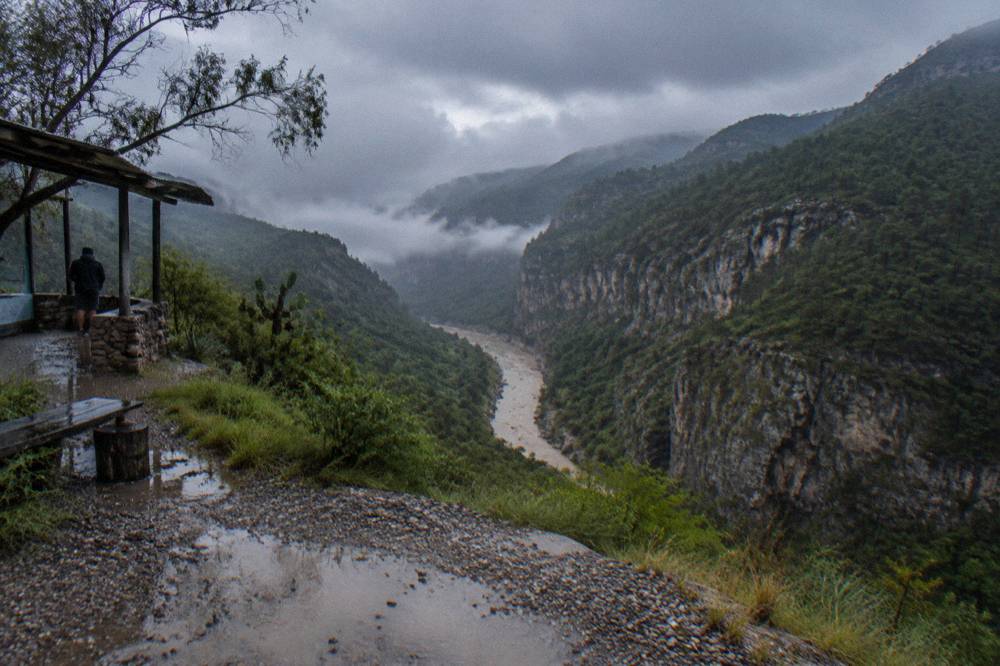
Recent weeks showed the wider pattern. Heavy rain linked to a cold front brought flash floods, vehicle strandings and preventive road closures around Santiago, and the Presa La Boca reservoir upstream of town rose past capacity, forcing controlled releases. When the whole watershed is that saturated, canyon closures are not cautious, they are obvious.
When Is The Matacanes Season And When Is It Off Season?
Operators describe the Matacanes season as roughly March 21 to September 15, with the end date depending on rains and hurricanes, and some listings state the route is only suitable in those months. Off season, roughly late September through winter, tours pause because water and weather conditions no longer support a commercial descent.
The March start is consistent across operator statements: that is when the dry-season water levels settle into the range that makes the route runnable day after day. The September end is softer, because the tail of the hurricane season can either close things early or, in a quiet year, let departures run a little longer. The operator wording is "approximately September 15," and that word approximately is doing real work. More of these guides are collected on Matacanes Canyoning.
The current suspension sits exactly in this seasonal seam. It was issued after river levels rose following rains, the classic late-season event, and it remains in force until a new official notice. Whether the season was already winding down or the suspension cut it short, the practical answer for a traveler is the same: the operator and the booking page are the authority on whether any date runs, and no reopening date should be assumed.
Planning around this is straightforward. Book inside the core season, ideally April through June when the balance of water and weather is most reliable. Treat late August and September as conditional: bookable, often brilliant, but the first to be suspended when a hurricane system approaches. And keep a flex day in your itinerary if you travel in the shoulder weeks.
| Period | Typical water and weather | Booking advice |
|---|---|---|
| March 21 to May | Levels settling after winter, low rain risk | Reliable window; book any listing with confidence |
| June to August | Core summer season, afternoon storms possible | Book in advance; message the operator two days ahead |
| September to about September 15 | Hurricane tail, level-dependent | Conditional; favor free-cancellation listings |
| Mid-September to March | Off season, tours pause | Plan a different canyon-region activity or return in spring |

How Do Water Levels Change The Tour Itself?
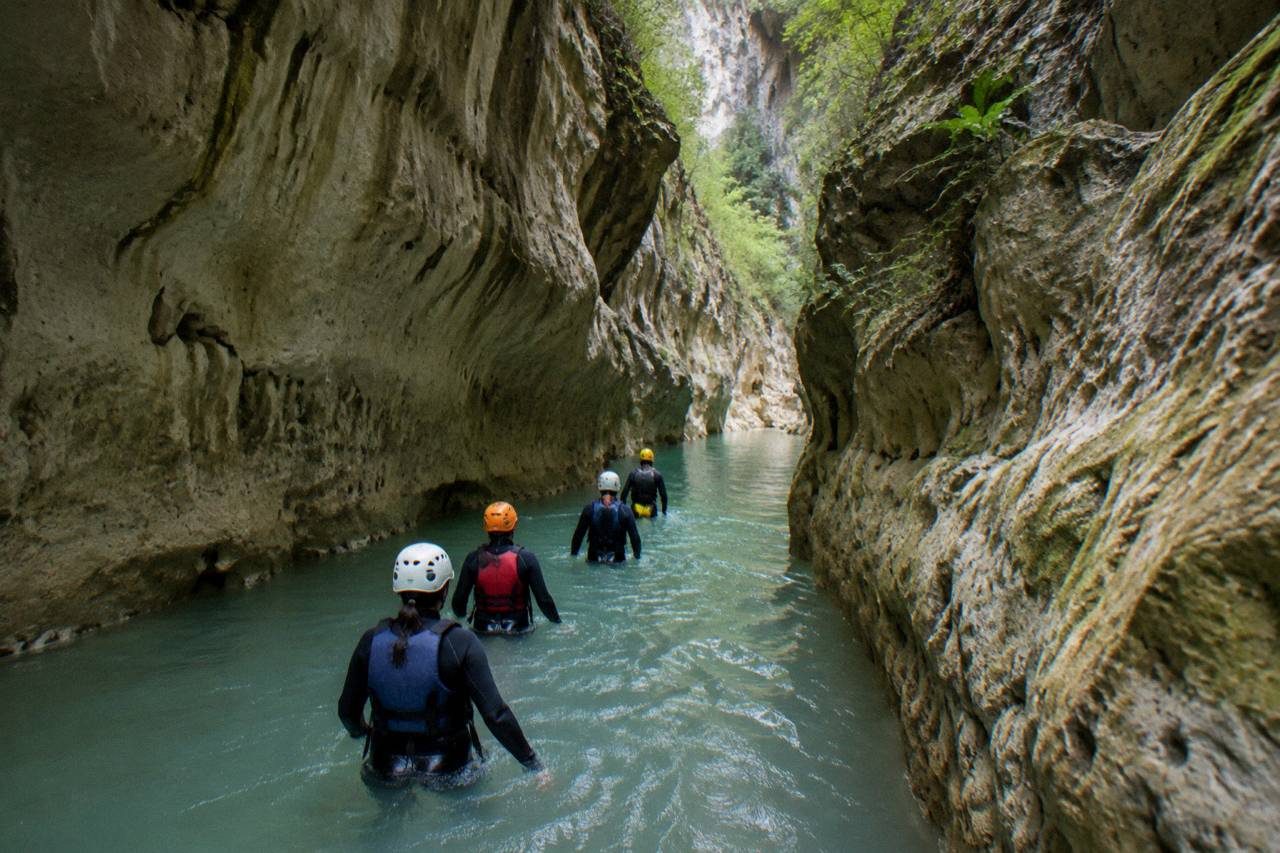
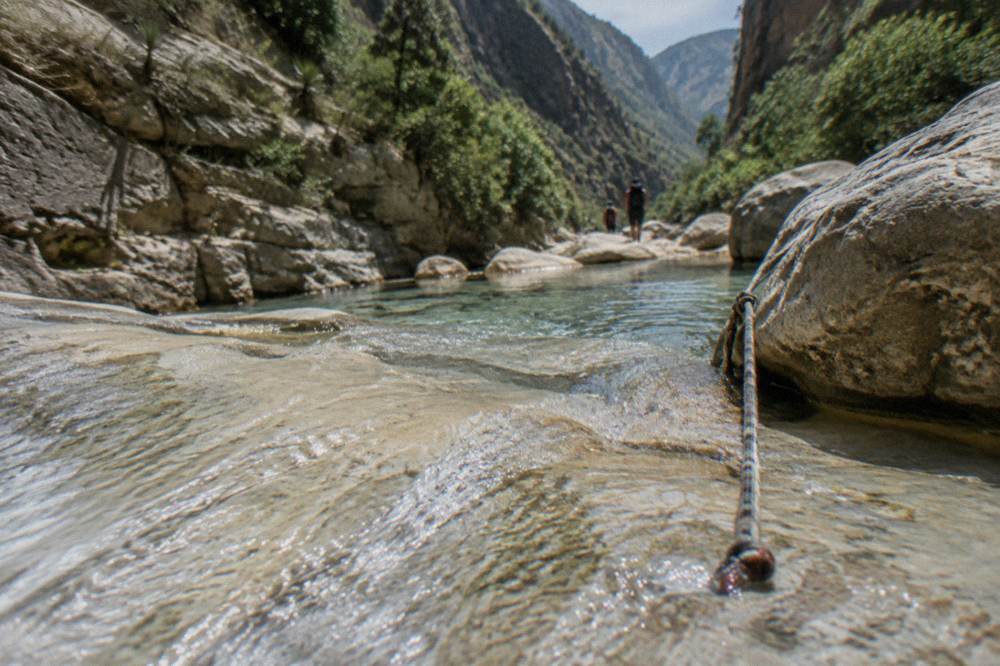
When the level is high, sections of Matacanes that are normally jumps or swims become unsafe and either the tour is cancelled or the guide reroutes around the most exposed parts. When the level is low, the same canyon is a chain of jumps, slides, rappels and cold swims, with a 12 m single drop as the operator describes it, and most of the day spent in the water.
Operators describe the tour as 8 to 10 hours with 70 percent or more of the time spent in water, in cold water at that, with temperatures in the range of 12 to 18 degrees Celsius according to operator descriptions. Every one of those numbers is level-dependent. High water turns the slides into hydraulics and the pools into current, which is exactly what the daily monitoring is screening for.
The practical read for a booker: a departure that is confirmed to run has already passed a level check that morning. That is the quiet service you are buying with a guided day. The guide knows which jump to open, which to close, and when the answer is simply not to enter, and the route has enough variety that moderate changes can be absorbed without cancelling.
What the level never changes is the fee structure on the ground. The national park entry, stated by the park authority as MXN 125 per person per day, and the official Potrero Redondo ejido access fee of MXN 60 per person, paid in the community, apply regardless of conditions. Note that some Matacanes listings bundle permits into the price while others leave them as cash on the day, which we break down in tour costs and what is included. The community has also warned that outsiders near the route have charged visitors inflated access fees of MXN 180 to 250, so pay the official fee in Potrero Redondo, not to someone waving you down on the road.
| Level condition | What changes on the route | What it means for your booking |
|---|---|---|
| Normal season level | Full route: jumps, slides, rappels, swims, caves | Tour runs as described |
| Moderately high after rain | Exposed jumps closed, strong-current sections rerouted or skipped | Tour may run in modified form; guides decide on the day |
| High, rising, or under official suspension | Canyon descent is unsafe | Departure cancelled; operator refunds per the listing terms |
| Low water late in dry season | Some slides and jumps shallow; more walking between features | Tour usually runs; expect a drier, slower day |
Should You Book In Advance During Rainy Months?
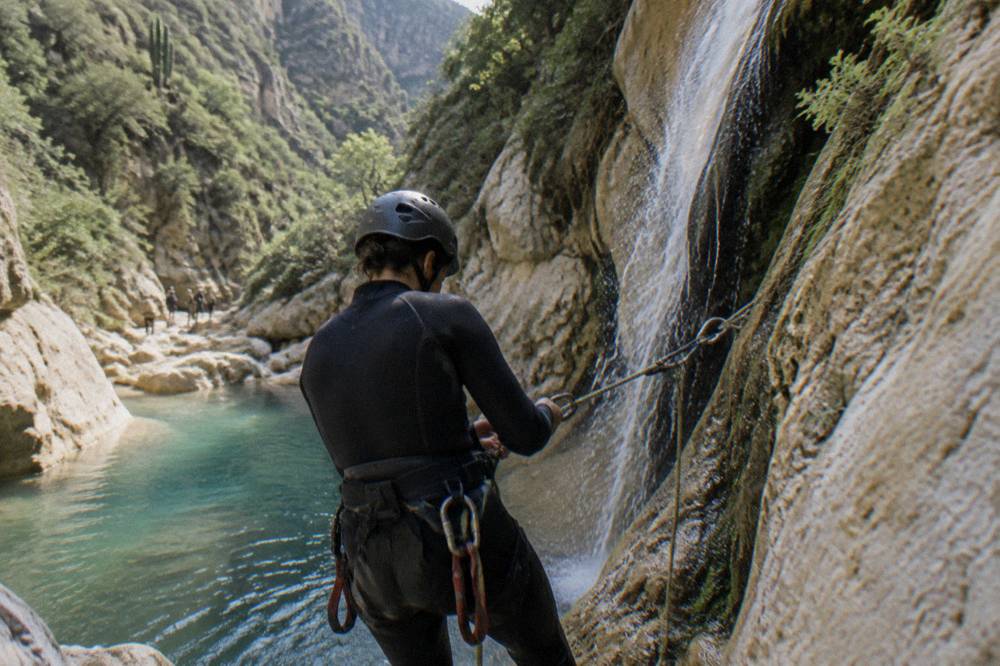
Yes, book in advance, but book the listing's cancellation policy as much as its price. A free-cancellation listing lets you lock a summer or early-autumn date and still walk away if a suspension or a forecast changes your plans, while a no-cancellation listing ties your money to the operator's weather luck rather than your own judgment.
The busiest listing, Matacanes Full-Day Canyoning, fills its groups of up to 25 well ahead in peak weeks, and its 4.9 rating across 1783 reviews is the strongest review base on the roster, so waiting for a clear forecast before booking often means finding it sold out. The trade is that its terms refund you only when the operator cancels. That is a reasonable bet for most travelers, since an operator cancellation refunds in full, but it does mean you cannot back out yourself for free.
The opposite trade is the Matacanes From Monterrey With Lunch listing at from $195 per person, which includes hotel pickup from Downtown Monterrey and San Pedro Garza Garcia, a full meal, insurance, permits and photos, plus free cancellation. For a rainy-month booking where you want an exit ramp, it is the more forgiving structure, and the listing notes prior rappelling experience and good fitness are required.
The new From Santiago With Regional Meal listing, from $247 per person, also carries free cancellation and bundles the CONANP permit and ejido access into the price, though it has no reviews yet and the guide is Spanish-language per the listing. Weather worry plus a no-reviews listing is a lot of uncertainty in one booking, so weigh that honestly.
A simple rule for the rainy edge of the season: book two things, a date and a fallback. The date should be the earliest good day in your trip, and the fallback should be a non-canyon adventure like the Nido via ferrata or the Chipitin 7-rappel canyon, which is a different canyon with its own listing and its own season stated as April to September. The terrain around Monterrey is dense with options; see our adventure guide to the region.
How To Check Whether Matacanes Is Running Right Now
Ask the operator directly through the live listing, and treat their answer as the authority. There is no public dashboard for river levels or suspensions, the civil protection authority issues notices ad hoc, and neither news coverage nor forum posts reflect whether tomorrow's departure is confirmed.
The check takes one message. Before you book, and again two or three days before you travel, message the operator on the listing and ask two questions: is a suspension currently in force, and is my date confirmed. Operators answer this constantly during the shoulder season, and they would far rather tell you a date is doubtful than collect a cancellation.
Do not rely on old news articles. A story from early October about a suspension tells you nothing about a date in November, in either direction, and reprinting a closure as permanent is just as wrong as promising a reopening. The authority communicates by notice, and the operators relay it.
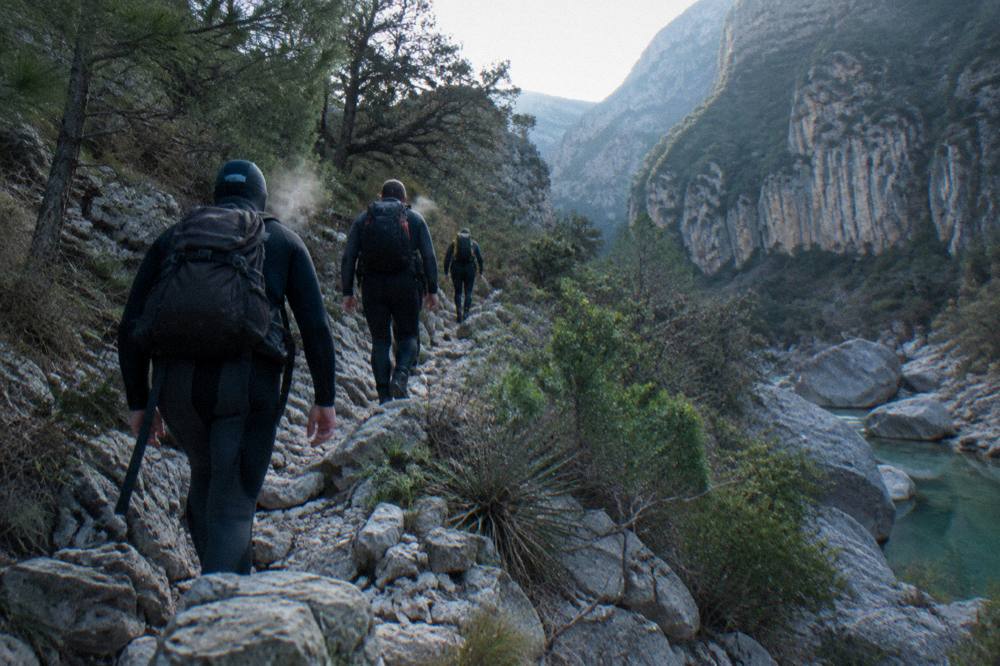
One more local nuance: heavy rain affects the roads as well as the river. Access to the Potrero Redondo trailheads from the Cola de Caballo area involves unpaved dirt roads that operators describe as requiring high-clearance or 4x4 vehicles. Part of what a tour includes is the transport decision on that road, which is one more reason the guided day with round-trip group transport included is the sane structure here. For the drive itself, see how to get from Monterrey to Matacanes.
The honest summary: Matacanes Canyoning as a site exists because this canyon is worth the planning friction, and the planning friction is mostly water. Book inside the season, book a cancellation term that matches your risk appetite, message the operator before you travel, and hold a fallback day. The system of daily monitoring and ad hoc suspensions is not an inconvenience bolted onto the tour, it is the reason the tour has a good safety record at all.
Common Questions About Matacanes Closures And Water Levels
Why does Matacanes close when it rains?
The tour takes place in the riverbed, so high water makes the jumps, swims and rappels unsafe. Protección Civil de Santiago suspends canyon activities in the Sierra when river levels rise, as it did until further notice.
Who decides if Matacanes runs on a given day?
Two layers: Protección Civil de Santiago can suspend activities with an official notice, and operators, Potrero Redondo residents and state authorities monitor the river level daily and cancel individual departures they judge unsafe. The operator and booking page are the authority on your date.
What happens if my tour is cancelled?
If the operator cancels for weather or water level, you are refunded. If you cancel yourself, listings with a free-cancellation term refund you, while the listing with no customer cancellation term refunds only operator-initiated cancellations. Check the terms on the live listing before paying.
Can a flash flood happen if it is not raining at the canyon?
Yes. The civil protection authority has warned that rains in the upper Sierra can send sudden flood waves into the canyons even when local conditions appear favorable, because the water arrives from upstream. This upstream risk is why daily level monitoring exists.
When is the Matacanes season?
Operators describe the season as roughly March 21 to September 15, with the end depending on rains and hurricanes, and some listings state the route is only suitable in those months. Closures can still be issued at any time inside the season.
Should I book a Matacanes tour in advance during rainy months?
Yes, but choose the cancellation policy deliberately. A free-cancellation listing lets you keep an exit if forecasts change, while the busiest listing refunds only if the operator cancels. Book your date early in your trip so a cancellation can roll forward.
How do I check whether Matacanes is running right now?
Message the operator through the live listing and ask whether a suspension is in force and whether your date is confirmed. There is no public river-level dashboard, and news stories quickly go stale in both directions.