Matacanes With A Guide Or On Your Own: Why Most People Book
Matacanes has no gate, no ticket booth and no ranger checking credentials at the canyon mouth, which is exactly why the guided-versus-independent question deserves a straight answer before you drive out to Santiago.
Short answer
You can physically reach the Matacanes trailhead without a guide, but you still pay two entry fees (MXN 125 national park and MXN 60 ejido access), the route carries real water hazards, and guided tours from $144 per person include gear, transport and insurance. Most independent visitors end up booking.
Matacanes has no entrance kiosk, no turnstile and nobody checking certifications at the canyon mouth. That absence of a gate is what makes the "matacanes without guide" question genuinely confusing: nothing physically stops a fit, equipped traveler from walking in. Yet the overwhelming majority of people who descend this canyon do it with a certified guide, and it is not marketing that convinces them. It is the water, the access logistics and the arithmetic of what gear and transport actually cost once you price them out yourself.
This guide lays out both sides honestly. What the rules really require, what the fees are, where the genuine hazards sit, what a guide provides that is hard to replicate independently, and which travelers are the realistic candidates for going alone. The short version: independent entry is possible, guided entry is what most people choose once they see the full picture.
Can You Enter Matacanes Without A Guide?
Yes, there is no gate or checkpoint that requires a guide to enter, but nobody enters free or unregulated in practice. The route sits inside Parque Nacional Cumbres de Monterrey, whose authority charges a per-person daily entry fee, and the community of Potrero Redondo charges its own access fee at the route entrance. Access can also be suspended outright by the local civil protection authority when river levels rise, for everyone, guided or not.
The park entry fee is MXN 125 per person per day, as stated by the national park authority, with exemptions for older adults, pensioners, people with disabilities and children under 12 with ID. The park is open every day of the year on paper. On top of that, the community of Potrero Redondo charges an official ejido access fee of MXN 60 per person for the Matacanes and Chipitin routes, paid in Potrero Redondo at the route entrance. Those two payments are yours whether you have a guide or not, and many guided tours fold them into the listed price.
The third layer is the one that surprises people. Protección Civil de Santiago, the municipal civil protection authority, can and does suspend river, canyon and rugged-terrain activities across the Sierra de Santiago when river levels rise, and it did exactly that, with Matacanes named explicitly. These suspensions hold until a new official notice and apply to everyone. Operators typically run the canyon from about March 21 to about September 15, depending on rains, and the water level is watched daily by Potrero Redondo residents and state authorities. The lesson for an independent planner is simple: the booking page and the operator are your live sources on whether a date runs, and the same question applies to your own solo trip.
| Access layer | Who charges it | Amount | Guided or independent |
|---|---|---|---|
| National park entry | Parque Nacional Cumbres de Monterrey | MXN 125 per person per day | Both pay, unless exempt |
| Ejido access at route entrance | Community of Potrero Redondo | MXN 60 per person | Both pay, often included in tour price |
| Seasonal suspension | Protección Civil de Santiago | No fee, activities halted | Applies to everyone |
For a fuller picture of how the touring season works, see the guide to the best time to do Matacanes, which covers the operator season window in detail.
Is A Guide Legally Required To Descend The Canyon?
No single verified regulation states that a guide must accompany every person who enters Matacanes, and this site will not print a legal claim it cannot source. What is documented is that commercial operators must operate within the national park framework and hold state tourism certification, that guided tours carry accident insurance, and that the canyon itself remains hazardous regardless of the paperwork. Treat the guide question as a risk and logistics decision, not a permit question.
Plenty of internet forum answers on "matacanes without guide" state flatly that no permit is required to visit. That is not a confirmed official rule, so we do not repeat it as fact. What we can say with sources: the park fee and the ejido fee above are the charges an individual actually encounters, commercial operators describe certification requirements for themselves, and the practical difference between a legal entry and a safe descent is where most solo plans fall apart.
The people who live and work around this canyon describe the risk plainly. Rescues do happen in Matacanes; local emergency services have conducted multiple operations in the canyon in recent years, and independent, unguided attempts are repeatedly flagged by operators and canyon community sources as carrying high accident risk due to water hydraulics and inadequate preparation. We will not detail individual incidents here, and we would point any traveler to check the current official travel advisory and ask their operator directly about conditions.
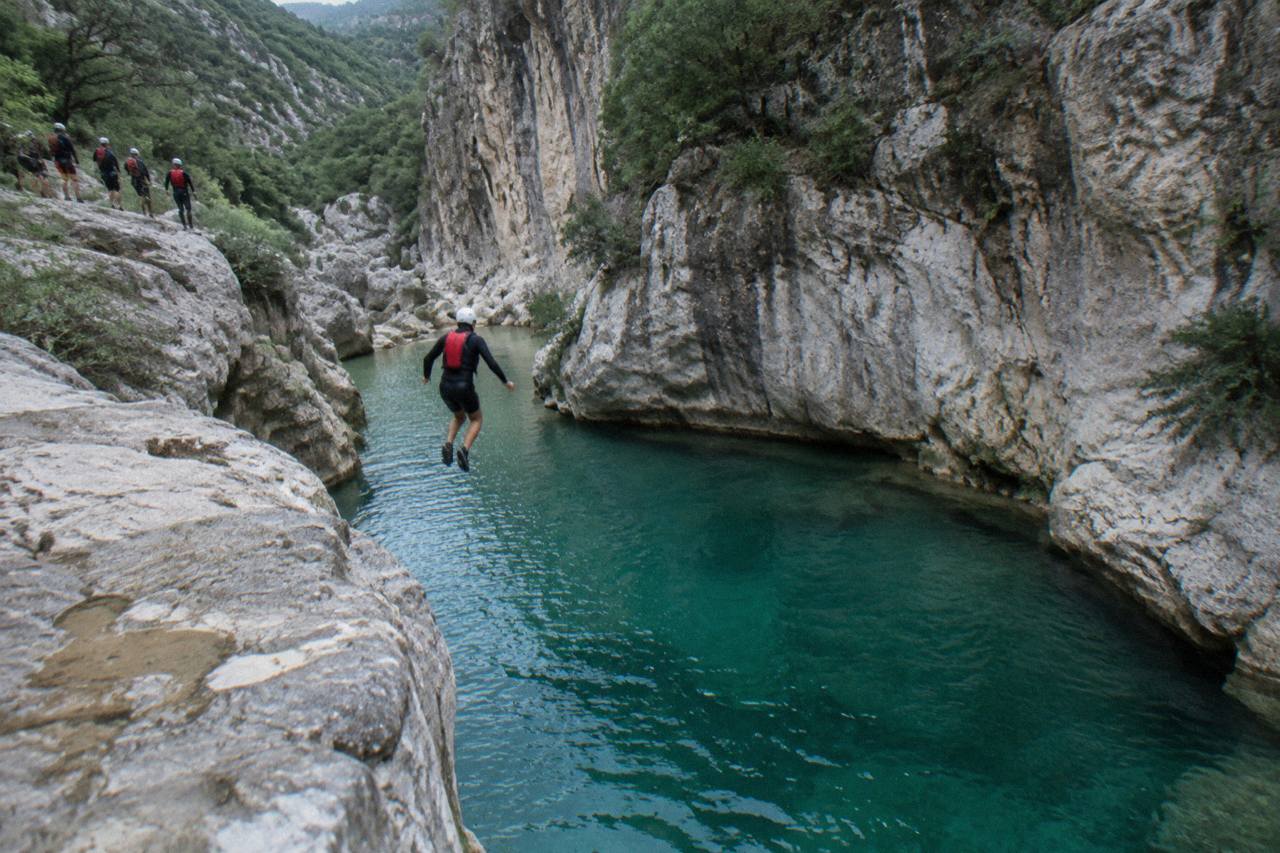
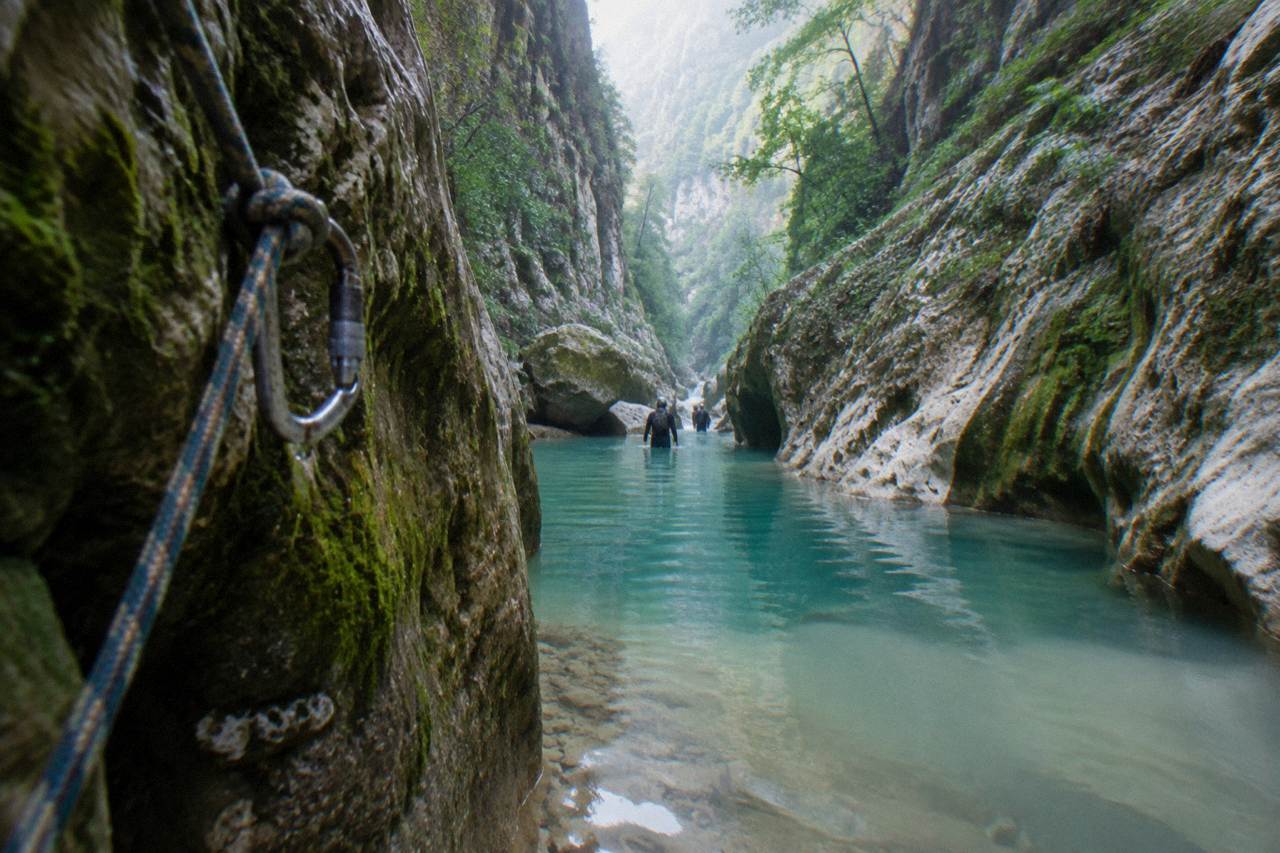
The route itself is the argument. Operators describe a full day of 8 to 10 hours, with 70 percent or more of the time spent in water, jumps up to 12 meters (some described as mandatory), rappels, natural slides and cold-water swimming. The single biggest drop is a 12 meter waterfall rappel as the operator states it. If reading that list makes you want someone who has run it a hundred times holding the rope, you already have your answer. The full sequence is mapped in the Matacanes route, rappels, jumps and slides.
Where The Real Risks Of Going Alone Actually Sit
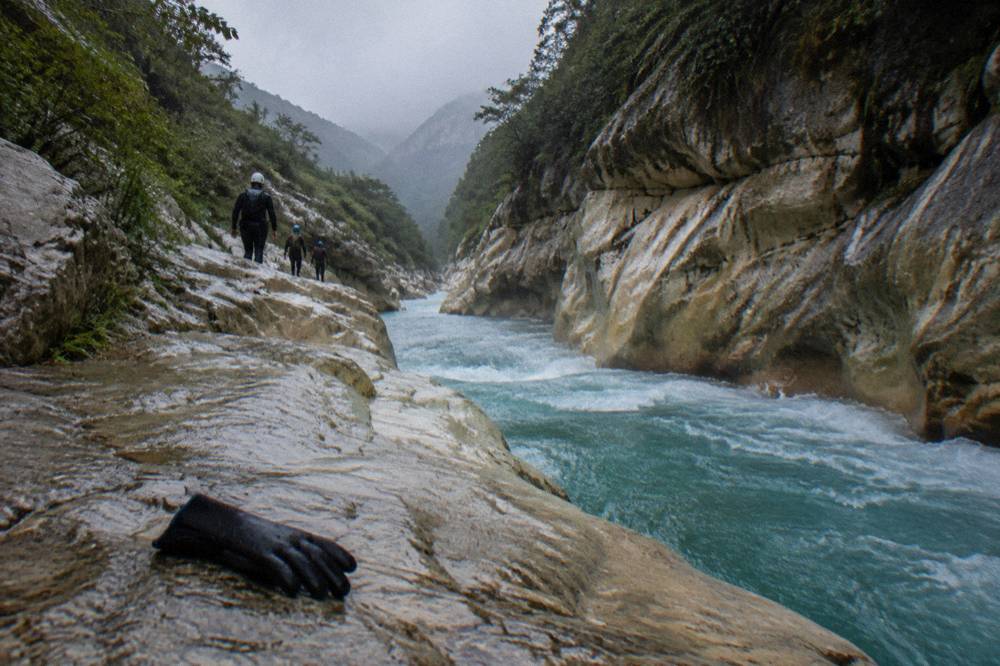
The real risks of going alone sit in three places: flash floods generated by rain in the upper Sierra, which the civil protection authority explicitly warns can strike Matacanes even when it is not raining at the canyon itself; hydraulics and jump landings that punish wrong technique; and plain elapsed-time exposure in cold water. None of these are hypothetical, and each one hits hardest when nobody is monitoring conditions or pacing you.
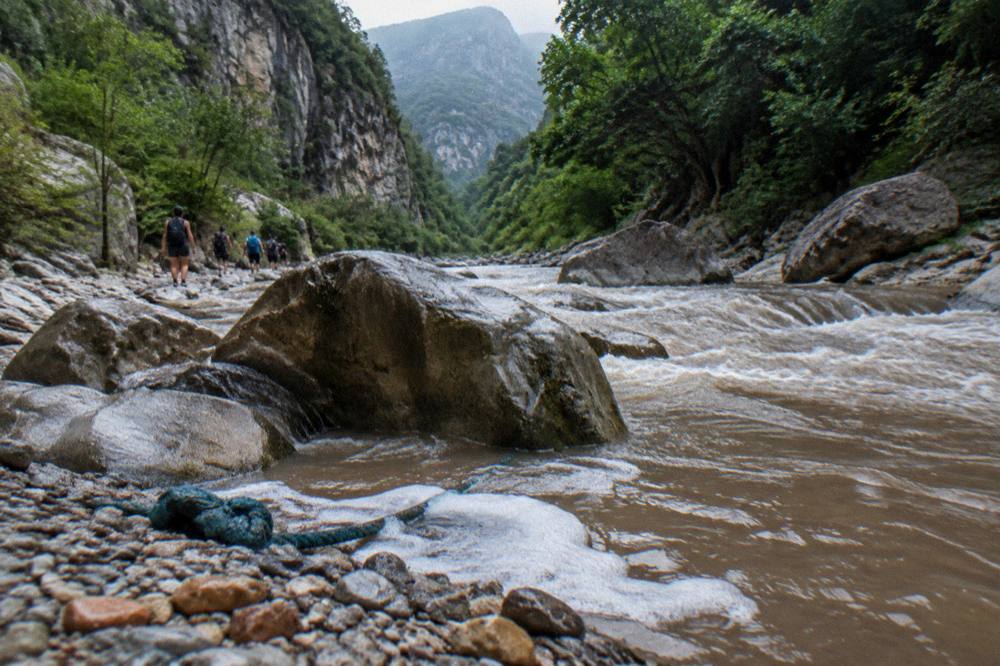
Start with the flood mechanics, because they are counterintuitive. The watershed above Matacanes is large. A storm kilometers away upstream sends water down the drainage hours later, and the canyon that felt calm at 9 a.m. can behave completely differently by noon. This is precisely why the daily monitoring by Potrero Redondo residents and state authorities exists, and why the current suspension was issued on river levels rather than rain at the site. A solo group has no upstream information. A guided group has an operator whose entire business depends on not running the canyon on the wrong day.
Then there is the water itself. The same features that make this route famous, jumping pools, slides and rappel lines into cascades, are the features that injure improvising visitors. Operators report that swimming ability is not strictly essential because the canyoning life jacket provides buoyancy, but every participant must be able to jump into water, and jump technique into unfamiliar pools is a real skill. Guided tours brief every jump, check every landing and set the rope systems on every rappel. For more on the physical demands, read Matacanes fitness and swimming requirements.
| Hazard | Why it catches independent groups | How a guided tour manages it |
|---|---|---|
| Flash flood from upstream rain | No visibility into the upper watershed | Daily level monitoring, suspensions respected |
| Jump and landing technique | Wrong entry into shallow or obstructed pools | Guided briefing at every jump |
| Rappel rigging | Building anchors on wet rock under time pressure | Guides set and check every descent system |
| Cold water exposure, 8 to 10 hours | Misjudged pacing and no wetsuit logistics | Wetsuits, planned rest and food stops |
Rescue is the backstop nobody wants to need. Emergency response in a canyon means technical retrieval, sometimes by helicopter, and it takes time. Guided listings on this site include accident insurance in their inclusions, which is worth reading closely: an independent visitor who needs extraction is coordinating that alone. The general point that rescues occur here is well documented; for a fuller treatment see is Matacanes safe, rules, guides and rescues.
What Gear Does A Guide Provide That You Cannot Easily Rent?
A guided Matacanes tour supplies the full technical kit as standard: helmet, canyoning harness with descent system, full-length wetsuit and flotation vest, plus ropes, breakfast and snacks on most listings. Renting or buying that kit independently in Monterrey is possible in fragments but awkward in practice, and the items that matter most, ropes, anchors and a properly fitting wetsuit for cold water, are exactly the ones casual renters skip.
Look at what the listings on this site actually include. The most reviewed full-day tour, rated 4.9 across 1783 reviews from $158 per person, includes wetsuit, harness, helmet, life vest, continental breakfast, snacks, round-trip group transport from the meeting point and tour pictures. A Monterrey-departure option from $195 per person adds hotel-zone pickup, a full local meal, accident insurance, park permits and even a headlamp for the cave sections. These are not frills; the headlamp and the insurance are the difference between a managed day and an improvised one.
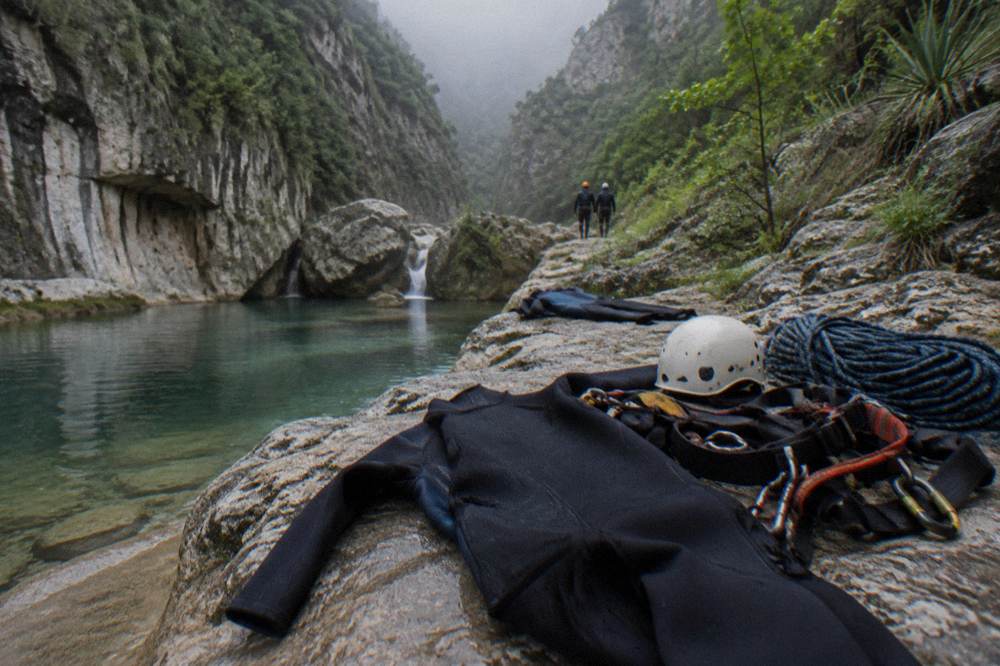
The item-by-item problem for an independent group is that canyon gear is not generic outdoor gear. A climbing harness is not a canyoning harness; a pool noodle is not a flotation vest with the buoyancy rating this water demands; and ropes for wet rappels are specialized equipment that must be inspected and replaced. Life jackets and helmets are described as mandatory on guided tours and enforced practice in the canyon, and operators supply them precisely because they are not optional in hydraulics. Sourcing all of it, at correct sizing, for one weekend, in Monterrey, is a real errand.
| Gear item | Guided tour | Independent trip |
|---|---|---|
| Helmet | Supplied, mandatory | Buy or rent, sizing matters |
| Canyoning harness and descender | Supplied, checked by guides | Specialty rental, hard to find |
| Full-length wetsuit | Supplied on the listings above | Rent in Monterrey, fit is hit or miss |
| Flotation vest | Supplied, mandatory practice | Buy or specialty rental |
| Ropes and anchors | Guides rig every descent | Purchase, inspect, rig yourself |
| Accident insurance | Included on several listings | Arrange separately |
The packing question changes once you book a tour, because almost everything technical is handled for you. Our what to bring and wear to Matacanes guide covers the personal items that still matter, from quick-dry shoes to a change of clothes for the drive back.
How Do The Costs Compare, Guided Versus Independent?
A guided Matacanes day runs from $144 to $611 per person depending on the listing, with the most reviewed option from $158 including gear, food and transport. An independent trip saves the tour price but keeps the MXN 125 park fee and MXN 60 ejido fee, then adds gear rental, 4x4 access, food and your own time; for most visitors the guided price buys more than the savings are worth.
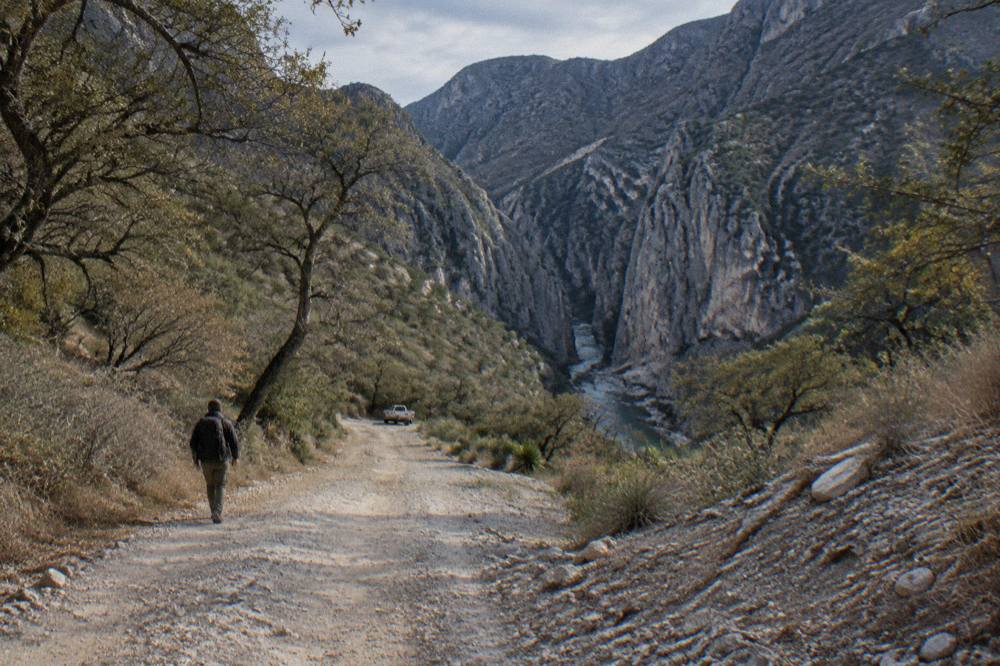
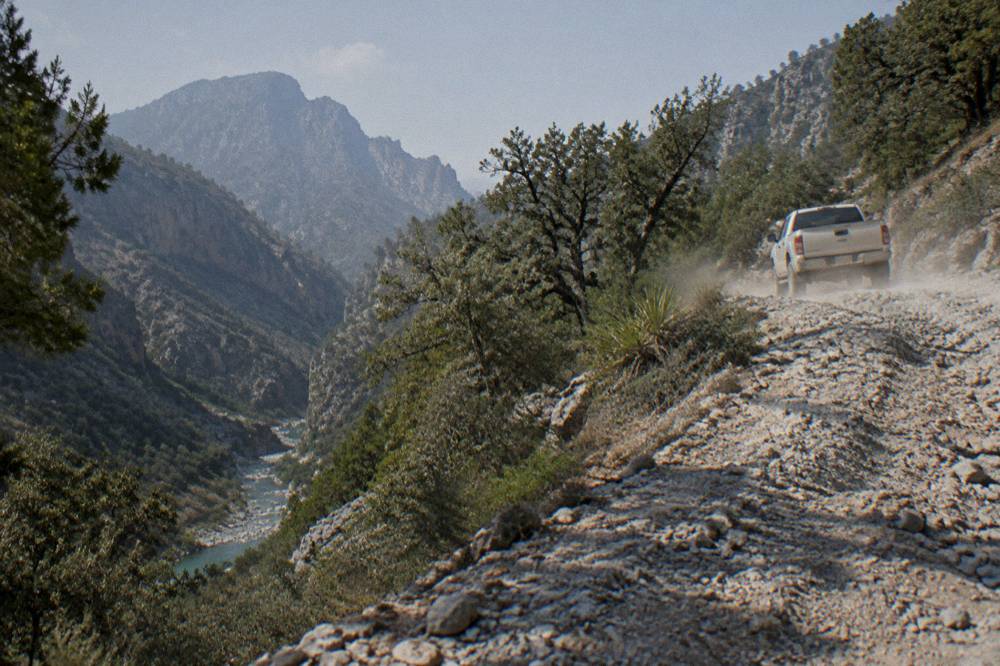
Run the arithmetic honestly. The fees you cannot escape: MXN 125 per person to the national park and MXN 60 per person to the ejido, both printed by their respective authorities and neither waived for solo travelers. Then access: the road from the Cola de Caballo area toward Potrero Redondo and the Matacanes trailheads includes unpaved, steep segments for which a 4x4 is described as required, and several tours include 4WD transport to the canyon precisely because of it. A standard rental car does not comfortably cover the last stretch, and a shuttle adds cost and scheduling.
Then the kit from the table above, then food and water for a 8 to 10 hour day, then the value of your own weekend time spent sourcing all of it. Against that, the guided floor is from $144 per person for a full-day listing with free cancellation, and the most reviewed tour sits from $158. The top of the range is a small-group listing from $611 per person, capped at 15 guests, with a minimum age of 12. Every price here is a snapshot, and the live listing shows the current figure.

| Cost line | Guided day tour | Independent trip |
|---|---|---|
| Tour price | From $144 to $611 per person | None |
| Park entry MXN 125 | Often included | Paid at entry |
| Ejido access MXN 60 | Often included | Paid in Potrero Redondo |
| Technical gear | Included | Rental or purchase |
| 4x4 canyon access | Included on several listings | Arrange separately |
| Meals | Breakfast and snacks on most, lunch on some | Self-supplied |
| Accident insurance | Included on some listings | Arrange separately |
If the budget line is what decides this for you, the detailed breakdown with every inclusion and exclusion per listing is in Matacanes tour cost, fees and what is included. And if a smaller canyon budget still wants adventure, the Nido de los Aguiluchos via ferrata runs from $108 per person, rated 4.9 across 753 reviews, though it is a climbing and via ferrata day, not canyoning.
When Do Closures And Water Levels Decide This For You?
The guided-versus-independent question becomes moot whenever Protección Civil de Santiago suspends canyon activities, because the suspension applies to everyone and holds until an official notice reopens the Sierra. Operators run roughly March 21 to September 15, the river level is monitored daily, and an independent planner has no equivalent monitoring feed, which is exactly when going alone is worst advised.
The current suspension is the current, real example. After river levels rose, the municipal authority halted river, canyon and rugged-terrain activity across the Sierra de Santiago, Matacanes named among them, until further notice. There is no fixed reopening calendar; closures are issued ad hoc by the authority as conditions dictate. The pattern is seasonal and it is honest to present it that way: the operator season window exists because late summer rains and hurricane influence make the water unpredictable, and the same weather that fills Presa La Boca fills the canyon.
For a solo planner this is the quiet dealbreaker. A guided booking comes with an operator who cancels or reschedules when the level is wrong, and whose refund terms, where a listing offers free cancellation, protect the date. A self-organized trip that drives out on a marginal day has no such feedback loop. If water levels are your main worry, the deeper treatment is in Matacanes flash floods, closures and water levels.
Never treat any date as guaranteed, whichever way you go. Water level, temperature and access can change, tours pause when levels are high, and the operator plus the booking page are the authority on whether your date runs.
Who Should Still Consider Going Independently?
The realistic independent candidate is an experienced canyoner who owns their gear, has run comparable aquatic canyons, travels with at least one equally capable partner, checks conditions with local sources that same morning, and accepts the rescue and insurance exposure. Everyone else, families, first visitors, casual hikers and swimmers without jump experience, is better served by a guided full-day tour.
Honesty cuts both ways, and there is a real population for whom "matacanes without guide" is a legitimate plan. Experienced canyoners exist, gear exists, and the canyon has been descended self-supported by people who knew exactly what they were doing. If that is you, the checklist above is the bar: partner, kit, same-day local condition check, and a clear-eyed view that rescue here is technical, slow and self-funded. Check the current official travel advisory and ask local operators about conditions before committing; they monitor the water daily even if you are not paying them for the tour.
For everyone else, the guided decision is not about hand-holding, it is about the three problems this article has laid out: no upstream flood visibility, hard-to-rent technical gear, and access logistics that eat a day. The tours on this site solve all three inside a single price. The Matacanes Canyoning homepage comparison walks the choice listing by listing if you want the full spread.
One honest alternative for the "we want our own adventure" instinct: a different canyon with a guide. The Chipitin 7-rappel route from Monterrey, from $195 per person with meals and round-trip transport included, is a rope-heavy day in a distinct canyon, and being guided there does not feel like a tour, it feels like a specialized descent. The tradeoffs between the two routes are covered in which Matacanes tour to book.
| Traveler profile | Better choice | Why |
|---|---|---|
| First-time canyoner | Guided full day | Gear, briefing and insurance included |
| Family with teens | Guided, check age terms | Minimum age 12 appears on some listings, ask the operator |
| Experienced canyoner with gear | Independent is defensible | Meets the checklist above |
| Swimmer, no jump experience | Guided | Jumps up to 12 m are part of the route |
| Solo traveler | Guided | Partners matter for rope work and emergencies |
The bottom line this site reports, without romance: most independent travelers who research Matacanes properly end up booking, not because anyone forces them, but because the risk and the logistics are real and the guided price, from $144 per person, costs less than replicating the day alone. Check availability on the live listing for the date you want, and let the current price and the current water level make the final call.
Common Questions About Going Without A Guide
Can you do Matacanes without a guide?
Physically yes, there is no gate that requires a guide, but you still pay the MXN 125 park fee and the MXN 60 ejido fee, and the route's jumps, rappels and flash-flood exposure make a guide the standard choice. Most independent researchers end up booking a guided tour from $144 per person.
Is a permit required to enter Matacanes canyon?
The charges an individual actually encounters are the national park entry fee of MXN 125 per person per day and the Potrero Redondo ejido access fee of MXN 60 per person. This site does not print a legal permit claim it cannot source; check with your operator and the park authority for current requirements.
Do guided Matacanes tours include the entry fees?
Several listings include park permits in the price, and one from $195 per person lists park permits, accident insurance, gear, a full meal and transport from Monterrey. Check the inclusions on the live listing for the tour you are considering.
What gear do you need to go independently?
Helmet, canyoning harness with descent system, full-length wetsuit, flotation vest, ropes and anchors, plus food, water and a headlamp for cave sections. Guided tours supply the technical kit as standard, which is a large part of why the independent savings shrink.
Can Matacanes close even if I am going on my own?
Yes. Protección Civil de Santiago suspends canyon activities on river levels, and suspensions apply to everyone, guided or independent, until an official notice. Operators run roughly March 21 to September 15 and monitor the water daily.
How dangerous is Matacanes without a guide?
Risk concentrates in flash floods from upstream rain, jump landings and rappel rigging on wet rock. Rescues do occur in the canyon, and operators consistently flag unguided attempts as high risk. Cold water swimming over 8 to 10 hours adds exposure.
What is the cheapest guided Matacanes option?
The lowest-priced listing on this site is a full-day tour from $144 per person with free cancellation, rated 4.2 across 5 reviews. The most reviewed option runs from $158, rated 4.9 across 1783 reviews. Prices are snapshots; the live listing shows current figures.