How Hard Is Matacanes? Difficulty, Heights And What Scares People
Matacanes is rated intermediate, and that rating is honest: the jumps are mandatory, the water is cold, and the day is long. Here is what actually feels hard, and who struggles.
Short answer
Operators rate Matacanes as intermediate. The route involves jumps up to 12 m (some mandatory), rappels, natural slides, and 70% or more of an 8 to 10 hour day in cold water at 12 to 18°C. Minimum age is 12 on the listings that state one. Strong swimming is not required, but you must be able to jump into water.
Matacanes is the canyon people drive from Monterrey to descend, and the question they ask before paying is almost always the same one: can I actually do this? The honest answer starts with the operator's own rating. The route is graded intermediate, requires regular physical condition, and spends 70% or more of an 8 to 10 hour day in or beside cold water, with jumps up to 12 m, some of them mandatory, plus rappels and natural slides. None of that is hidden in the fine print. It is the product.
What trips people up is not usually one single obstacle. It is the stacking: a pre-dawn start, a long drive on dirt roads to Potrero Redondo, a descent into cold water before the sun has properly reached the canyon floor, and then hours of jumping, swimming and rappelling in sequence, with no exit shortcut halfway. If you want the full picture of what the canyon asks of your body, this guide walks through it section by section, from the mandatory jumps to the water temperature to the people who struggle most.
How Hard Is Matacanes Really?
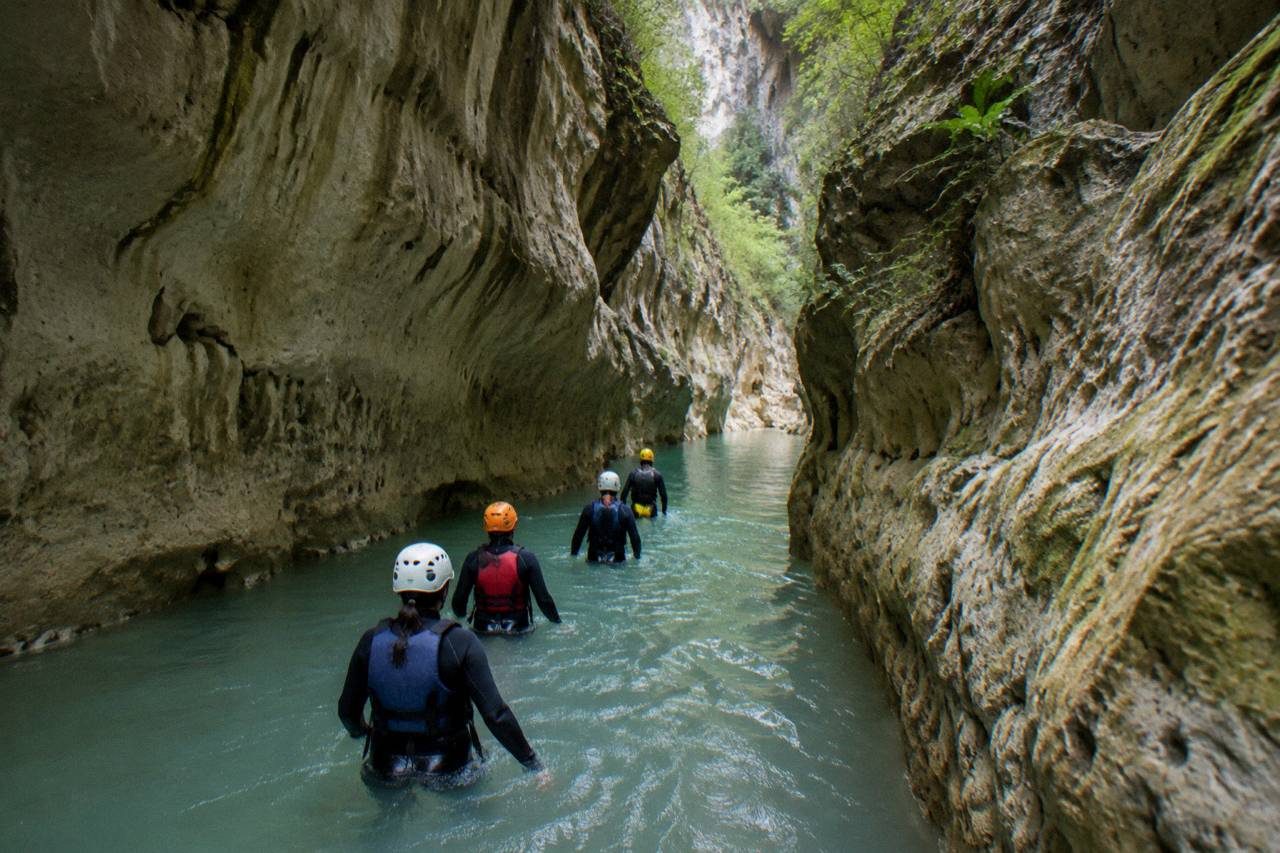
Matacanes carries an intermediate rating from the operators who run it, and the label fits a reasonably fit, water-confident adult. The day runs 8 to 10 hours, 70% or more of it in water, with rappels, natural slides, swims and jumps up to 12 m, some mandatory. You do not need to be an athlete, but you need stamina, steady nerves on exposed rock, and genuine comfort in deep, cold water for hours at a time.
The difficulty is cumulative rather than technical. A single 12 m rappel is a beginner skill with a guide managing the rope. A single 5 m jump is a pool trick. Matacanes strings these together across a full day, in a wetsuit, in water the operator describes at 12 to 18°C, inside a canyon where the only way out is through. That is what "intermediate" is measuring. There is no halfway exit that spares you the remaining jumps and rappels, so the real question is whether you can sustain the effort, not whether you can do any one move.
The good news for nervous first-timers is that the support system is real. Guided tours supply the wetsuit, helmet, life jacket and harness with a descent system, and the operator states that swimming ability is not essential because the canyoning life jacket provides buoyancy. What is not negotiable is the jump itself: you must be able to leap into water, repeatedly, and stay calm while the next obstacle comes into view. One operator's requirements page, which lists the route at intermediate level with a 12 m single drop, is a useful reference point for what a typical program expects: the GEO Aventura Matacanes page.
For context on how the full day unfolds, our Matacanes day hour by hour walkthrough breaks down each stage of the descent.
How High Are The Jumps And Which Ones Are Mandatory?
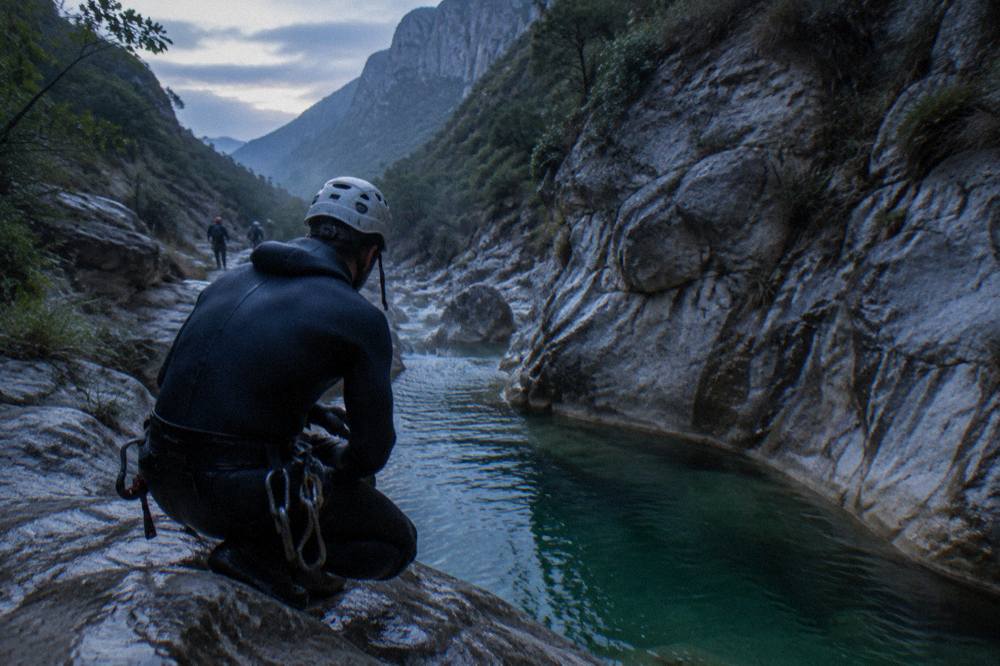
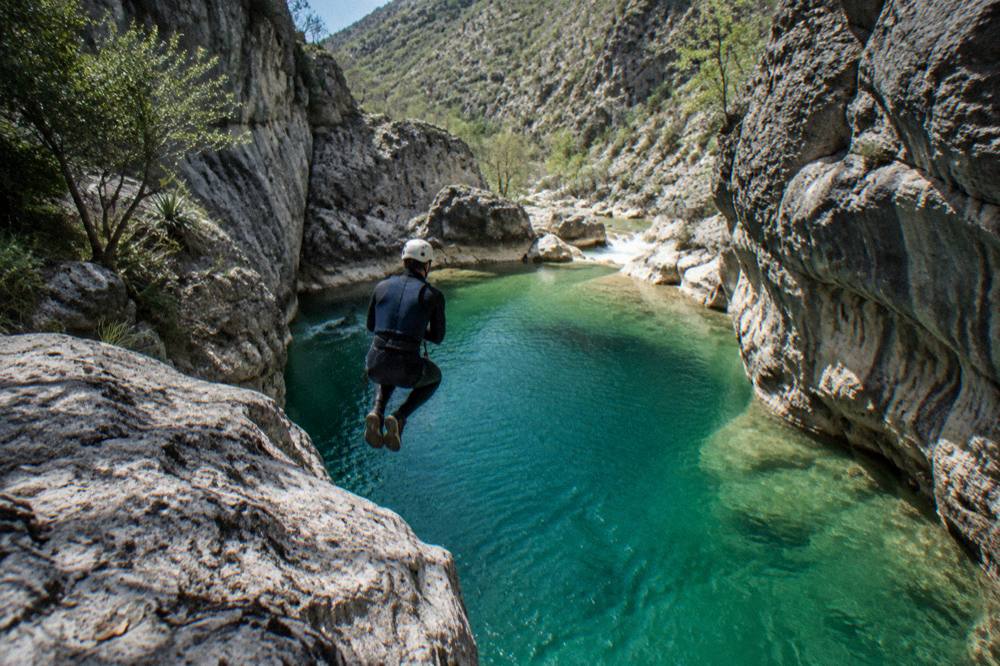
The largest single drop on the route is 12 m, and jumps reach that height, with the operator stating that some jumps are mandatory. The mandatory ones cannot be walked around or rappelled instead, because the canyon walls leave no alternate path. Guides control the order and the timing, and every participant wears a helmet and life jacket for each jump, but the leap itself is yours to make.
The number that scares people is 12 m, roughly a four-story building. In practice, the route builds up: shorter jumps and natural slides come first, so by the time you stand on the high ledge you have already jumped a dozen times from lower rock. Guides check the landing pool, call the jump, and manage the group's pace. The life jacket does the floating once you are in. What no guide can do is make the canyon walkable, and that is the part of "mandatory" that matters for your decision: if a 12 m leap into cold water is a flat no for you, Matacanes is the wrong canyon, not a canyon you can partially skip.
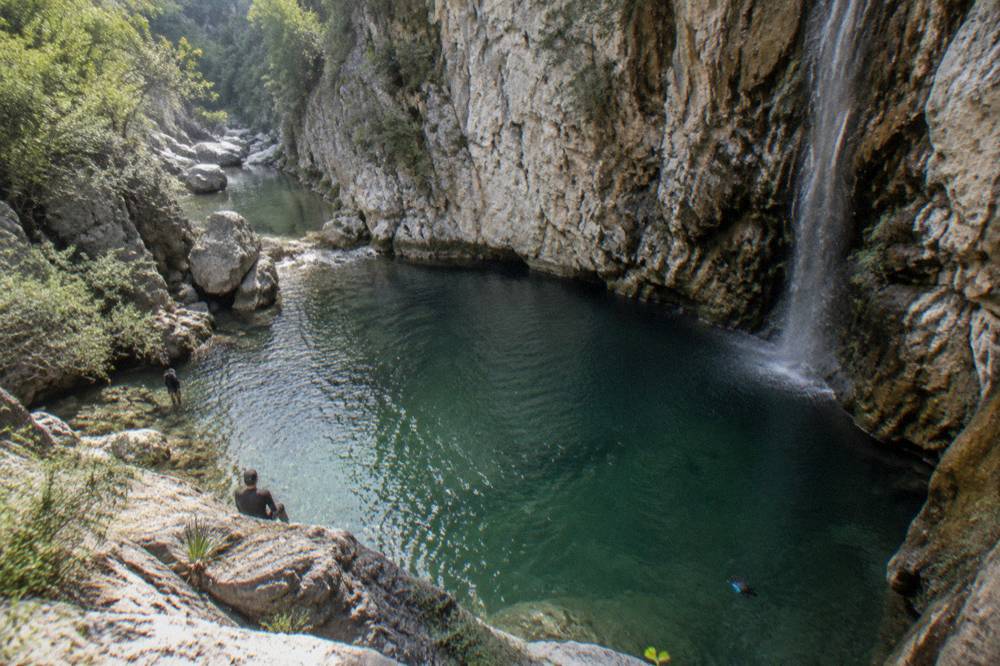
Fear of heights and fear of the jump are different problems, and it helps to know which one you have. The rappels reward control: you lean back on the rope and descend at your own pace. The jumps reward commitment: hesitation at the lip is where most people struggle, and where a queue of wetsuit-clad strangers waits below. If you want a tour that minimizes both, the listing you choose changes the experience, because group size determines how much individual coaching you get at each obstacle. Here is how the main Matacanes listings differ on that score:
| Listing | Group max | Price from | Rating | Jump coaching reality |
|---|---|---|---|---|
| Matacanes Full-Day Canyoning | 25 | $158 per person | 4.9 across 1783 reviews | Large group, more waiting at each jump |
| Matacanes From Monterrey With Lunch | not stated on the listing | $195 per person | 5 across 2 reviews | Requires prior rappelling experience per the listing |
| Matacanes Small Group From The Hotel Hacienda | 15 | $611 per person | 4.9 across 27 reviews | Smallest stated group, most guide attention |
| Matacanes Full Day From Walmart Las Torres | 30 | $144 per person | 4.2 across 5 reviews | Largest stated group, earliest start at 4:00 a.m. |
The listing that suits a nervous first-timer is usually the one with the most reviews spelling out what the day involves. The full-day listing at 4.9 across 1783 reviews is the most-reviewed option on the roster, and its listing is candid about the route: wetsuit, harness, helmet, life vest, breakfast, snacks, round-trip group transport from the meeting point and tour pictures included. Check availability before the season fills up. One caution: that listing shows no customer free-cancellation term, with a refund only if the operator cancels for weather or minimum group size, so read the terms before booking.

How Cold Is The Water In Matacanes?
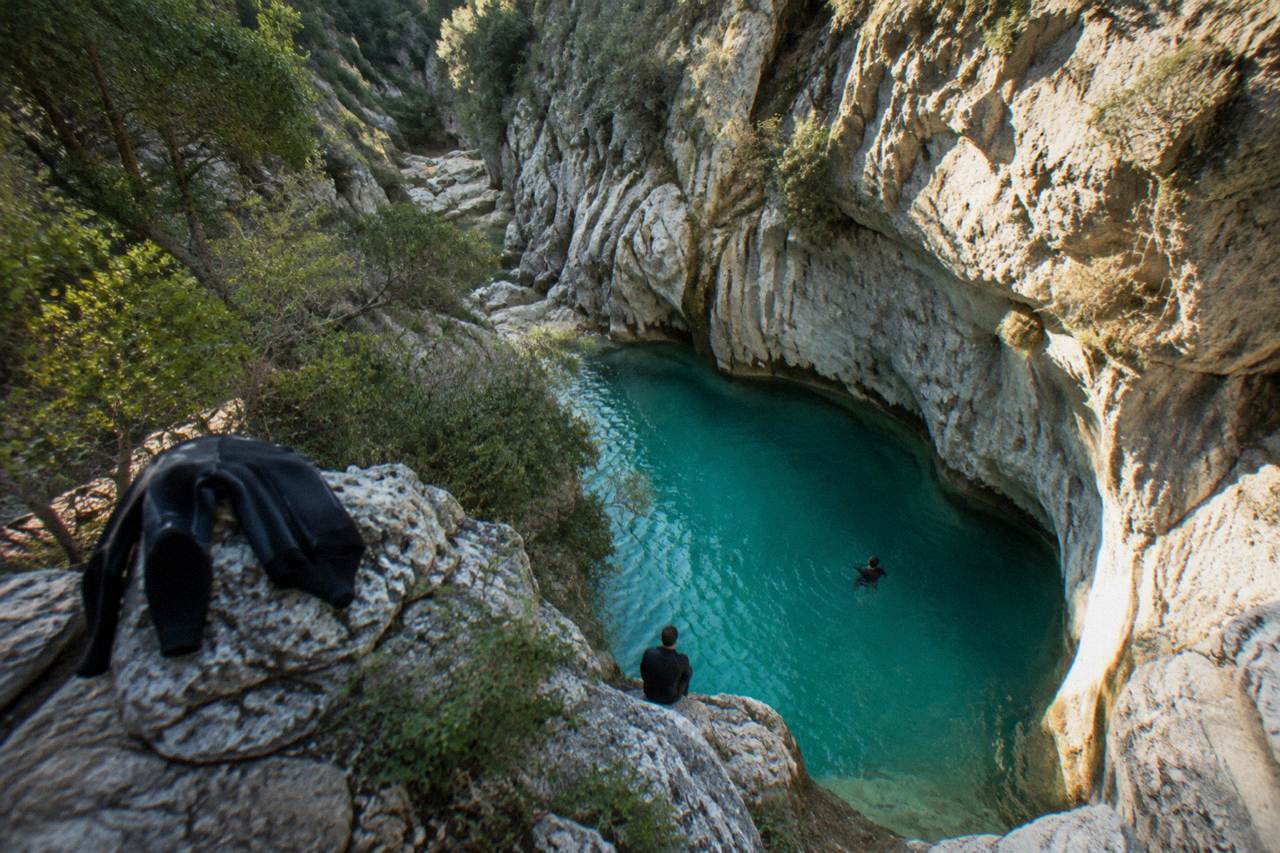
Operators put Matacanes water at 12 to 18°C, cold enough that every guided tour supplies a full-length wetsuit and requires it for the descent. The cold is not a one-time shock at the start: 70% or more of the day is spent in water, so you re-enter cold pools dozens of times. Wetsuits manage it, but swimmers who hate cold water find the day harder than the jumps.
Twelve to 18°C is swimming-pool-winter-training territory, not bathtub water. The wetsuit does most of the work, trapping a layer of water your body warms, and the life vest adds buoyancy when you surface. What the suit cannot fix is the face-in moment, every single time you jump, and the cumulative chill on a shaded canyon floor where the sun arrives late and leaves early. People who surf or swim in unheated water rarely mention the temperature afterward. People whose open-water experience is summer lakes sometimes find the cold, not the height, is what wears them down by hour six.
The other honest note about water is that its level is the reason tours pause. Operators describe the season as roughly 21 March to 15 September, watched daily, with suspensions possible any time the river rises. Our flash floods, closures and water levels guide covers that system in detail, including how the current suspension in the Sierra de Santiago works. For this article's question the point is simpler: high water makes the canyon genuinely harder, and the operator decides, not you.
The listing you pick also changes your cold-water day at the edges. The lunch-included tour from Monterrey provides a full local meal after the descent, which matters when you have burned a day's calories in cold water, plus accident insurance and a photo shoot. It states that prior rappelling experience and good fitness are required, so it is not the beginner's choice despite the lunch.
How Fit Do You Need To Be To Do Matacanes?
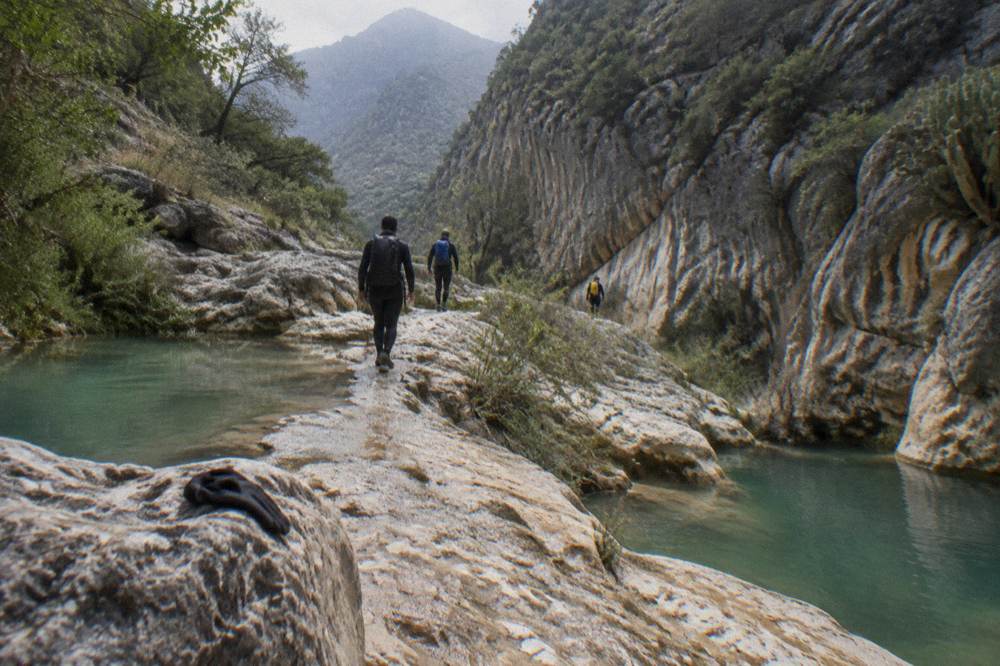
Operators require regular physical condition for Matacanes and exclude participants with heart or lung conditions, recent surgeries or fractures, spinal problems or epilepsy unless they notify the operator first. The day is 8 to 10 hours long, largely in water, with steep approach and exit trails on either side of the canyon. You need hiking stamina and water confidence more than strength.
The fitness that matters is endurance, not power. The route's obstacles are technique-light for a beginner: the guides rig the rappels, the jumps need commitment rather than athleticism, and the slides do the work themselves. What no guide can do for you is carry you through a full day: the walk in, hours of swimming and jumping at 12 to 18°C, the scramble between obstacles, and the climb out at the end when your legs are done. Operators describe the level as intermediate and ask participants to flag significant overweight or health conditions in advance, and that request deserves an honest answer.
Age is the clearest published line. Minimum age 12 appears on the small-group and via ferrata listings in this roster, and the operator's own programs state 12 with a parent or guardian accompanying children. For listings that print no minimum age, ask the operator directly rather than assuming. If you are weighing whether a 12 year old, or a nervous adult, can manage the full route, our Matacanes age limits and kids guide covers that decision on its own.
| Requirement area | Operator expectation | Where it bites |
|---|---|---|
| Cardio endurance | Regular condition, full-day effort | Hour 6 and the exit climb |
| Swimming | Not essential, buoyancy from life jacket | You must still jump into deep water |
| Heights | Comfort with ledges and rappel edges | The 12 m mandatory jumps |
| Cold tolerance | 12 to 18°C water, wetsuit supplied | Repeated entries, shaded pools |
| Health disclosures | Heart, lung, spinal, epilepsy, recent surgery | Tell the operator when booking |
For a smaller-group version of the same route, the small-group listing from the Hotel Hacienda caps the group at 15, sets minimum age 12 in print, includes breakfast tacos and trail snacks, and runs from $611 per person on its listing, which also notes free cancellation.
Who Struggles Most On The Matacanes Route?
Three groups struggle most: people who cannot commit to a jump, people unprepared for cold water, and people who underestimate the day's length. The jumps are mandatory, the water sits at 12 to 18°C, and the tour runs 8 to 10 hours with no exit halfway. Height-anxious swimmers usually finish happy; height-anxious non-jumpers usually do not start.
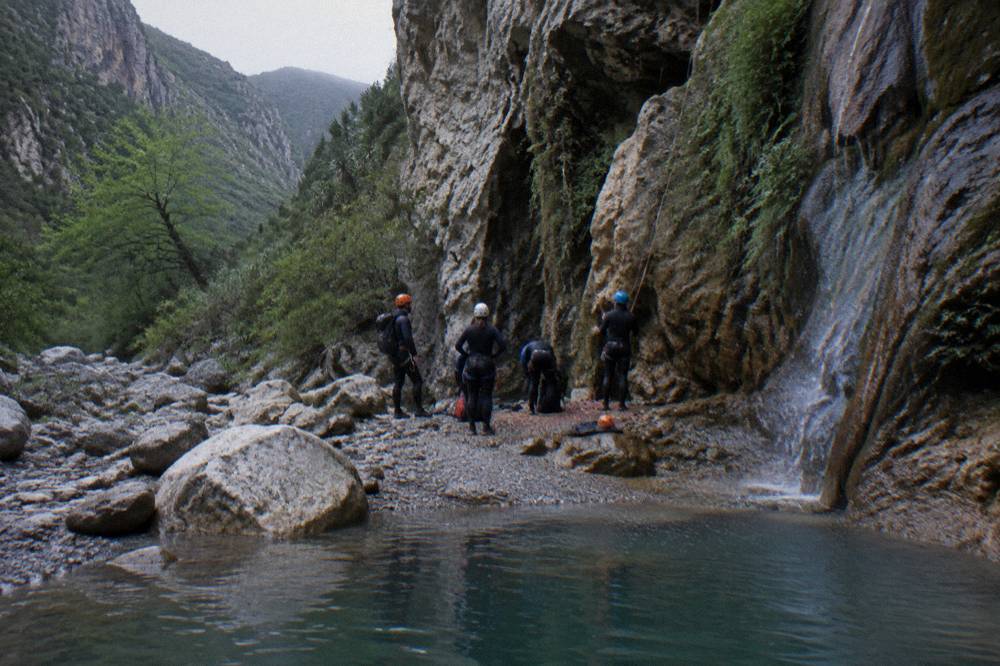
Put plainly, the failure mode at Matacanes is panic at a lip, not injury. Rescues in the Sierra de Santiago canyons do happen, which is exactly why life jackets are enforced and why operators keep pushing the guided-only message, but the far more common bad day is quieter: a guest frozen on a ledge, a long queue forming, a guide talking someone down with the whole canyon waiting. If you have never jumped from a high board or a quarry ledge, test that reflex before you pay. A 3 m platform at a local pool tells you most of what you need to know about your own reaction.
| Who usually thrives | Who usually struggles |
|---|---|
| Swimmers and surfers used to cold water | Guests whose only water time is heated pools |
| Hikers used to 8 hour days | Guests who rarely walk more than an hour |
| People who have jumped from heights before | People who have never left a high diving board |
| Anyone honest with the operator about health | Guests who withhold medical conditions |
| Ages 12 to 60 with regular condition | Untreated fear of heights with no practice jump |
If the fear list reads like you but the canyon still calls, two of our guides help you tilt the odds: what to bring and wear to Matacanes covers the gear that softens the cold, and is Matacanes safe, rules, guides and rescues explains the safety system you are buying into.
Does The Listing You Book Change The Difficulty?
The canyon is the same, but the listing changes how hard the day feels: group size sets how long you wait and how much coaching each obstacle gets, the start time sets how tired you arrive, and pickup logistics set whether you spend energy on transport. Within this roster the same route sells from $144 to $611 per person across four Matacanes day listings, and the differences are real.
The 4:00 a.m. start on the cheapest listing is the clearest example. A 30-person group meeting outside Walmart Las Torres at 4:00 a.m. begins the canyon already short on sleep, and a 30-person group waits longer at every rappel station. The small-group listing from the Hotel Hacienda costs from $611 per person, but 15 people move faster through the canyon and each guest gets more guide time at the jumps. Neither listing changes the 12 m drop or the water temperature. They change the human buffer around them.
| Listing | Duration | Start and meeting | Included food | Group max |
|---|---|---|---|---|
| Full-Day Canyoning | about 1 day | Walmart Supercenter Eugenio Garza Sada or Hotel Hacienda lot | Continental breakfast, snacks | 25 |
| Full Day From Walmart Las Torres | about 12 hours | Walmart Las Torres main entrance, 4:00 a.m. | Breakfast, meal not included | 30 |
| From Monterrey With Lunch | about 12 hours | Pickup in Downtown Monterrey and San Pedro | Breakfast, trail snack, full meal | not stated |
| Small Group From The Hotel Hacienda | about 9 hours | Hotel Hacienda Cola de Caballo roundabout, Santiago | Breakfast tacos, trail snacks | 15 |
This site, Matacanes Canyoning, exists to make exactly this comparison easy, and our which tour to book guide ranks all the listings side by side. For the difficulty question, the shortcut is this: the nervous first-timer gets the most from a listing with a small stated group and a candid description, and the most-reviewed listing is a reasonable default because 1783 reviews describe the jumps in unsold detail.
Should A Nervous First Timer Book Matacanes?
A nervous but fit first-timer who can jump from height into cold water should book Matacanes; a nervous non-jumper should not, because some jumps are mandatory and there is no exit halfway. Pick a smaller listed group, answer the health questions honestly, and treat the wetsuit, life jacket and guide as the support system they are. The reward is the most famous canyon day in northern Mexico.
The distinction that decides it is honest self-assessment on one act: jumping. Everything else on the route has a workaround. Rappels are guide-managed. Swimming is life-jacket-assisted. Cold is wetsuit-buffered. Fatigue is pacing and breakfast. The jump has no workaround, the operator states some jumps are mandatory, and the canyon walls are vertical. Test the reflex, then decide.
One more honest variable before you pay: the season and the river decide whether a date runs at all. Operators run roughly 21 March to 15 September, the water level is watched daily, and Protección Civil de Santiago suspended canyon activities in the Sierra de Santiago after river levels rose, until further notice, with the local authority warning that flash floods can occur even when it is not raining at the canyon itself. Coverage of that suspension is reported at Enfoque Monterrey. The booking page and the operator are the authority on whether your date goes ahead, so confirm before you travel.
Common Questions About Matacanes Difficulty
How hard is Matacanes for a beginner?
Operators rate it intermediate. A fit, water-confident beginner who can jump from height into cold water can complete it with a guide; the mandatory jumps and the 8 to 10 hour length are the two factors that weed people out, not the technical skills.
Do you have to jump in Matacanes?
Yes, in part. The operator states jumps reach 12 m and some are mandatory, because the canyon walls leave no alternate path. Guides control timing and check the landing pool, but the jump itself cannot be skipped.
Can you do Matacanes if you cannot swim?
Operators say swimming ability is not essential, since the canyoning life jacket provides buoyancy. You must still be able to jump into deep water and stay calm in it, repeatedly, through a full day.
How cold is the water in Matacanes?
The operator puts it at 12 to 18°C. Every guided tour supplies a full-length wetsuit, and 70% or more of the day is spent in water, so expect repeated cold entries rather than one shock.
What is the minimum age for Matacanes?
Age 12 appears on the small-group listing in this roster and on the operator's own programs, with children accompanied by a parent or guardian. Listings that print no minimum age should be asked directly.
Which Matacanes listing is best for a nervous first-timer?
One with a small stated group, so you get more guide time at each jump. In this roster the small-group listing caps at 15; the most-reviewed full-day listing, 4.9 across 1783 reviews, is the strongest default because so many reviews describe the obstacles plainly.
Is there a way out of the canyon halfway?
No practical one. The route commits you to the full sequence of jumps, rappels and slides, which is exactly why the mandatory-jump question matters before you book.