Is Monterrey Safe To Visit Right Now?
An honest look at safety in Monterrey for adventure travelers: official advisories, the drive to Santiago, canyon rescues and closures, and how to book a guided Matacanes day with confidence.
Is Monterrey Safe To Visit Right Now?
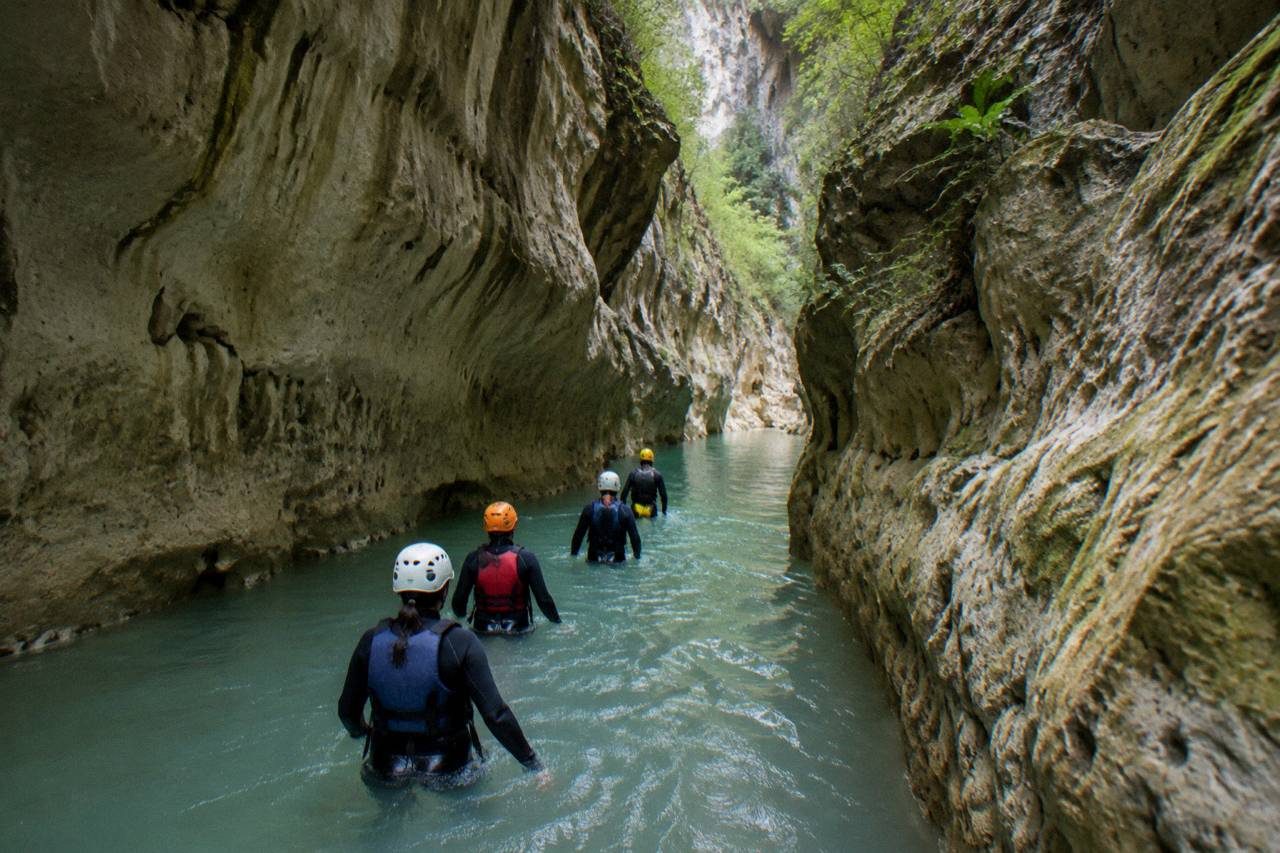
Monterrey is a working industrial capital of more than five million people that also happens to sit at the foot of some of the most spectacular canyon country in North America. For adventure travelers the safety question is really three separate questions: is the city itself safe for visitors, is the road south to Santiago and the Sierra safe, and is the canyoning, the thing most foreign visitors come for, run in a way that manages risk. The honest answer to all three is that thousands of people do this trip every year, that the risks are real but well understood, and that the difference between a safe trip and a bad one usually comes down to going with an accredited operator and checking current conditions before you commit to a date. The most reviewed guided descent, the Matacanes full-day tour, has carried 1,783 reviewers alone, which tells you something about the scale of ordinary, uneventful tourism here. If you're torn between the two classic descents, our comparison of the Hidrofobia and Matacanes canyons walks through which route fits your experience and comfort level.
Is Monterrey Safe To Visit Right Now?
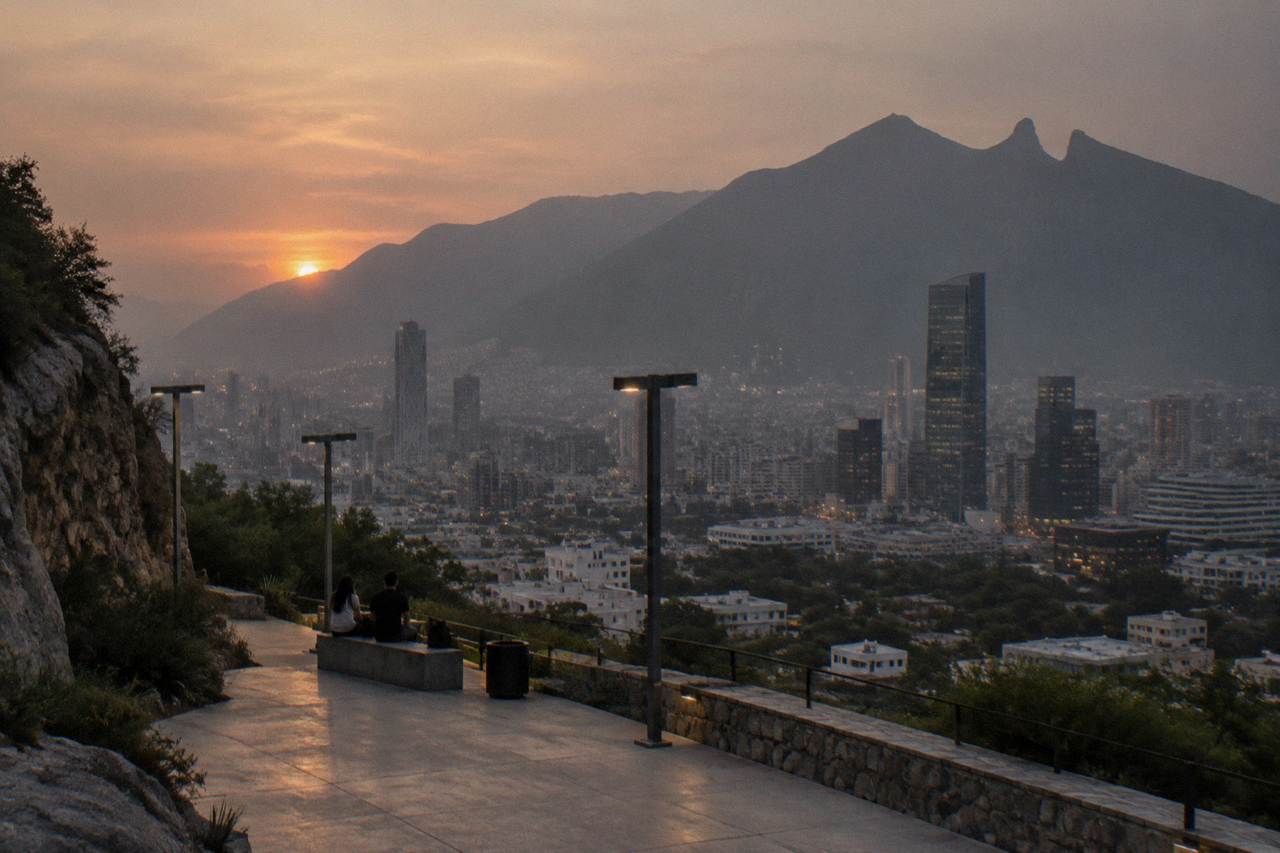
For most visitors, yes, in the ordinary way a large city is: with normal urban caution, a check of the current official travel advisory for your country, and, for the mountain part of the trip, a booked seat with an accredited operator rather than a self-organized descent. The city is the business capital of northern Mexico, full of corporate travelers, universities and weekend tourists from Texas, and the visitor economy runs on predictable routines: airport taxis and ride-hailing, hotel zones in San Pedro and downtown, and day trips south to Santiago. None of that makes it crime-free, no large city is, but it does mean the infrastructure visitors use is well-trodden.
The US State Department publishes state-by-state levels for Mexico on its own site, and those levels change; the only responsible instruction is to read the current advisory yourself at the official Mexico travel advisory page and see what it says about Nuevo León on the day you book. What we can say from the local record is that Monterrey's tourism economy, from the bars of the Barrio Antiguo to the trailheads of Chipinque, operates openly and at scale, and that foreign visitors are a normal, expected presence.
The safety question also shifts with geography. Monterrey the city and Santiago the mountain town twenty minutes south are different environments. The city asks for the caution you'd bring to any metro area of this size: use app-based rides at night, keep phones out of reach on busy streets, ask your hotel which neighborhoods to walk after dark. The Sierra asks for something else entirely, which is respect for water. The single most consequential safety fact for an adventure visitor is not crime at all: it is that canyon activities in the Sierra de Santiago are suspended by the municipal civil protection authority when river levels rise, and that suspensions can be issued at any time, even when it is not raining at the canyon itself. If the water levels cooperate, our guide to Monterrey adventures for thrill seekers covers the canyons, climbs, and rivers worth planning around.
If you are weighing this trip now, the practical sequence is simple. Check the advisory, check whether your date falls inside the operator season operators describe as running roughly 21 March to 15 September, and book a guided tour with a cancellation arrangement you understand. The three listings below are a reasonable shortlist for that last step: the classic full day, a version with hotel pickup and a full meal from Monterrey, and a half-length via ferrata that suits anyone who wants the vertical thrill without the full canyon commitment.
Is The Drive From Monterrey To Santiago Safe?
Yes, in normal conditions the drive from Monterrey to Santiago is safe and straightforward. The route is a short 34 km trip south on the Carretera Nacional, about 28 minutes in total, along a major federal highway that is heavily used every day. The road is the main artery connecting Monterrey to the towns and parks of the Sierra, and it carries commuter and tourist traffic constantly. Ride-hailing operates between the two, with average journey times of about 25 to 26 minutes, and public buses reach Santiago on a combination of routes in roughly 50 minutes for a fare near 49 MXN.
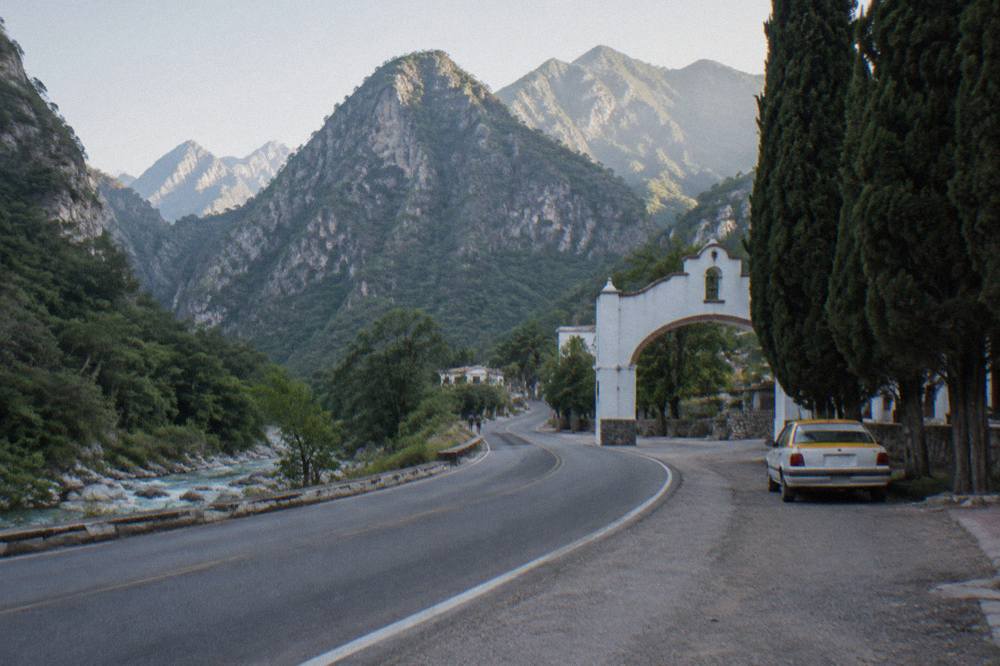
There are two caveats worth knowing before you drive it yourself. First, roadworks happen: repaving of a stretch of the Carretera Nacional between Allende and Monterrey was underway currently, done at night, which is a normal maintenance pattern rather than a hazard specific to visitors. Second, and more important, rain changes everything in this region. Heavy rainfall, flash floods, stranded vehicles and preventive road closures including turnaround points on the Carretera Nacional in the Santiago area. This is the seasonal reality of the Sierra: tropical systems and cold fronts can push rivers over their banks within hours.
The last stretch matters too. The paved road ends well before the Matacanes trailhead. Reaching Potrero Redondo and the canyon access points from the Cola de Caballo area involves unpaved dirt roads with steep descents and climbs that call for a 4x4, which is one concrete reason almost every visitor goes with a tour: the operators run that leg themselves. The Matacanes tour with lunch from Monterrey includes round-trip transport from downtown Monterrey and San Pedro Garza García, and the full-day tour from Walmart Las Torres includes an air-conditioned vehicle from its meeting point. If you'd rather understand the whole route in detail first, our guide on getting from Monterrey to Matacanes breaks down every meeting point and transport option on the current listings.
Is Canyoning In Matacanes Safe For A First-Timer?
Guided Matacanes descents enforce life jackets, helmets and harnesses on every guest, and the canyon remains a genuine intermediate-level environment with jumps, rappels and a 12 m drop, so it rewards honesty about your own fitness. The most reviewed listing, Matacanes Full-Day Canyoning, is rated 4.9 across 1783 reviews, and the small-group version from the Hotel Hacienda is rated 4.9 across 27 reviews. Those numbers reflect thousands of ordinary completions by ordinary tourists, many of them first-timers.
What makes those trips safe is not luck but structure. Operators supply and require the full kit, wetsuit, harness, helmet and life vest, and the operator guidance is explicit that swimming ability is not essential because the canyoning life jacket provides buoyancy, though every participant must be able to jump into water. Operators also screen for health: heart and lung conditions, recent surgery or fractures, spinal problems and similar issues need to be declared in advance, and significant overweight should be flagged before booking. The GEO Aventura operator page, a useful primary read, sets all of this out at its Matacanes program page, including the minimum age of 12 with a parent or guardian accompanying children.
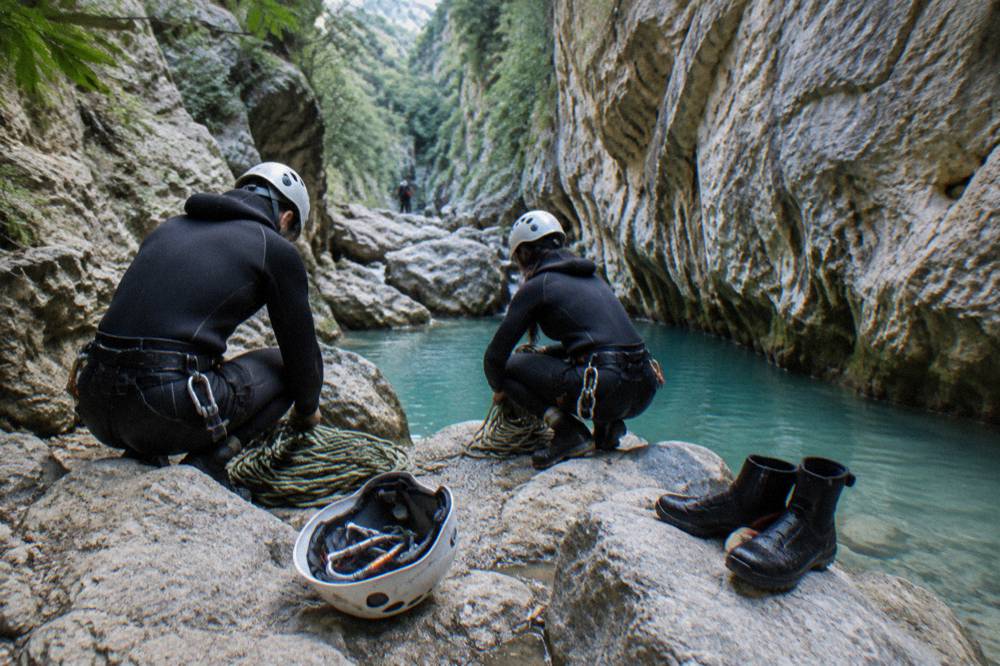
The part no listing can guarantee is the water itself. The season operators describe runs from about 21 March to 15 September because that is when the risk profile is acceptable, and the river level is monitored daily by Potrero Redondo residents, Las Adjuntas and state authorities. When the level is high, tours pause. Rescues in the Sierra de Santiago canyons do happen; the local press carries them, and civil protection responds to them, which is precisely why unguided attempts are treated as high-risk by everyone involved. The safety system here works through guided groups, mandatory flotation and helmets, and a hard willingness to cancel.
For a visitor nervous about the full canyon, there is a sensible stepping stone. The Nido de los Aguiluchos via ferrata, rated 4.9 across 753 reviews from $108 per person, delivers climbing, rappels and exposure with a minimum age of 12, in about seven hours rather than twelve. It is not canyoning, and we'd never describe it as the Matacanes route, but it is the same guiding culture and the same mountains, at a lower commitment level.
What Does The Current Suspension Mean For My Booking?
Protección Civil de Santiago suspended river, canyon and rugged-terrain activities in the Sierra de Santiago after river levels rose, and the suspension stands until an official notice says otherwise, so any date you book is conditional on conditions. This is not a scandal and not a permanent closure: it is the seasonal mechanism working as designed. Rains in the upper Sierra can generate sudden flash floods in the canyons even when the weather at the trailhead looks clear, which is exactly why the authority halts descents on its own judgment rather than waiting for local rain.
| Situation | What it means for you | What to do |
|---|---|---|
| Suspension in force | Canyon descents, rappel routes and rugged-zone hiking in the Sierra de Santiago are paused | Ask your operator whether your date is expected to run before traveling |
| Date inside roughly 21 March to 15 September | The window operators describe as the normal season | Book, but read the cancellation terms first |
| Heavy rain forecast anywhere in the Sierra | Flash floods possible even without local rain | Expect a possible pause or reschedule |
| Operator cancels for weather or group size | Most listings treat this as a refundable cancellation | Confirm the terms on the live listing before paying |
Cancellation terms vary between listings, and this is where reading matters. The full-day tour from Walmart Las Torres and the small-group Camaleon tour both carry free-cancellation terms, as does the lunch-included version from Monterrey. The most-reviewed Gaia full-day listing has no customer free-cancellation term printed: refunds there come only if the operator cancels for weather or minimum group size, which in a weather-driven activity is actually a common arrangement. Check the live listing for the tour you want, on the date you want, and know which of the two arrangements you are buying. For a broader comparison of what each trip costs and includes, see our breakdown of Matacanes tour costs and inclusions.
Should You Book Now Or Wait For Conditions To Settle?
Book the date you want and treat weather as a managed risk rather than a reason to stay home: operators reschedule and refund when the authority or the river calls off a day, and the busy spring window fills. Waiting for perfect certainty in a mountain canyon is a losing game; the certainty you can actually buy is a listing with terms you've read and an operator who answers questions before payment. That is the whole strategy.
How Do You Reduce Risk On A Monterrey Adventure Trip?
You reduce risk by targeting the three things that actually catch visitors, in order: book with vetted operators instead of unvetted ones, avoid self-organized canyon attempts, and guard against street-level opportunistic crime in the city. Handle these three well and you have addressed the main sources of trouble on a Monterrey adventure trip. The canyon is the environment with the least margin for error. Every credible source on Matacanes, from operator pages to canyon community wikis, discourages independent descent: the hydraulics, the route-finding and the water-level judgment are the operator's job. Book the guided full day, wear the kit they hand you, and declare any health condition before you board the vehicle. If you're still weighing how much risk you're actually signing up for, this look at whether canyoning counts as an extreme sport uses the same Matacanes route to draw the line between guided adventure and true extremes.
In the city, the playbook is the one you already know from other large cities. Use app-based rides rather than street taxis at night, keep valuables out of sight, and let your hotel tell you which areas they'd walk after dark. On the road south, watch the weather for the whole Sierra, not just Santiago: the recent floods closed roads across the area and stranded vehicles, a reminder that the mountains take rain seriously even when the city is dry. The community around Potrero Redondo also published a notice warning visitors that people other than the ejido were charging inflated access fees of 180 to 250 MXN at the route; the official community fee is 60 MXN per person, and the park entry fee is 125 MXN per person per day, both reported by the local press quoting the community notice. Going with a tour that includes permits and access sidesteps that whole negotiation.
One more layer of reassurance is worth naming: several of the current listings include accident insurance in the price, notably the lunch-included Matacanes tour from Monterrey, which also covers park permits and a certified guide under the NOM-09 accreditation. Insurance doesn't make a canyon safe, but it tells you the operator is running a formal operation rather than an informal one. Matacanes Canyoning exists to make exactly this distinction easy: real listings, stated terms, and the honest caveat when a listing has no rating yet.
For travelers whose real question is whether the whole region rewards the effort, the answer runs wider than safety. Our piece on whether Monterrey is worth visiting covers what the city and the Sierra give back once the risk question is settled.
Common Questions About Monterrey Safety
Is Monterrey Safe To Visit Right Now?
For most visitors, yes, with normal big-city caution, a check of your country's current official travel advisory for Nuevo León, and, for the canyon portion of the trip, a guided tour with an accredited operator. Canyon activities in the Sierra de Santiago can also be suspended at any time when river levels rise, so confirm your date with the operator.
Is Monterrey safe to visit right now?
For most visitors, yes, with normal caution: check the current official travel advisory for the latest level, use app-based transport in the city, and book the mountain day with a guided listing that states its cancellation terms. The most-reviewed Matacanes full-day tour is rated 4.9 across 1783 reviews, from $158 per person.
Is the drive from Monterrey to Santiago dangerous?
No, it is a roughly 34 km, half-hour drive on the busy Carretera Nacional. The risks are weather-related: heavy rain in the Sierra has caused flash floods and temporary road closures in the Santiago area, so check conditions on the day and let the tour operator handle the unpaved 4x4 stretch to the trailhead.
Is Matacanes canyoning safe for beginners?
Guided descents are designed for intermediate-level participants, and operators supply mandatory wetsuits, helmets, harnesses and life vests. Swimming ability is not essential because the canyoning life vest provides buoyancy, but you must be able to jump into water, and health conditions must be declared in advance. Minimum age 12 applies on the small-group and via ferrata listings.
Can the canyon tour be cancelled for safety reasons?
Yes. Protección Civil de Santiago can suspend river, canyon and rugged-terrain activities when river levels rise, and operators pause trips on daily water-level monitoring. Some listings offer free cancellation by customers; on others, refunds apply only when the operator cancels, so read the terms on the live listing before booking.