Potrero Chico, Grutas De García And Other Adventure Near Monterrey
Monterrey sits inside one of Mexico's densest adventure corridors: world sport climbing at Potrero Chico, cable car caves at Grutas De García, waterfalls and canyons in the Sierra de Santiago, and via ferrata routes a short drive from the city. Here is how the pieces fit together, and where a guided canyon day belongs in the plan.
Short answer
The main adventure anchors near Monterrey are Potrero Chico climbing in Hidalgo (over 800 bolted routes), the Grutas De García caves with a cable car, Cola De Caballo waterfall, La Huasteca canyon and the Sierra de Santiago canyoning routes. A guided canyoning day runs from $144 per person, and via ferrata from $108 per person, per the live listings.
Monterrey is one of the few large cities in North America where a full adventure week needs almost no driving. The metropolitan area ends and the mountains begin, and within roughly ninety minutes you can be clipped to a limestone wall, descending into a cave by cable car, standing under a waterfall, or rappelling into a canyon in Cumbres de Monterrey National Park. The region's best known canyon is Matacanes, and most travelers arrive for that day first, then discover that the surrounding Sierra de Santiago and the neighboring valleys hold enough for several more.
This guide walks through the four big adventure anchors near the city: Potrero Chico for rock climbing, Grutas De García for caving, Cola De Caballo for waterfalls, and La Huasteca plus the Santiago canyons for roped descent work. It also covers how the guided listings compare on price and what they include, and how to sequence a week so the hardest day lands where your legs can handle it. For a wider view of city based adventures, see the Monterrey adventure lover's guide.
What Adventure Options Are There Near Monterrey?
Adventure near Monterrey clusters into four zones: Potrero Chico for climbing about an hour west, the Grutas De García for a cable car cave visit northwest, Cola De Caballo and the Sierra de Santiago for waterfalls and canyoning to the south, and La Huasteca inside the national park on the metropolitan edge. Each pairs a different effort level with a different time commitment, from a two hour cave walk to a twelve hour canyon descent.
The geography rewards planning. Monterrey to Santiago on the Carretera Nacional covers about 34 km and takes around 28 minutes in normal traffic, which puts the waterfall zone and the canyon trailheads effectively inside the metro area for timing purposes. Potrero Chico sits in the opposite direction, in the town of Hidalgo, while the Grutas De García are on the northern side of the Santa Catarina ridge. You cannot comfortably do two of the big items in one day, but you can alternate hard and easy days across a week.
| Zone | Signature activity | Rough travel from Monterrey | Effort level |
|---|---|---|---|
| Potrero Chico, Hidalgo | Sport and multi pitch climbing | Roughly an hour west | Moderate to demanding |
| Grutas De García | Guided cave tour with cable car | Under an hour northwest | Easy |
| Cola de Caballo, Santiago | Waterfall park, zip line | About 30 minutes south | Easy |
| Sierra de Santiago canyons | Canyoning: rappels, jumps, slides | About 30 minutes south | Demanding |
| La Huasteca canyon | Via ferrata, ziplines, rappelling | Metropolitan edge, Santa Catarina | Moderate to demanding |
Guided options matter most in the canyon and via ferrata zone. The Grutas and the waterfall parks are walk up visits, but canyoning and roped climbing here are guided activities for almost everyone, and the listings differ sharply on what is included. That comparison comes later in this guide, once each destination has been described on its own terms.
What Makes Potrero Chico A Climbing Destination?
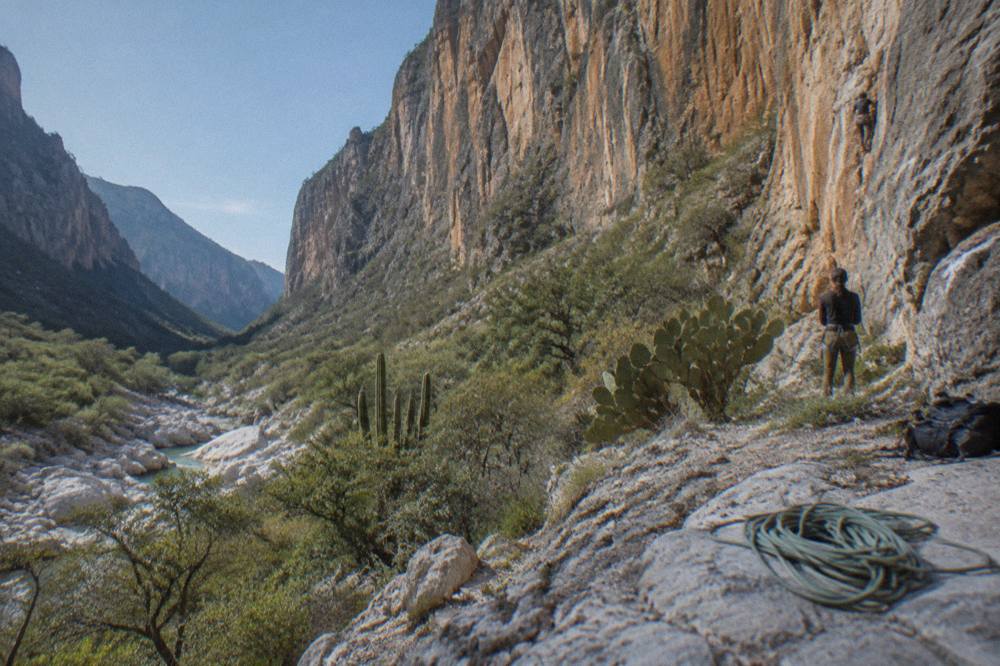
Potrero Chico in Hidalgo, Nuevo León, is one of the largest sport climbing areas in the Americas, with over 800 bolted limestone sport and multi pitch routes graded from 5.7 to 5.14, best climbed from November through March. Year round guided operations run with certified instructors, and many descents require a 60 meter rope. It is a destination climbers fly in for, not a half day afterthought.
The wall is the draw. The canyon of stacked limestone outside Hidalgo holds single pitch routes for first timers next to multi pitch lines that take most of a day, and the cold season from November to March is when the temperatures cooperate. Climbing references note that many of the longer descents assume a 60 meter rope, and local guide services maintain AMGA certified instruction year round, so a visiting climber without a partner can plug into a guided program at short notice (route count and season details appear in current climbing guides).
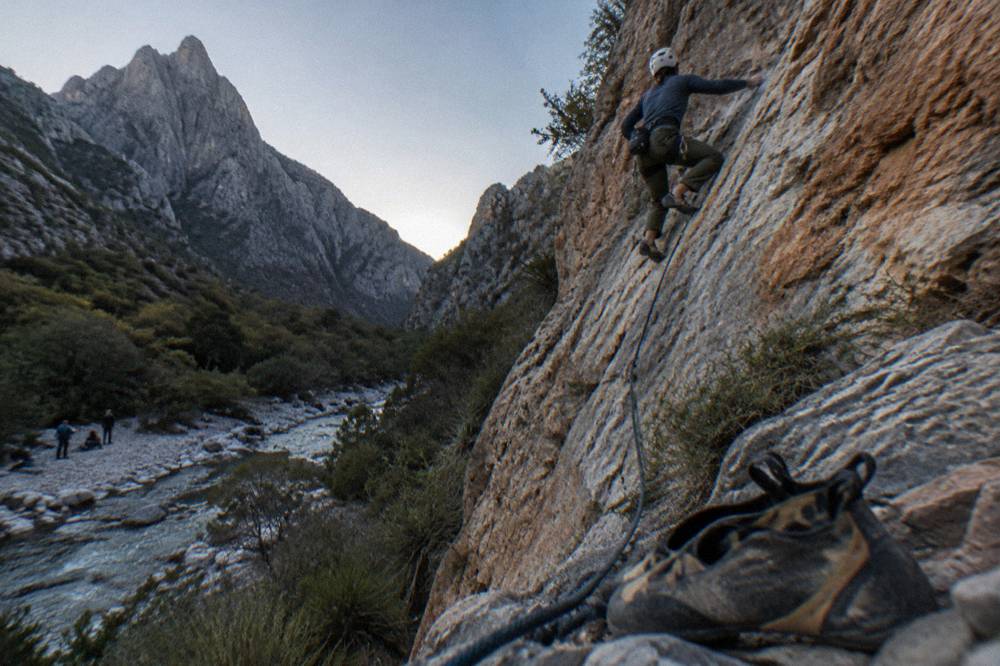
For a canyoning visitor, Potrero Chico works as the complement day. Canyoning in the Sierra de Santiago is a wet, cold, high endurance day; climbing at Potrero is dry and technical, and the two use different muscles. A common pattern is a canyon day, a rest morning, then a guided climbing morning at Potrero before the drive home. Climbers who want rope skills before a canyon descent sometimes do the climbing day first, since rappelling technique transfers directly.
The practical note is seasonal overlap. The canyon season runs roughly from 21 March to about 15 September, per operator statements, while Potrero Chico's prime window is November to March. In spring and fall the two overlap at the edges, which is exactly when a combined week works best. In deep summer the canyon is in full swing and Potrero is uncomfortably hot; in deep winter the reverse.
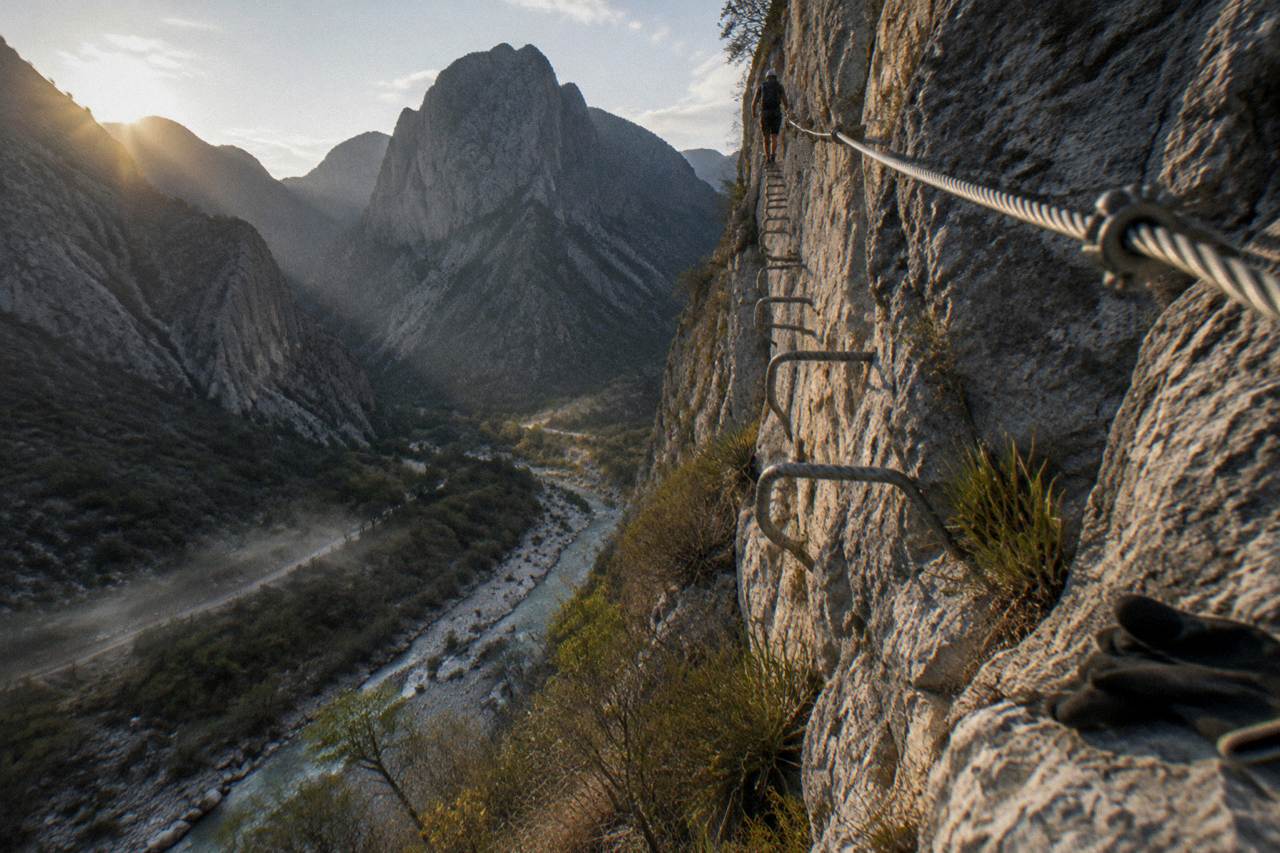
If roped movement is the theme of your trip but a full canyon is more than you want, the via ferrata listing at Nido de los Aguiluchos is the middle option: climbing style exposure on metal rungs and cables, with rappels, guided, from $108 per person for about a 7 hour day, rated 4.9 across 753 reviews on the live listing. The group meets in the H‑E‑B Gonzalitos parking lot in Monterrey, minimum age 12, group max 15. That listing carries no customer free cancellation term, so read the refund terms before booking.
What Are The Grutas De García And How Do You Visit?
The Grutas De García are a large cave system in García, Nuevo León, visited by a cable car that travels over 200 meters up the mountainside, followed by a guided cave tour inside; the path costs around 50 MXN per person and the cable car around 190 MXN, and the site opens Tuesday to Sunday from 9:00 a.m. to 5:00 p.m. It is the region's easiest headline adventure, doable in a half day.
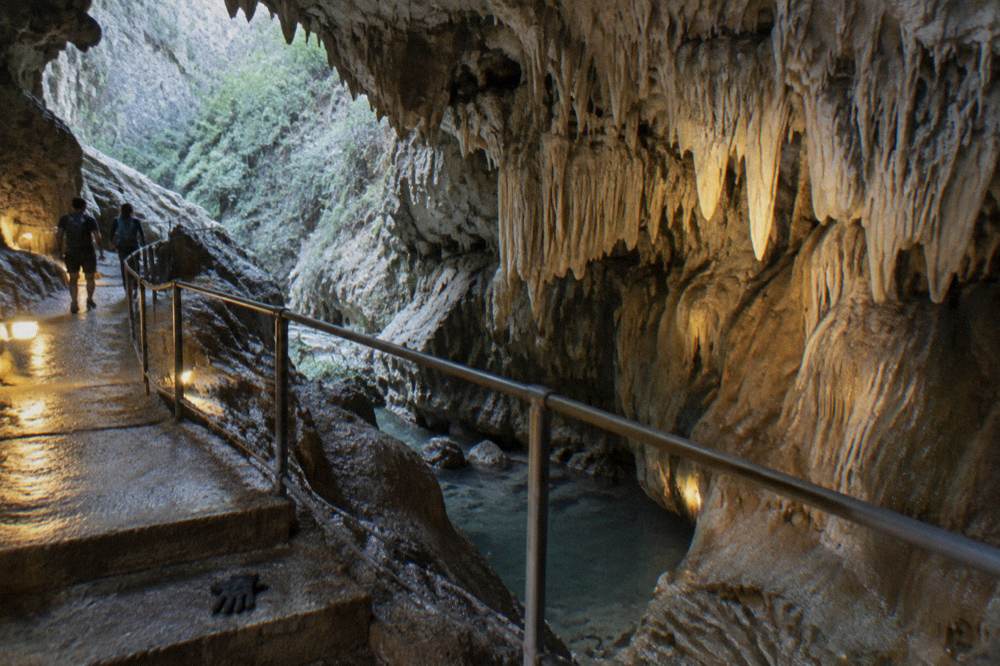
The caves are an old chamber system high on the Cerro del Fraile, and the funicular is half the experience: you ride up an open cliff face with the whole Santa Catarina valley below, then walk a lit route through stalactite formations with a site guide. Travel reporting on the site lists the two part pricing, one fee for the cave path and a separate, larger fee for the cable car, with the schedule running Tuesday through Sunday (current fee and schedule details appear in recent visitor coverage). Confirm both numbers on site or with your driver, since municipal attractions adjust prices.
| Item at Grutas De García | Planning figure |
|---|---|
| Cave path entry | Around 50 MXN per person |
| Cable car | Around 190 MXN per person |
| Schedule | Tuesday to Sunday, 9:00 a.m. to 5:00 p.m. |
| Ride length | Over 200 meters of mountainside |
| Time needed | Half a day including travel from Monterrey |
The Grutas pair naturally with a recovery day. They are dry, flat underfoot compared to every other item in this guide, and shady, which makes them the standard plan for the day after a canyon descent when nobody wants to walk far. Families traveling with a canyoning party that sat out the descent often do the caves on the same day, since the two sites sit on opposite sides of the metro area and neither depends on the other's schedule.
One caution repeats across the region: mountain weather closes things. The cave is enclosed so it runs in most conditions, but the cable car can pause in high wind, and the approach road can be affected by the same rain events that suspend canyon activities. If a storm system is moving through, do the caves on a clear margin day rather than the day the front arrives.
How Do Cola De Caballo And La Huasteca Fit An Adventure Week?
Cola de Caballo is a 25 meter waterfall inside an ecotourism park south of Santiago, open daily from 9:00 a.m., with adult entry at 50 MXN, children and seniors at 30 MXN and parking at 30 MXN. La Huasteca is a canyon in Cumbres de Monterrey National Park on Monterrey's edge, where operators run guided via ferrata, ziplines and rappelling at heights up to 700 meters.
Cola de Caballo, the park rather than the waterfall alone, has broadened what it offers: current coverage of the site describes a 500 meter roller zip line suitable for all ages and run year round, alongside the main 25 meter fall (entry fees and schedule details appear in local reporting). Access is by the Carretera Nacional southbound, turning at El Cercado onto the dedicated road that reaches the park around kilometer 6. It is the classic easy day for a group splitting abilities: some do the canyon, the rest do the waterfall.
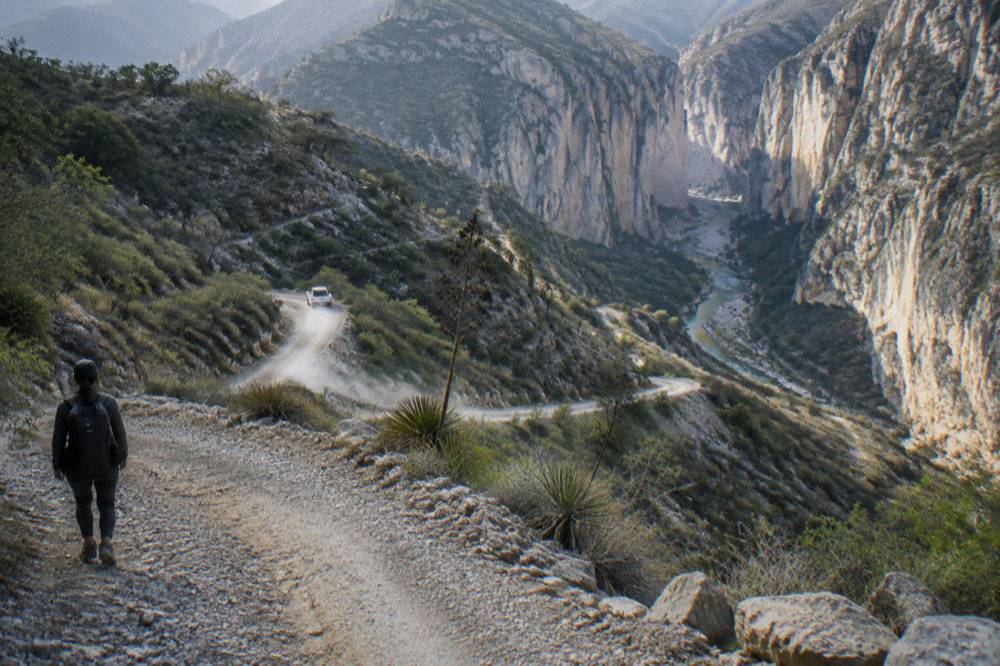
La Huasteca is different in kind. The canyon walls above Santa Catarina are used for guided via ferrata, zipline and rappelling programs that reach heights up to 700 meters, run with hotel pickup from Monterrey, and it sits inside the national park, so the same entry fee structure applies. The canyon itself is a landmark of the skyline, and the routes on its walls are the closest big vertical terrain to the city center. Our La Huasteca canyon guide covers it in detail.
For canyon travelers, Cola de Caballo has a second role: many Matacanes and Chipitín operators use the Hotel Hacienda Cola de Caballo in Santiago as a meeting point, and the trailhead access beyond it runs on unpaved roads that need high clearance or 4x4 vehicles. You will pass through this corridor on the way to the canyon whether or not you visit the waterfall itself, and staying nearby the night before an early departure is a common tactic covered in where to stay in Santiago.
The Chipitín corridor is part of this same zone. The Chipitín canyon, which is a different route from Matacanes, is known for its seven rappels, and two guided listings cover it: a from Monterrey version from $195 per person with round trip transport, meals, water, electrolytes and snacks included and free cancellation, and a from Santiago version, also from $247 per person, meeting at the Hacienda Cola de Caballo address with 4x4 transport to the canyon, light breakfast, snacks and a regional meal at the end. Both are new listings without reviews yet, and the second runs April to September per the listing.
Can You Combine These With A Matacanes Canyon Day?
Yes, and that is exactly how most adventure travelers structure a Monterrey week: the Matacanes full day is the anchor, booked for mid week when groups are smaller, with Potrero Chico, the Grutas De García or Cola De Caballo on the days before and after. The canyon day is 8 to 12 hours door to door and physically dominant, so it needs a rest day either side rather than a climbing morning before it.
The Matacanes listings span a real price range, from $144 per person for the full day from Walmart Las Torres (12 hours, breakfast and photos included, free cancellation, rated 4.2 across 5 reviews) to $611 per person for a small group of max 15 from the Hacienda with a minimum age of 12 (about 9 hours, taco breakfast and snacks, free cancellation, rated 4.9 across 27 reviews). The most reviewed listing is the full day at from $158 per person, rated 4.9 across 1783 reviews, with a group max of 25, continental breakfast, snacks, gear and round trip group transport from the meeting point; that one lists no customer free cancellation term, with refunds only if the operator cancels.
| Listing | Price (per person) | Duration | Group max | Rating and reviews | Free cancellation |
|---|---|---|---|---|---|
| Matacanes Full-Day Canyoning | From $158 | About 1 day | 25 | 4.9 across 1783 reviews | No customer term listed |
| Matacanes Full Day From Walmart Las Torres | From $144 | About 12 hours | 30 | 4.2 across 5 reviews | Yes |
| Matacanes Small Group From The Hacienda | From $611 | About 9 hours | 15 | 4.9 across 27 reviews | Yes |
| Matacanes From Monterrey With Lunch | From $195 | About 12 hours | Not on the listing | 5 across 2 reviews | Yes |
A fourth option, from $195 per person, adds hotel pickup from Downtown Monterrey and San Pedro Garza García, a full local meal, accident insurance, park permits and a photo shoot, and asks for prior rappelling experience and good fitness per the listing. It is rated 5 across only 2 reviews, so the review pool is thin, but the inclusion list is the most complete of the four. Note the distinction between the last two columns carefully when comparing: the cheapest listing and the small group listing both exclude a meal, while the pickup listing includes two.
The sequencing rule that matters: do not put Potrero Chico and Matacanes on consecutive days if you can avoid it. Both load the forearms and both run long. A pattern that works is Grutas or Cola de Caballo on arrival day, Matacanes on day two, the caves or the waterfall park on day three as recovery, and Potrero Chico climbing on day four. Travelers with only three days usually drop Potrero Chico, since it is the farthest afield.
For anyone weighing whether the anchor day is within reach, the how hard is Matacanes guide breaks down the fitness and swimming demands, and operators state that a specialized canyoning life jacket provides buoyancy, though participants must be able to jump into water. The route itself, with its rappels, jumps and a 12 meter single drop as the operator describes it, is covered in the canyon route guide.
When Is The Best Season For Each Activity?
The seasons deliberately offset: canyoning in the Sierra de Santiago runs roughly 21 March to 15 September per operator statements, Potrero Chico climbs best from November to March, the Grutas De García and Cola De Caballo run all year on fixed schedules, and La Huasteca's guided programs run alongside the dry season. Spring and fall are the shoulder windows where the most activities overlap.
The offset is driven by water and heat. Canyons need enough water to jump into and slides to run, but not so much that flash floods become likely, and the municipal civil protection authority in Santiago watches river levels and can suspend canyon, river and rugged terrain activities at any time, including outside the main season. Climbing inverts that calendar: limestone walls in Nuevo León are unclimbable in summer heat and at their best when the canyons are empty.

Two practical implications follow. First, the booking page and the operator are the authority on whether a date runs: operators describe daily monitoring of river levels by Potrero Redondo residents and state authorities, and suspensions can be issued when it is not raining on site, because rain in the upper Sierra reaches the canyons later. Second, the all weather options, the Grutas and Cola de Caballo, are your backup days. If the canyon day suspends, move the caves into that slot and rebook the canyon, since most listings in the roster do carry free cancellation.
| Activity | Prime window | Runs outside it? |
|---|---|---|
| Matacanes and Chipitín canyoning | About 21 March to 15 September | Suspensions possible any time by river level |
| Potrero Chico climbing | November to March | Guided operations run year round |
| Grutas De García | Year round, Tuesday to Sunday | Closed Mondays |
| Cola de Caballo park | Year round, daily | Weather can close the zip line |
| La Huasteca guided programs | Dry season | Operator dependent |
The via ferrata listing at Nido de los Aguiluchos deserves one line in the season discussion: it is a climbing and rappel product, not a water descent, so it is less exposed to river level suspensions than the canyon listings, which makes it a useful hedge for a spring or fall week when a canyon date carries some weather risk. The national park entry context still applies to activities inside Cumbres de Monterrey, where the official daily entry fee is 125 MXN per person (the park authority publishes the current fee), and the separate Potrero Redondo community access fee for the Matacanes and Chipitín routes is 60 MXN per person paid locally, as the community notice states.
What Should An Adventure Traveler Budget?
Budget a Monterrey adventure week around three cost layers: guided activity fees (canyoning from $144 to $611 per person, via ferrata from $108, all from the live listings), site entry fees in pesos (park entry 125 MXN, community access 60 MXN, Cola de Caballo 50 MXN, the Grutas cable car around 190 MXN), and local transport, with Uber between Monterrey and Santiago running around 330 MXN each way. Meals are included on some guided listings and not others.
The guided fee is the big line, and the inclusion differences explain most of the spread. The $144 full day and the $158 full day both exclude a main meal; the $195 pickup listing and both Chipitín listings include substantial food. The $611 small group listing buys a max 15 group and a taco breakfast, at roughly four times the price of the largest group option. None of that makes one listing the right answer; it makes the inclusion list the thing to read, and the live booking page the source for the current price.
| Cost item | Planning figure | Notes |
|---|---|---|
| Matacanes guided day | From $144 to $611 per person | Range across the four listings |
| Via ferrata guided day | From $108 per person | About 7 hours |
| Chipitín guided day | From $195 to $247 per person | Two listings, both new |
| National park entry | 125 MXN per person per day | Park authority fee |
| Potrero Redondo community access | 60 MXN per person | Paid locally, official rate per the community notice |
| Cola de Caballo park | 50 MXN adult, 30 MXN child or senior | Plus 30 MXN parking |
| Grutas De García | About 50 MXN path plus 190 MXN cable car | Tuesday to Sunday |
| Uber Monterrey to Santiago | Around 330 MXN | About 25 to 28 minutes |
Transport is the quiet variable. The listings split between hotel pickup (only the from Monterrey options), central Monterrey meeting points like the Walmart Las Torres location with its 4:00 a.m. start per the listing, and Santiago meeting points at the Hacienda Cola de Caballo. If you stay in Santiago rather than Monterrey, you cut the early morning drive entirely, and cabin rates in Santiago run roughly 2000 to 3500 MXN per night for small groups per local reporting. Public transit exists, three bus lines and about 50 minutes for under 50 MXN, but a 4:00 a.m. canyon start is not a bus schedule.
How Do You Build The Week Around A Canyon Day?
Anchor the week around a five-day structure: an easy arrival day at Cola de Caballo or the Grutas de García, the Matacanes canyon on day two, a recovery day on day three, Potrero Chico climbing on day four, and a via ferrata morning at Nido de los Aguiluchos the day before you leave. Reserve the canyon and via ferrata ahead, keep the walk-up parks flexible, and hold a swap day in case river levels suspend the canyon.
The order is not arbitrary. The canyon day is the one that benefits most from fresh legs and the one most exposed to suspension, so it goes early in the week with slack behind it. Climbing goes after a rest day, not before the canyon, and the via ferrata works last because it is short, city adjacent, and easy to reach even on a packing day. Anyone who wants to check the difficulty before committing can start with the fitness and swimming requirements guide, which covers what operators actually ask of participants.
One more note on the canyon anchor itself: the region's operators run several Matacanes variants that differ in pickup, meal, duration and group size, and the which tour to book comparison breaks those differences out line by line. What this guide adds is the surround: the city that sits inside a national park's worth of rock, caves, water and walls, close enough that a week feels short. That is the real reason Matacanes Canyoning trips so often grow into full Monterrey adventure weeks.
Common Questions About Adventure Near Monterrey
How far is Potrero Chico from Monterrey?
Potrero Chico sits outside the town of Hidalgo, Nuevo León, roughly an hour's drive west of Monterrey. Climbing references describe over 800 bolted routes from 5.7 to 5.14, with the best conditions November through March and guided operations year round.
What do the Grutas De García cost?
Recent visitor coverage lists around 50 MXN for the cave path and around 190 MXN for the cable car, open Tuesday to Sunday from 9:00 a.m. to 5:00 p.m. Confirm the figures on site, since municipal attractions adjust prices.
Can you visit Cola de Caballo without a tour?
Yes. The ecotourism park is a walk up visit with adult entry at 50 MXN, children and seniors at 30 MXN and parking at 30 MXN, open daily from 9:00 a.m. The 25 meter waterfall and a 500 meter roller zip line are inside the park.
Which is harder, canyoning or via ferrata near Monterrey?
Canyoning is the harder day: operators describe a 12 meter single drop, cold water and 8 to 10 hour days. Via ferrata at Nido de los Aguiluchos runs about 7 hours on metal rungs and cables with a minimum age of 12 and group max 15, from $108 per person.
Can you do Matacanes and Potrero Chico in the same trip?
Yes, but not on the same day and ideally not on consecutive days. The canyon season runs roughly 21 March to 15 September, while Potrero Chico climbs best November to March, so spring and fall are the overlap windows.
What happens if the canyon is suspended for water levels?
The municipal authority in Santiago can suspend canyon activities at any time when river levels rise, even when it is not raining on site. Move a cave or waterfall day into the slot, and rebook: most listings in the roster carry free cancellation, though the full day at from $158 lists no customer free cancellation term.
Do the guided tours near Monterrey include meals?
Some do. The from Monterrey Matacanes listing at from $195 includes a full local meal, and both Chipitín listings include substantial food. The $144 and $611 Matacanes listings exclude a main meal, so read the inclusion list before comparing prices.
Where should you stay for an adventure week around Monterrey?
Santiago puts you closest to the canyons, Cola de Caballo and many operator meeting points, with cabins around 2000 to 3500 MXN per night for small groups. Monterrey itself suits the via ferrata, La Huasteca and city based departures, and Uber between the two runs around 330 MXN.